 MineArchive
Wingate Grange Colliery explosion, 1906
Wingate Grange, a colliery of some 1,200 underground workers in east Durham, exploded on the night shift of Sunday 14 October 1906, killing twenty-six men. The inspectors' report traced the deaths seam by seam -- a shifter blown into the downcast shaft, a stoneman killed by violence and burning on the engine plane, five men lost to afterdamp in the Five Quarter. At the inquest the Home Office was represented by counsel, and the evidence turned on a shot fired to clear a stone fall, and on the single naked light allowed in a pit otherwise worked with safety lamps.
| Date | 14 October 1906 |
|---|---|
| Mine | Wingate Grange Colliery |
| Region | County Durham |
| Type | Explosion |
| Fatalities | 26 (Twenty-six men were killed. The inquest of 31 October and 1 November 1906 sat on twenty-four of them.) |
| Context | During active mining |
Cause
An explosion on the night shift, which the inquest evidence associated with the firing of a shot to clear stone; the pit was worked with safety lamps except for one naked light, and the under-manager said he had never known gas in it.
What happened
Wingate Grange lay near the southern edge of the Northern coalfield, where the measures pass under the Magnesian Limestone; five seams had been proved workable and about 1,200 people were employed underground across the shifts. The officials' reports on the last working day, Saturday 13 October 1906, showed nothing unusual, and the customary Sunday morning examination was made. The examiners descended at about eight on the Sunday evening and the repairing and stonework shift at ten, with time enough for the men to reach their places before the explosion. The inspectors' report accounts for the dead through the workings: four men were in the first East way, three of them killed by afterdamp; a shifter named Elliott at the downcast shaft was blown into the shaft and killed; a stoneman named Maddison was killed by violence and burning on the engine plane; three of the four men in the Main Coal seam died, one of them, a shifter named Dixon, killed by violence close to the downcast shaft; and of the twenty-six people in the Five Quarter seam, most at or near the faces, five were killed by afterdamp.
Rescue & recovery
Members of the rescue party gave evidence at the inquest about how and where they found the bodies, and about which of the men had been killed by the explosion itself and which had died of afterdamp.
Investigation & inquiry
The inquest was resumed at the Colliery Institute, Wingate, on the Wednesday and Thursday before 2 November 1906, before the coroner Crofton Maynard. A. H. Ruegg KC appeared for the Home Office and conveyed the Home Secretary's sympathy with the bereaved and his hope that the real cause would be clearly shown; the inspectors of mines for Durham and Northumberland attended, and the owners and the Durham Miners' Association were represented. Robert Owen, the under-manager, described the workings and said he had never known gas in the pit: all the seams were worked with safety lamps, but there was one naked light. Edward Murton, the master shifter in charge of the men, thought the explosion had been caused by Maddison firing a shot to clear away some stone, there being every symptom of a shot having been fired.
Memorials & commemoration
Unknown.
People
2 of the 26 who died are named in the archive; the rest are not named in the sources read for this record.
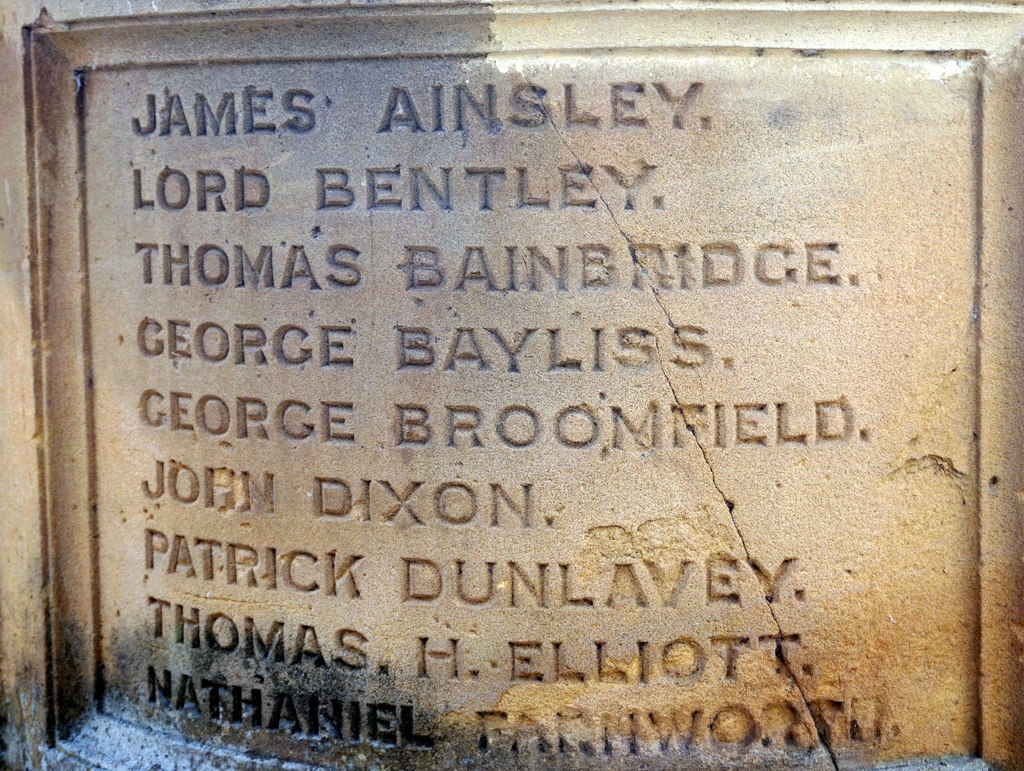
- John Dixon (d. 1906) · victim, from 1906 — A shifter in the Main Coal seam, killed by violence close to the downcast shaft in the explosion of 14 October 1906; his name is on the Wingate Grange memorial.
- Thomas H. Elliott (d. 1906) · victim, from 1906 — A shifter at the downcast shaft, blown into the shaft and killed by the explosion of 14 October 1906; his name is on the Wingate Grange memorial.
What's uncertain
Points where sources disagree or the record could not be settled; both accounts are kept. All open questions in the archive.
- Evidence at the inquest pointed to the explosion having been caused by the shot-firer Maddison firing a shot to clear stone, which one witness called a mad thing to do where the fall was; the coroner raised the question whether naked lights should be allowed at all in the pits of east Durham. (uncertain) 2
Recorded claims
Individual factual claims, each attached to the source(s) that support it below. Where sources disagree, both are kept.
- Wingate Grange employed about 1,200 people underground across its shifts and worked five seams, in a coalfield traversed by faults, the largest with a throw of thirty fathoms. 1
- The examiners went down at about eight o'clock on the Sunday evening of 14 October 1906 and the repairing and stonework shift followed at ten; the officials' reports on the last working day, Saturday 13 October, had disclosed no unusual source of danger. 1
- Men were killed by violence, by burning and by afterdamp across several seams: a shifter named Elliott was blown into the downcast shaft, a stoneman named Maddison was killed by violence and burning on the engine plane, and five of the twenty-six people in the Five Quarter seam died of afterdamp. 1
- The inquest on the victims was resumed at the Colliery Institute, Wingate, on 31 October and 1 November 1906 before the coroner Crofton Maynard, with A. H. Ruegg KC for the Home Office and both the owners and the Durham Miners' Association represented; the under-manager Robert Owen said he had never known gas in the pit, that all the seams were worked with safety lamps but that there was one naked light. 2
- Evidence at the inquest pointed to the explosion having been caused by the shot-firer Maddison firing a shot to clear stone, which one witness called a mad thing to do where the fall was; the coroner raised the question whether naked lights should be allowed at all in the pits of east Durham. (uncertain) 2
Sources
- (secondary) Wingate Grange Colliery Disaster Report (1906) (Durham Mining Museum) — Durham Mining Museum
- (secondary) The Wingate Colliery Explosion (The Times, 2 November 1906) (Durham Mining Museum) — Durham Mining Museum
- (observational) Wingate Grange Colliery Memorial, Wingate — Geograph
Record created: 17 September 2026 · Last researched: 20 September 2026