 MineArchive
Upton Colliery Explosion, 1940
Shortly before midnight on 4 June 1940 an explosion tore along a longwall face in the No. 2 district of the Barnsley seam at Upton Colliery, about a mile and a half from the pit bottom. Six men were killed and eight burned. It was believed that a stopping sealing off an area where a fire had burned some months earlier had blown out.
| Date | 4 June 1940 |
|---|---|
| Mine | Upton Colliery |
| Region | West Yorkshire |
| Primary type | Explosion |
| Associated types | Rescue |
| Fatalities | 6 (Two men were killed underground and four died in Pontefract Infirmary. Hansard's statement to the Commons on 5 June, made while the toll was still rising, gave two killed and one since died.) |
| Injuries | 8 |
| Context | During active mining |
Cause
Believed to have been the blowing out of a stopping which had sealed off an area of the workings where a fire had occurred some months earlier.
Contributing factors
The member for Hemsworth, G. Griffiths, asked the Secretary for Mines in the Commons the following day to place before the investigation correspondence which the workmen's inspectors had sent to the Mines Department over the preceding twelve months.
What happened
The explosion came shortly before midnight on 4 June 1940, at the intake end of the longwall face in the No. 2 district of the Barnsley seam, about a mile and a half in from the pit-shaft bottom. As far as the deputy McGuire could judge, the force had travelled along the coal face and caught the men who were getting coal.
Six men died: John Turner, 46, of New Lane, Upton; C. Cartwright, 30, of Manor Farm Estate, South Elmsall; Leslie Rich, 30, of Harewood Lane, Upton; John Stevens, 49, of Cross Street, Upton; Alec England, 22, of Francis Street, Moor Top, Ackworth, married only about ten months; and James Joseph Hughes, 38, of Harewood Lane, Upton. Turner and Cartwright were killed in the pit; the others died in Pontefract Infirmary. Four more — N. Overton, J. W. Foster, J. W. Dakin and T. Coleman — were taken to the infirmary with severe burns and reported very poorly, Dakin and Foster being brothers-in-law. Four others, less seriously hurt, were taken to their homes: Ernest Rich, uncle of the dead Leslie Rich; A. Bartrop; T. H. Walker; and R. Millward, who was sixteen.
A man working two bays from the scene said that he and his mates had been knocked down by the rush of air. Another who helped bring the injured out said there had been nothing in the way of panic — 'all the men who were not injured turned to and helped those who were' — and that it was lucky the thing was no worse, because it easily might have been.
Rescue & recovery
Rescue brigades from the West Yorkshire rescue station at Wakefield and from several neighbouring collieries were sent to the pit and brought the dead and injured up in a short time; doctors were summoned to the pit top to attend to the injured. McGuire told the paper there had been a very ready response of volunteers from the junction.
Investigation & inquiry
The Secretary for Mines, David Grenfell, made a statement to the Commons on 5 June in answer to a private notice question. Following an inspection, and in view of the possible risk of further explosions, all men were withdrawn from the district while His Majesty's Inspectors, the owners and the workmen's representatives consulted on the precautions needed before the cause could be investigated. Pressed on whether there would be an inquiry, Grenfell said investigations were proceeding and undertook to put the workmen's inspectors' correspondence at the disposal of those making them.
Memorials & commemoration
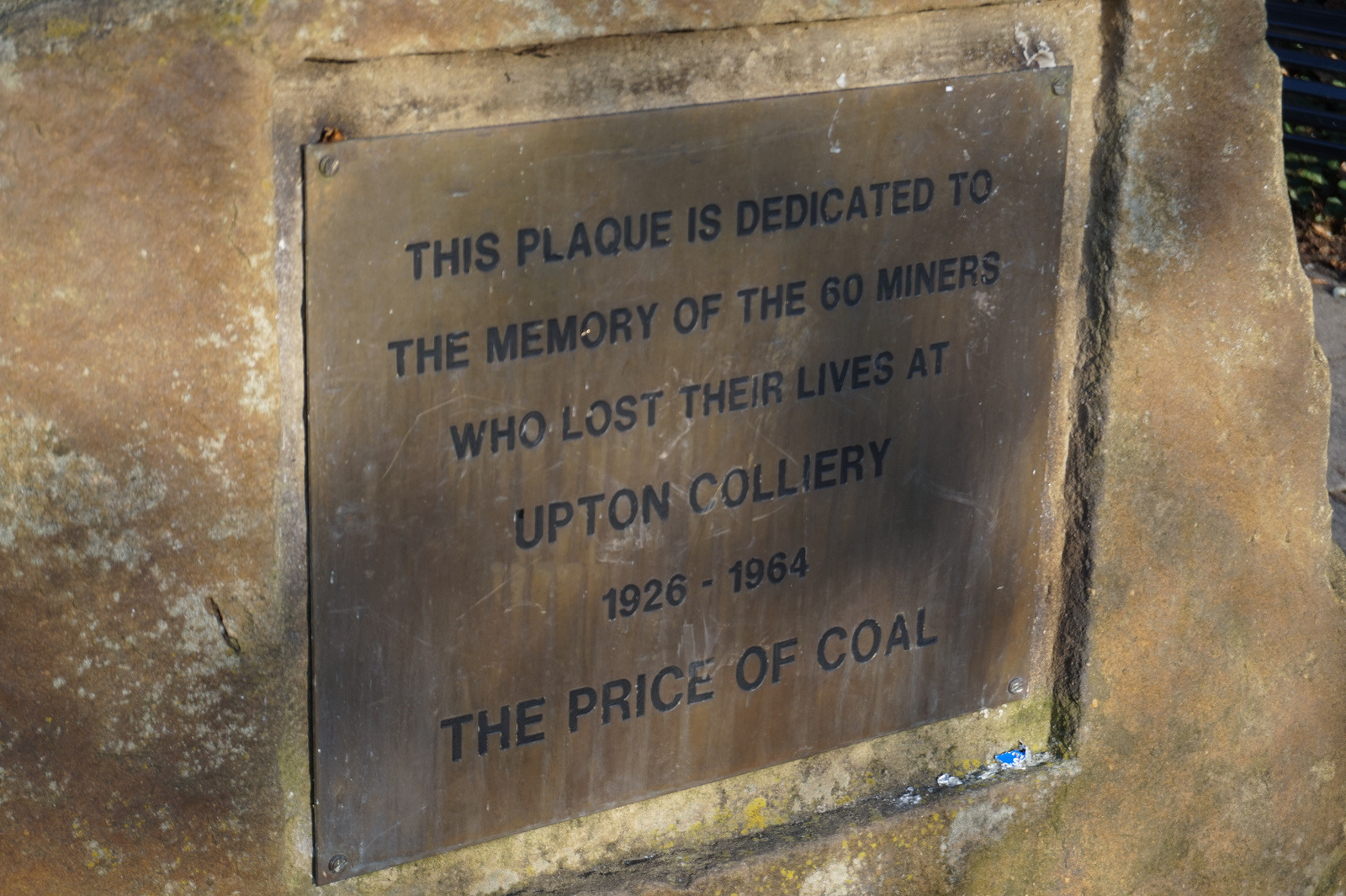
A memorial to the men of Upton Colliery stands in the memorial garden at Upton Country Park.
What's uncertain
Points where sources disagree or the record could not be settled; both accounts are kept. All open questions in the archive.
- The Derby Evening Telegraph of 5 June 1940 names six dead and eight burned. Hansard, reporting to the Commons the same day while the toll was still rising, gave two killed and one since died. A later secondary account states ten died; that figure appears to be a misreading of the Telegraph report and is not followed here. (uncertain) 1,2,3
- It was believed that a stopping which had sealed off an area where a fire occurred some months earlier had blown out. (uncertain) 3
Recorded claims
Individual factual claims, each attached to the source(s) that support it below. Where sources disagree, both are kept.
- The Derby Evening Telegraph of 5 June 1940 names six dead and eight burned. Hansard, reporting to the Commons the same day while the toll was still rising, gave two killed and one since died. A later secondary account states ten died; that figure appears to be a misreading of the Telegraph report and is not followed here. (uncertain) 1,2,3
- The explosion occurred at the intake end of the longwall face in the No. 2 district of the Barnsley seam, about a mile and a half from the pit-shaft bottom. 2,3
- It was believed that a stopping which had sealed off an area where a fire occurred some months earlier had blown out. (uncertain) 3
- Following an inspection, and in view of the possible risk of further explosions, all men were withdrawn from the district pending consultations between His Majesty's Inspectors and representatives of the owners and workmen. 2
- The member for Hemsworth asked that correspondence sent to the Mines Department by the workmen's inspectors over the previous twelve months be put before the investigation; the Secretary for Mines undertook that it would be. 2
Related terminology
Mining terms this disaster is structurally linked to, with the nature of the relationship.
- Heapstead (contextual relationship)
Named in this record’s rescue and recovery: “…dead and injured up in a short time; doctors were summoned to the pit top to attend to the injured. McGuire told the paper there had been a…” - Longwall (contextual relationship)
Named twice in this record, first in the summary: “Shortly before midnight on 4 June 1940 an explosion tore along a longwall face in the No. 2 district of the Barnsley seam at Upton Colliery,…” - Rescue Brigade (contextual relationship)
Named in this record’s rescue and recovery: “Rescue brigades from the West Yorkshire rescue station at Wakefield and from several…” - Return Airway (contextual relationship)
Named in this record’s narrative: “The explosion came shortly before midnight on 4 June 1940, at the intake end of the longwall face in the No. 2 district of the Barnsley seam,…” - Stopping (contextual relationship)
Named twice in this record, first in the summary: “…bottom. Six men were killed and eight burned. It was believed that a stopping sealing off an area where a fire had burned some months earlier had…”
Photographs & further reading
This page doesn't try to reproduce everything — these are the best original sources found for this disaster.
The contemporary report naming the dead and injured, with eyewitness accounts from men working near the face and the deputy who directed the rescue.
View sourceThe Secretary for Mines' statement to the Commons the day after the explosion, with the exchange on whether there would be an inquiry.
View sourceSources
- (secondary) Upton Colliery — Wikipedia
- (primary) Explosion, Upton Colliery (HC Deb 5 June 1940 vol 361 cc849-50) — Hansard, House of Commons
- (primary) Six Lives Lost By Yorkshire Pit Explosion — Derby Evening Telegraph, 5 June 1940 (via Durham Mining Museum)
Record created: 3 September 2026 · Last researched: 3 September 2026