 MineArchive
Union Colliery inundation, 1902
On the morning of 4 September 1902 a face at Union Colliery, in the Bixslade valley of the Forest of Dean, holed into the flooded old workings of Miles' Level. Most of the 67 men below escaped, but seven were trapped. When pumping let rescuers in on 9 September three were found alive after nearly 120 hours; four had drowned.
| Date | 4 September 1902 |
|---|---|
| Mine | Union Colliery, Coalway |
| Region | Forest of Dean |
| Primary type | Flooding / Inundation |
| Associated types | Entrapment, Rescue |
| Fatalities | 4 (Herbert Gwatkin, 26 or 30; Amos James, 20 or 30, and his brother Thomas James, 27; William Martin, 26; all colliers. Rescued alive on 9 September: Thomas Cooper, 52, James Gwilliam and James Hawkins.) |
| Context | During active mining |
Cause
The Union workings had been plotted to a meridian that was not the true magnetic meridian and never checked against the surface, so they lay about 70 yards nearer the old Hopewell and Miles' Level workings than the plan showed. A Crown plan of 1896 had also placed the Slade Pit wrongly, and the Miles' Level owners had not kept their own plan up to date. Where the 30-yard barrier of coal required by the Forest mine laws should have stood, less than a yard remained at Harry Short's working place.
What happened
The day shift had gone down for a seven o'clock start, among them several sets of brothers. When the water broke in, men waded to pit bottom with water swirling round them and were drawn up in the cage, the last of them Albert Gwatkin, who had been working with his brother Herbert; others escaped along the windroad, a ventilation adit. The pumps, of 36,000 and 50,000 gallons an hour, were started but choked with sludge after a few strokes, and the water rose 28 feet in the shaft. A roll call found nine missing; two, John Evans and Arthur Teague, sheltered for an hour and a half and then felt their way out along the signal cables to the rescue party.
Below, James Hawkins and James Gwilliam had heard the water break in and run for pit bottom behind Herbert Gwatkin, who was swept away crossing the main road. Gwilliam was carried along by the flood until he caught hold of a prop; he found Thomas Cooper, Hawkins rejoined them, and the three shared a bottle of cold tea and a morsel of bread from a tommy bag. They drank from a rill nearby until they were too weak to walk to it, and lost all track of time.
Rescue & recovery
The inspector, J. S. Martin, and his assistants arrived the next morning; a volunteer party led by H. Walker went down the disused Hopewell Engine shaft at Fetter Hill but found no way through. Pumping went on for five days while crowds of up to 300 waited under the trees, and a donkey engine raised steam in the shaft to help the air. Before dawn on Tuesday 9 September Ernest Worthy, the manager, the miners' agent Rowlinson and Carl Deakin went in, carrying bread and milk. Nearly three-quarters of a mile in they found the body of William Martin, and 400 yards beyond it heard a weak voice: Cooper, Gwilliam and Hawkins, huddled together after nearly 120 hours. The road was cleared of sludge and the three were brought out on a dram. The bodies of Martin and of the brothers Amos and Thomas James, who had reached safety but gone back for their clothes and watches, were recovered; Herbert Gwatkin was found the following Sunday night in a dipple known as Howell's.
Investigation & inquiry
At the inquiry it emerged that the plan supplied by the Crown and the colliery's own plotting were both at fault, and the Deputy Gaveller's assistant found the underground workings about 70 yards wrong in relation to the surface. The inquest jury found the owners guilty of neglect in not taking the necessary precautions to ascertain the proximity of the old workings at Miles' Level, and gave its expenses to the disaster fund.
Legal & regulatory aftermath
Worthy was charged with not keeping at the mine a plan showing the workings in relation to the surface, contrary to the Coal Mines Regulation Acts. At Coleford Police Court in December 1902 he was fined a nominal one shilling, with no costs. Thomas Deakin, the managing director, would not risk working the Union again and closed it; its men were found work at the company's other pits, and the gale was sold to the Princess Royal Collieries Company by January 1904.
Memorials & commemoration
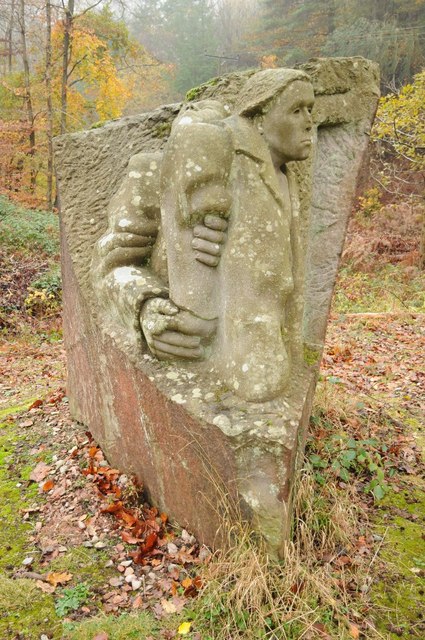
Martin and Gwatkin lie in identical graves at Christ Church, and the James brothers together at Coleford. King Edward VII sent his sympathy to the families, and a fund was raised to which the Parkend company gave £100. A sandstone statue of two trapped miners embracing, by the sculptor Matt Baker, commissioned by the Forest Freeminers, now stands at the colliery site with a plaque.
Recorded claims
Individual factual claims, each attached to the source(s) that support it below. Where sources disagree, both are kept.
- On 4 September 1902 water from the old workings of Miles' Level burst into Union Colliery in the Forest of Dean; seven men were trapped, three were found alive on 9 September and four had drowned. 1,2,3,4
- The Union workings were about 70 yards out from where the plans showed them, because they had been plotted to an inaccurate meridian and never checked against the surface, leaving less than a yard of coal where a 30-yard barrier should have stood. 1,4
- The inquest jury found the owners guilty of neglect in not ascertaining the proximity of the old workings at Miles' Level. 1
- The manager, Ernest Worthy, was fined a nominal one shilling at Coleford Police Court in December 1902 for not keeping a plan showing the workings in relation to the surface. 1
- A sandstone statue of two trapped miners embracing, by Matt Baker, commissioned by the Forest Freeminers, stands at the colliery site. 2
Related terminology
Mining terms this disaster is structurally linked to, with the nature of the relationship.
- Coal Mines Regulation Act (contextual relationship)
Named in this record’s aftermath: “…showing the workings in relation to the surface, contrary to the Coal Mines Regulation Acts. At Coleford Police Court in December 1902 he was fined a nominal…” - Free Miner (contextual relationship)
Named in this record’s memorials: “…embracing, by the sculptor Matt Baker, commissioned by the Forest Freeminers, now stands at the colliery site with a plaque.” - Gale and Gaveller (contextual relationship)
Named in this record’s aftermath: “…it; its men were found work at the company's other pits, and the gale was sold to the Princess Royal Collieries Company by January 1904.” - Level (contextual relationship)
Named 4 times in this record, first in the summary: “…of the Forest of Dean, holed into the flooded old workings of Miles' Level. Most of the 67 men below escaped, but seven were trapped. When…” - Old Workings (contextual relationship)
Named twice in this record, first in the summary: “…in the Bixslade valley of the Forest of Dean, holed into the flooded old workings of Miles' Level. Most of the 67 men below escaped, but seven were…”
Sources
- (secondary) Forest of Dean Coal Mining — Lightmoor Press
- (secondary) Union Colliery Disaster Memorial (Forest of Dean Local History Society) — Forest of Dean Local History Society
- (primary) NMRS deaths and accidents database: Herbert Gwatkin, Union, Coalway, 4 Sep 1902 — Northern Mine Research Society
- (primary) Colliery disaster, 4 September 1902: Navigation [GLS] (Durham Mining Museum) — Durham Mining Museum
Record created: 23 October 2026 · Last researched: 24 October 2026