 MineArchive
Swaithe Main Colliery explosion, 1875
At about 9.40 a.m. on 6 December 1875 firedamp exploded in the Barnsley seam at Swaithe Main Colliery, near Barnsley, killing 143 men and boys. Seventy to eighty escaped through the connected Edmunds Main shaft. The jury could not say how the gas was fired but found the rules had not been kept and gunpowder recklessly used.
| Date | 6 December 1875 |
|---|---|
| Mine | Swaithe Main Colliery |
| Region | South Yorkshire |
| Type | Explosion |
| Fatalities | 143 (143 killed.) |
| Context | During active mining |
Cause
An explosion or explosions of firedamp in the Barnsley seam; how the gas was ignited was not established.
Contributing factors
A fiery seam with gas reported daily for six weeks; shotfiring with gunpowder while men were in the pit; a large goaf from which falls could release gas.
What happened
Swaithe Main, owned by Mitchell & Co., was one of the largest collieries in the country. It worked the Barnsley Nine Foot coal, known to be exceptionally fiery, from a 320-yard downcast and a 225-yard furnace upcast, and was joined by an incline to the company's Edmunds Main. On the Monday of the explosion 240 of its 300 men and boys had gone down.
Those on the pit bank heard a loud report and a rush up the shaft. Explorers led by John Mitchell found the shaft conductors wrecked at the bottom and had to finish the descent by ladder; the full force had fallen on the south level. Seventy to eighty men escaped up the Edmunds Main shaft, and a deputy opened separation doors so that air from Edmunds Main cleared the afterdamp from part of the workings. The coal was found burning about 300 yards from the pit bottom but was put out, a relief given the fire that had forced the flooding of Edmunds Main in 1862. Robert Miller of Strafford Colliery took charge of recovery when Mitchell fell ill, and the deputy Joseph Sheldon died in the far returns. Evidence pointed to two explosions centred on a twelve-acre goaf, where wood-takers drawing timber may have freed the gas, and powder and fuse of a kind not supplied by the colliery were found in Eyre's working place.
Rescue & recovery
Seventy to eighty men escaped through the Edmunds Main shaft; sixteen were brought out alive on the first day. Recovery of the dead took the rest of the week, hindered by afterdamp, falls and a fire that was put out.
Investigation & inquiry
The inquest at Barnsley before the coroner T. Taylor heard counsel for the Home Office, the owners, the manager and the miners' association; the inspector Frank N. Wardell reported on it for 1875.
Legal & regulatory aftermath
The jury found the deaths caused by firedamp but no evidence of how it was ignited, that the general and special rules had not been rigidly carried out and that gunpowder had been recklessly used, and asked that its opinion be sent to the Secretary of State.
What's uncertain
Points where sources disagree or the record could not be settled; both accounts are kept. All open questions in the archive.
- The inspector's report lists the cause as firedamp ignited by shotfiring. (uncertain) 3
Recorded claims
Individual factual claims, each attached to the source(s) that support it below. Where sources disagree, both are kept.
- The explosion on 6 December 1875 killed 143. 1,2
- Seventy to eighty men escaped through the connected Edmunds Main shaft. 1
- The jury found no evidence of how the firedamp was ignited, but that the rules had not been rigidly kept and gunpowder had been recklessly used. 1,2
- The inspector's report lists the cause as firedamp ignited by shotfiring. (uncertain) 3
Related terminology
Mining terms this disaster is structurally linked to, with the nature of the relationship.
- Afterdamp (contextual relationship)
Named twice in this record, first in the narrative: “…opened separation doors so that air from Edmunds Main cleared the afterdamp from part of the workings. The coal was found burning about 300…” - Deputy (contextual relationship)
Named twice in this record, first in the narrative: “…Seventy to eighty men escaped up the Edmunds Main shaft, and a deputy opened separation doors so that air from Edmunds Main cleared the…” - Firedamp (contextual relationship)
Named 3 times in this record, first in the summary: “At about 9.40 a.m. on 6 December 1875 firedamp exploded in the Barnsley seam at Swaithe Main Colliery, near…” - Goaf (contextual relationship)
Named twice in this record, first in the contributing factors: “…weeks; shotfiring with gunpowder while men were in the pit; a large goaf from which falls could release gas.” - Heapstead (contextual relationship)
Named in this record’s narrative: “…explosion 240 of its 300 men and boys had gone down. Those on the pit bank heard a loud report and a rush up the shaft. Explorers led by John…”
Photographs & further reading
This page doesn't try to reproduce everything — these are the best original sources found for this disaster.
A long account of the rescue, the inquest evidence and the verdict.
View sourceFrank N. Wardell's report from the Mines Inspectors Report for 1875.
View sourceSources
- (secondary) Swaithe Main Colliery Explosion - Barnsley - 1875 — Northern Mine Research Society
- (primary) Swaithe Main Disaster Report (Mines Inspectors Report for 1875) — Durham Mining Museum
- (primary) Swaithe Main Colliery — Durham Mining Museum
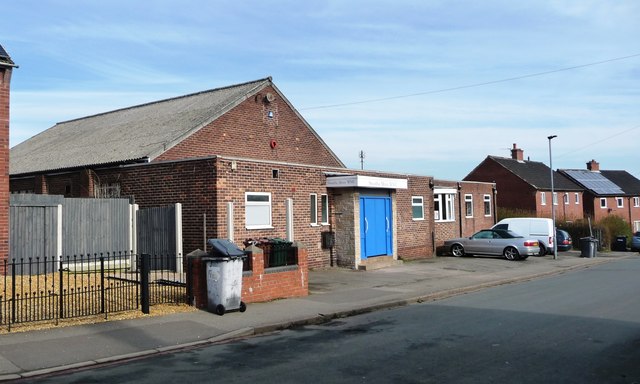
- (observational) Swaithe Main WMC, Worsbrough (photograph) — Geograph
Record created: 3 October 2026 · Last researched: 3 October 2026