 MineArchive
Peckfield Colliery explosion, 1896
At 7.15 on the morning of 30 April 1896 a candle fired gas from a small roof fall at Peckfield Colliery, Micklefield, and coal dust carried the explosion through the Beeston Bed workings. Sixty-three of the 105 men and boys in the pit died, most of them trapped by falls and poisoned by afterdamp, with nineteen of the twenty-three pit ponies.
| Date | 1896 |
|---|---|
| Mine | Peckfield Colliery |
| Region | West Yorkshire |
| Type | Explosion |
| Fatalities | 63 (63 men and boys of 105 in the pit, and 19 of 23 ponies. The churchyard memorial and its photographs' captions give 65.) |
| Context | During active mining |
Cause
Firedamp released by a slight roof fall in Goodall's Gate, 943 yards from the downcast shaft, ignited by a miner's candle.
Contributing factors
Men worked by tallow candles, only the undermanager and five deputies carrying safety lamps; dry coal dust raised by the first blast carried the flame through the mine, and two secondary explosions followed.
What happened
Peckfield, owned by Joseph Cliff and Sons, was reckoned a safe pit, though seven men had died there in nineteen years. Short-time working meant no coal was to be drawn on Thursday 30 April 1896, and the 105 men who went down were datallers and miners getting ahead for the next pay day. At 7.15 a.m., as they started work, gas escaping from a crack in the roof in Goodall's Gate was fired by a candle. Two men and their ponies died at the spot and four more as they ran. The dust lifted by the blast carried the flame south against the air, and it grew into a roaring flame in the main intake, tore through the stables and the office, where the undermanager William Radford died, and blew the cage into the headgear; the report was heard six miles away. Two secondary explosions followed. Twenty-four were killed by burns or blast; of the 81 left alive in the workings, only 42 reached the surface, the rest trapped by falls and overcome by afterdamp, their footprints in the dust showing the roads they had tried to escape by. The eleven men and boys in the lower Black Bed all got out: their deputy, Robert Henry Nevins, led them up a stone drift through the afterdamp.
Rescue & recovery
The three night deputies went down the No. 2 shaft at 8.30 a.m. but were stopped by a steam pipe blown across it; the manager Charles Houfton and Robert Routledge of Garforth Colliery arrived at 8.50, worked a cage past the obstruction and began bringing survivors out. Twenty-nine bodies were recovered by the Friday night and twenty-six on the Saturday, when William Naylor Whitaker was found alive, only to die that night in Leeds General Infirmary; the last four came out on 7, 12 and 14 May. A pony was found alive a fortnight after the explosion. The dead were laid out in the Miners' Institute.
Investigation & inquiry
Frank Wardell, HM Inspector of Mines, arrived that night and said he knew of no pit so badly damaged by an explosion. At the inquest on 20 May 1896 the jury found the explosion caused by gas and purely accidental, and blamed no one.
Legal & regulatory aftermath
Verdict of accidental death; no one blamed.
Changes to practice & legislation
Following the inquest the owners replaced candles with Routledge Newcastle safety lamps. The disaster coincided with the Coal Mines Regulation Act of 1896, which tightened owners' obligations to provide safety lamps.
Memorials & commemoration
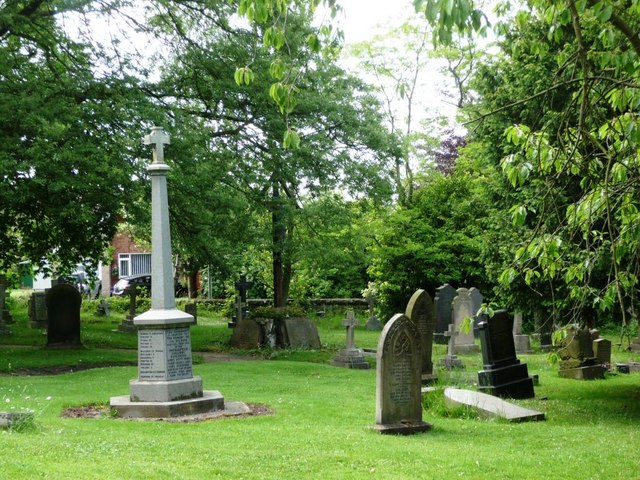
A memorial to the dead in St Mary's churchyard, Micklefield, with a plaque to the widows inside the church; plaques at the Bland's Arms (the relief fund's headquarters) and at the infants' school for the orphans; a marker on Pit Lane; and a memorial garden at Micklefield school with 63 decorated stones and gold horseshoes for the ponies. The relief fund, begun when J. C. Rhodes pinned a £5 note to a sheet of paper, raised £20,625, with £50 from Queen Victoria.
What's uncertain
Points where sources disagree or the record could not be settled; both accounts are kept. All open questions in the archive.
- The churchyard memorial is described as commemorating 65 men and boys who died at Peckfield Colliery on 30 April 1896. (disputed) 3
Recorded claims
Individual factual claims, each attached to the source(s) that support it below. Where sources disagree, both are kept.
- The explosion on 30 April 1896 killed 63 men and boys of the 105 in the pit, and 19 of 23 pit ponies. 1,2
- The churchyard memorial is described as commemorating 65 men and boys who died at Peckfield Colliery on 30 April 1896. (disputed) 3
- A slight roof fall in Goodall's Gate released firedamp that a miner's candle ignited at 7.15 a.m.; coal dust carried the explosion through the mine. 1,2
- On 20 May 1896 the inquest jury found the explosion caused by gas, purely accidental, with no blame attached to any person; the owners then issued Routledge Newcastle safety lamps. 1,2
- The relief fund raised £20,625, including £50 from Queen Victoria and £1,000 from the owners. 1,2
Related terminology
Mining terms this disaster is structurally linked to, with the nature of the relationship.
- Afterdamp (hazard involved)
Killed most of those trapped by falls. - Dataller (contextual relationship)
Datallers made up much of the reduced shift that day. - Deputy (contextual relationship)
Named 3 times in this record, first in the contributing factors: “Men worked by tallow candles, only the undermanager and five deputies carrying safety lamps; dry coal dust raised by the first blast…” - Naked Light (direct cause)
A tallow candle fired the gas. - Return Airway (contextual relationship)
Named in this record’s narrative: “…south against the air, and it grew into a roaring flame in the main intake, tore through the stables and the office, where the undermanager…”
Sources
- (secondary) Peckfield Colliery disaster — Wikipedia
- (secondary) 130 years on: the day the lights went out in Micklefield — East Side Story
- (observational) Memorial in Micklefield churchyard — Geograph (Christine Johnstone)
Record created: 21 September 2026 · Last researched: 21 September 2026