 MineArchive
Oaks Colliery explosion, 1866
Two explosions on successive days at Oaks Colliery killed 388 men and boys — 361 miners and 27 rescuers — and for nearly fifty years it was the worst mining disaster in English history.
| Date | 12-13 December 1866 |
|---|---|
| Mine | Oaks Colliery |
| Region | South Yorkshire |
| Primary type | Explosion |
| Associated types | Entrapment, Rescue |
| Fatalities | 388 (388: 361 miners and 27 rescuers, the figure given by Historic England in the list entry for the Barnsley Main pithead structures, which were listed partly for their association with this disaster. Most other accounts, including Wikipedia and the Northern Mine Research Society, give 361 as the whole toll and read it as already including 27 colliery employees and 23 volunteer rescuers killed in the second explosion; the Dearne heritage project gives 383; some later research suggests above 380, with an estimated 80 bodies never recovered. The figure here follows Historic England. Whichever reading is right, it remains the highest death toll of any disaster in England.) |
| Context | During active mining |
Cause
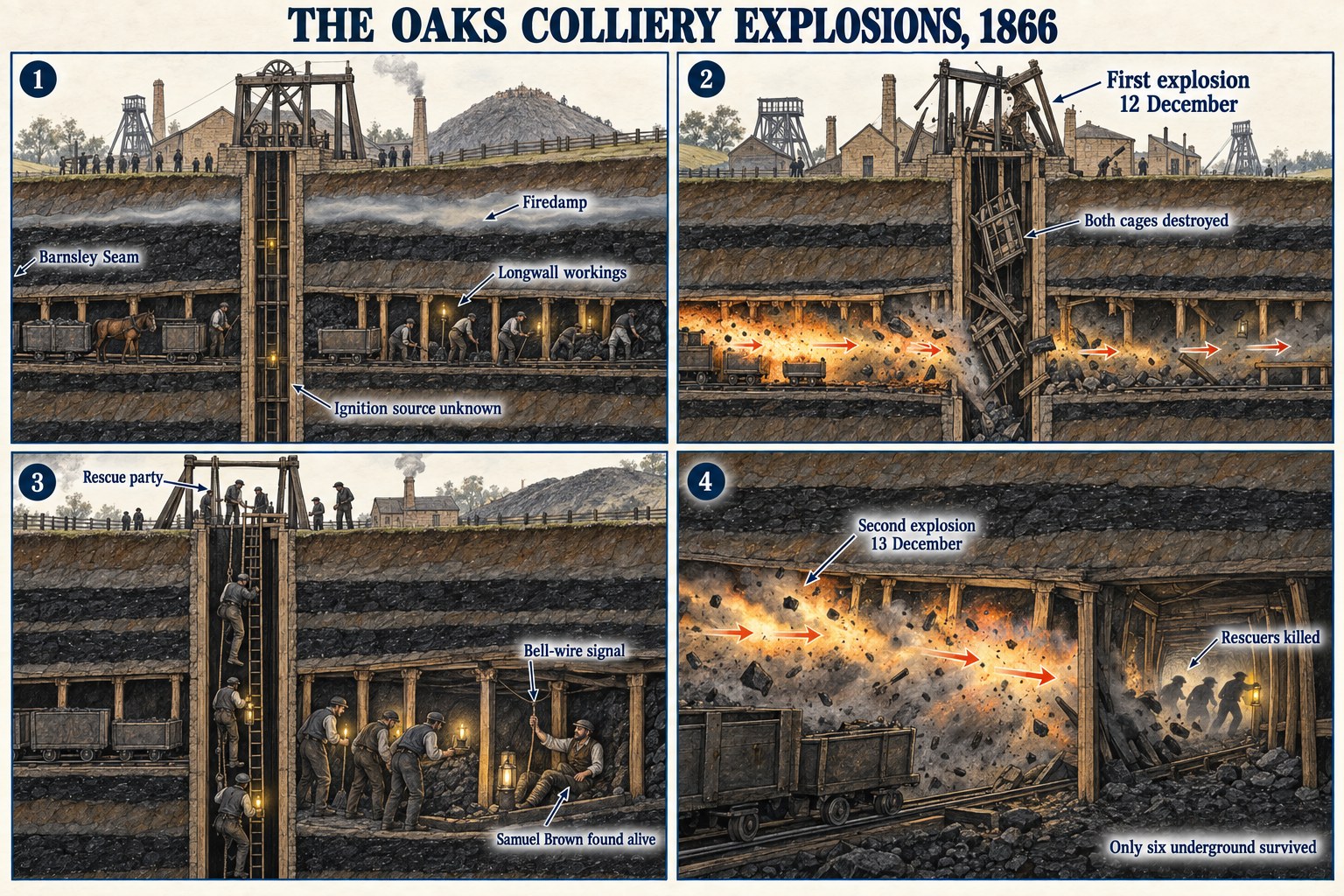
The inquest found the disaster was caused by an explosion of firedamp but could not establish conclusively how or where it was ignited. HM Inspector Joseph Dickenson attributed it to the longwall mining method used on the Barnsley Seam, which he considered inherently dangerous in this application.
Contributing factors
The longwall mining system in use at the colliery was identified by the government inspector as a specific contributing factor, alongside the scale of underground workings by 1866, some 450 acres served by around 60 miles of underground roadway.
What happened
At around 1:20pm on 12 December 1866, with less than an hour left in the shift, an explosion tore through the workings with such force that the surrounding neighbourhood reportedly shook for three miles around; both pit cages were destroyed, hampering escape and rescue alike. Of the 340 men and boys underground, only six ultimately survived. A rescue party descended the following day, 13 December, to search for survivors and recover bodies; a second explosion during this operation killed 27 colliery employees and 23 volunteer rescuers from neighbouring pits, among them the prominent mining engineer Parkin Jeffcock. Samuel Brown, found nearly 24 hours after the first explosion, was the last survivor recovered alive.
Rescue & recovery
Mining engineer Parkin Jeffcock led a rescue party into the workings on 13 December and was killed alongside 27 colliery employees and 22 other volunteers when a second explosion struck during the search; Samuel Brown was rescued alive after signalling via a bell wire, found by J. E. Mammatt and Mr Embleton.
Investigation & inquiry
A 13-day inquest could not conclusively establish how the firedamp was ignited. The coroner noted that the colliery had not been visited by a government inspector for some years. The jury recommended stricter government inspection of collieries but declined to make specific operational recommendations, holding that inspectors should investigate complaints rather than directly manage mines.
Legal & regulatory aftermath
Following the disaster the colliery's No. 1 shaft was filled and a new shaft sunk at Stair Foot, with compressed-air pumping used in efforts to reach the sealed workings; an estimated 80 bodies were never recovered.
Changes to practice & legislation
Although the 1872 Coal Mines Regulation Act eventually strengthened safety law, it followed only after twelve further colliery explosions elsewhere in Britain; a Royal Commission was established to examine colliery safety more broadly in the disaster's aftermath.
Memorials & commemoration
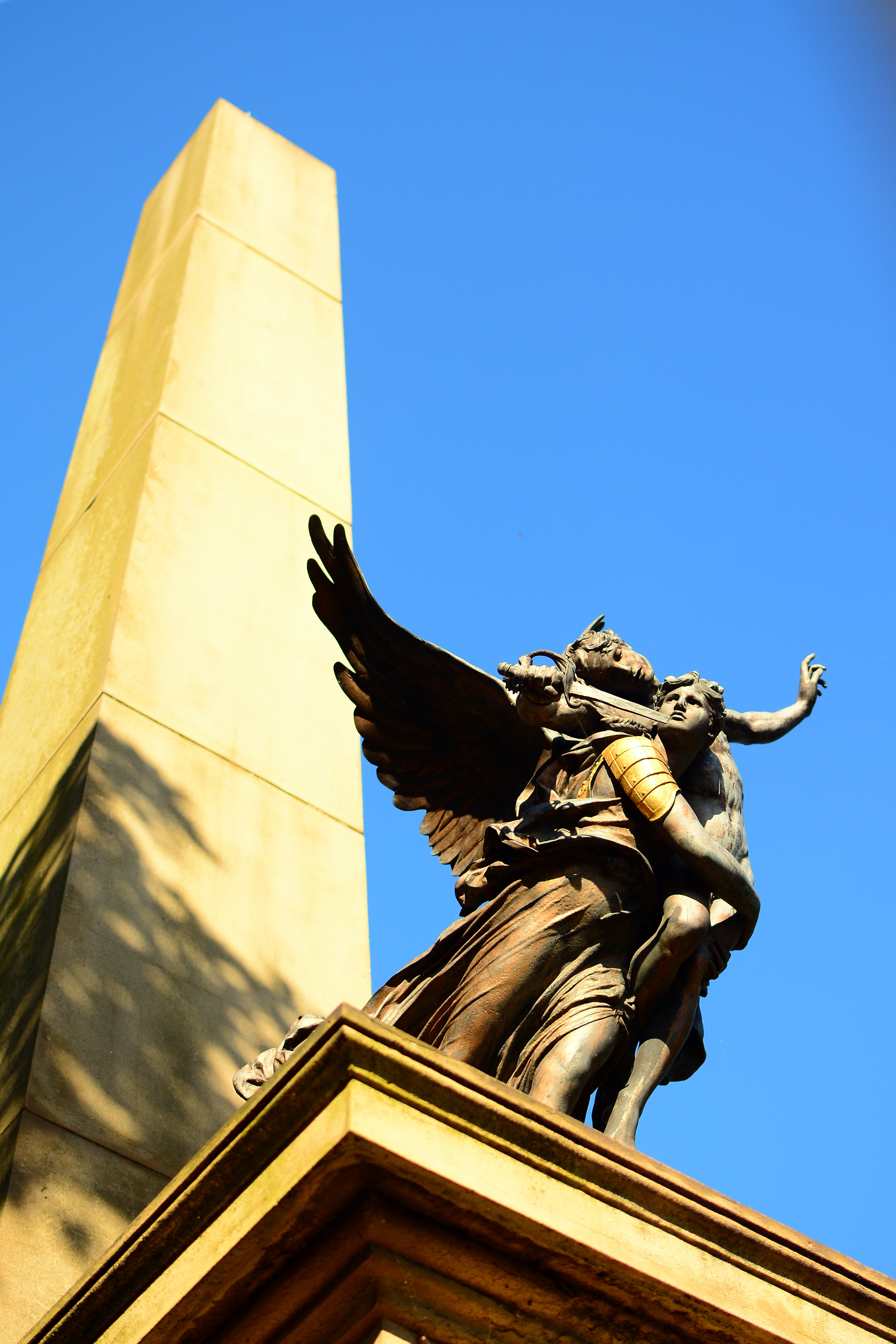
Three memorials commemorate the victims: an 1879 memorial in the graveyard at Ardsley, paid for by public subscription; an 1913 obelisk on Doncaster Road, Barnsley, designed by Wade and Turner with stonemason Peter Dalby, featuring a winged figure of Athena carrying a wounded warrior; and a 2016 sculpture by Graham Ibbeson in Barnsley town centre.
Recorded claims
Individual factual claims, each attached to the source(s) that support it below. Where sources disagree, both are kept.
- 361 people died in total: the great majority of the 340 men and boys underground during the first explosion on 12 December, plus 27 colliery employees and 23 volunteer rescuers killed in the second explosion on 13 December.
- Some later research suggests the true death toll may exceed 380, with an estimated 80 bodies never recovered from the sealed workings.
- Mining engineer Parkin Jeffcock led a rescue party into the workings on 13 December and was killed, along with 27 other colliery employees and 22 further volunteers, when a second explosion struck during the search.
- HM Inspector Joseph Dickenson attributed the disaster to the longwall mining method used on the Barnsley Seam, though the inquest could not conclusively establish how the firedamp was ignited.
Related terminology
Mining terms this disaster is structurally linked to, with the nature of the relationship.
- Cage (contextual relationship)
Named in this record’s narrative: “…neighbourhood reportedly shook for three miles around; both pit cages were destroyed, hampering escape and rescue alike. Of the 340 men…” - Coal (contextual relationship)
For nearly fifty years the worst mining disaster in Britain: 361 men and boys dead across two explosions on successive days, 23 of them volunteer rescuers killed in the second. - Colliery (contextual relationship)
Named 8 times in this record, first in the summary: “Two explosions on successive days at Oaks Colliery killed 361 men and boys, including 23 volunteer rescuers who died in…” - Firedamp (direct cause)
The inquest found the disaster was caused by an explosion of firedamp, though it could not establish conclusively how it was ignited. - Longwall (contributing factor)
HM Inspector Joseph Dickenson attributed the disaster in part to the longwall mining method used on the Barnsley Seam.
Sources
- (primary) Barnsley Main Colliery engine house and pithead structures, list entry 1413541 — Historic England
- (secondary) Oaks Colliery Explosions - Barnsley - 1866 — Northern Mine Research Society
- (secondary) Oaks explosion — Wikipedia
Record created: 23 August 2026 · Last researched: 9 September 2026