 MineArchive
Montagu View Pit disaster, 1925
| Date | 30 March 1925 |
|---|---|
| Mine | Montagu Colliery |
| Region | Tyne and Wear |
| Primary type | Flooding / Inundation |
| Associated types | Entrapment, Gas / Asphyxiation, Rescue |
| Fatalities | 38 (38 men and boys. The Northern Mine Research Society lists 35 by name; all 38 lived within two and a half miles of the pit, half of them in Scotswood.) |
| Context | During active mining (A working shift in the Brockwell seam of the View Pit, 1,689 yards from the shaft bottom by the roadways.) |
An inrush at the View Pit of Montagu Colliery, Scotswood, on the morning of 30 March 1925. Three shots fired to straighten a coal face broke the last six inches of coal holding back the flooded workings of the Paradise Pit, abandoned in 1848, and water under about 80 pounds per square inch filled the workings. Of the 148 men and boys in the seam, 38 died: seventeen suffocated by blackdamp before the water reached them, the rest drowned. The public inquiry found that plans of the old workings existed but were not in the colliery's hands, and its recommendations reshaped the law on abandoned-mine plans.
Cause
Three shots were fired at about 9.30 a.m. in a 'jud' — a projection of unworked coal about six feet wide and three and a half feet deep — at the face of Robson's Bord Flat in the Brockwell seam. The inquiry found beyond doubt that the shots broke the barrier to the flooded Brockwell workings of the old Paradise Pit, leaving about six inches of coal holding water at an estimated 80 pounds per square inch. That barrier held for roughly half an hour.
Contributing factors
The Montagu workings had come within 94 yards of the leasehold boundary and were required to leave a 40-yard barrier on their own side, so 54 yards remained workable. The old Paradise workings, abandoned in 1848 when the coal became unsaleable, crossed the boundary line, but neither the 1883 Benson lease nor the 1884 Carr lease mentioned them. The inquiry established that no one in the mine knew of the danger. Plans and tracings of the old workings did exist — in the hands of the royalty owner's mining engineers and of the lessees of the neighbouring colliery, which had marked its own plan in 1911 after meeting water near the Charlotte Pit — and letters of 1887 between the mining engineer William Armstrong and Thomas Walter Benson, found afterwards in Benson's private desk, twice raised the old workings and once advised precautionary boreholes. None of it was in the possession of Montagu's lessees. Statutes of 1872, 1887 and 1896 required abandoned-mine plans to be preserved but opened them only to inspectors and licence holders.
What happened
Bord and pillar work had been going on eastward in Robson's Bord Flat. The hewers Fenton and Perkins stopped at 11 p.m. on Friday 27 March, leaving the jud as the next piece to be worked; the place was reasonably dry and no one had complained of water. Joseph Robson, the deputy in charge, went down about 3.30 a.m. on the Monday and inspected at about 4.45 a.m., ordering the weekend's small accumulations of water to be cleared; his report — recovered eight months later, still legible after all that time in water — recorded no gas, good ventilation and a sound roof. 107 men and 41 boys were working the Brockwell seam that morning. Matthew Errington and William Guthrie got the deputy's permission to work with Fenton and Perkins and found the jud already drilled with two shot holes, with a third in the face beside it. Robson charged the three shots at about 9.30 a.m.; they brought down six or seven tubs of coal and straightened the face. About 9.45 a.m. a putter, James Tracy, brought Robson a message that Errington thought he had 'holed', and Robson returned to find a trickle of water coming through the middle of the seam. Soon after Tracy left there was a bang. Robson sent his son and Tracy to run, turned into the bord, and five yards on saw water filling the tunnel and put out his lamp; he ran after his son, who coupled up tubs, and a pony drew them and two drivers to the main road. The water crossed the Irish ropeway and the travelling road into the lower workings. Lads on the ropeway were able to shout a warning, and a depression called the swelly filled to the roof, which held the flood back from the inner workings for a time. Most of those who escaped waded out through several feet of water; seventeen were trapped in the 4th Headway, where their bodies were found together, in attitudes suggesting they had been suffocated by blackdamp before the water reached them. Thirteen more were recovered from the lower districts, where they drowned in the first minutes. The eight men working closest to the inrush in Robson's Bord Flat drowned almost at once. A miner's daughter, Alma Wheeler of Parmontley Street, later recalled that her father Bill 'never ran so fast in his life', grabbing boys as he went, and that the pit ponies, sensing fresh air, led men out in the darkness.
Rescue & recovery
Joseph Robson, having got his son and the drivers away, went into the Dip Hitch Flat workings and brought out five men. Sam Evans, the back overman, went back through the filling swelly towards the missing men and could not return as the water rose; he was among the dead. Cultured North East records that Evans and the deputies William Johnson and William Thompson were awarded places on the Carnegie Roll of Honour for heroism, Evans having had the chance to escape and gone back to warn others. Contemporary Chronicle reports single out the Rev Charles Hudson of St Margaret's, Scotswood, who went down the pit to help whenever he could, and a Nurse Walker, known as 'the Lady with the Lamp', who was first to the pit and asked to go down on the day of the flood. The pumps could not clear the water quickly. Seven weeks passed before the first body was reached, and only about half had been recovered by the mass funeral on 24 May 1925; eight more funerals followed. Mothers and wives identified men by odd buttons or patches sewn on their trousers, and a few were never identified. The brothers George and Matthew Hetherington of Bell's Close, working together at the face, were found on 19 October with their arms around each other. Accounts of the end of the recovery differ: the Tyne and Wear Historic Environment Record says five months, Cultured North East that the last funeral came five months after the mass funeral, and the Chronicle that the last body was not recovered until January 1926. Thirteen pit ponies also died. The National Archives holds a sketch plan of the positions of the bodies by Francis Johnston.
Investigation & inquiry
The public inquiry sat at the Assize Court in the Moot Hall, Newcastle, on 26 and 27 January 1926 under the Rt Hon. Hugh Pattison Macmillan KC, with Henry Walker CBE, HM Chief Inspector of Mines, as technical assessor. The Mines Department was represented by the divisional inspector T. Greenland Davies and the senior inspector H. T. Foster; William Benson and Son Ltd by E. A. Mitchell-Innes KC; the royalty owners by W. W. Gibson; the Institution of Mining Engineers by Colonel W. Blackett; the Miners' Federation of Great Britain by Herbert Smith and W. P. Richardson; the Northumberland Miners' Mutual Confident Association by W. Stanker; the Northern Colliery Officials' Mutual Aid Association by R. Nuttall; and the Montagu Miners' Lodge by John Mackay. The inquiry fixed the cause on the shots breaking the jud and found that no one underground knew of the danger; Mr Carr's recollection that his late father had once remarked that borings should be made in that part of the workings was treated as hearsay and given little weight. On the afternoon of the disaster a Mr Young of William Cochran Carr Ltd brought the neighbouring company's plan to Benson's office, and a tracing showing the workings on both sides of the boundary followed a day or two later; together they left no doubt where the water had come from. Macmillan's report is Command Paper 2607.
Legal & regulatory aftermath
Macmillan's central finding was about information rather than blame: knowledge of the old workings existed at the time of the accident, with the lessor's mining engineers and the lessees of the adjoining colliery, but not with the lessees of Montagu, and the statutes preserving abandoned-mine plans gave access only to inspectors and licensees.
Changes to practice & legislation
The report recommended: a statutory duty on the owners or lessees of adjoining working mines to notify each other when their workings came within a prescribed distance of the mutual boundary; a mutual right and duty to examine and copy each other's working plans, and any plans of abandoned workings they held, within 100 yards of that boundary; a duty on every working mine to find out whether plans of abandoned workings in or around its area were held by neighbouring owners or the Mines Department, and to copy the relevant parts; a duty on lessors to disclose and allow copying of any such plans they held; that the working plan every mine had to keep under the Coal Mines Act 1911 should show all workings, going or abandoned, so far as practicable; that the Department press on with recovering plans of workings abandoned before the 1872 Act; that plans it received be registered, catalogued and classified geologically for ready access; and that access be given not only to those under a statutory duty to inspect but to anyone able to satisfy the Department of a legitimate interest. More than a century earlier, after deaths from an inrush at East Denton Colliery, the viewer William Thomas had argued publicly that plans of abandoned workings should be lodged with the Justices of the Peace.
Memorials & commemoration
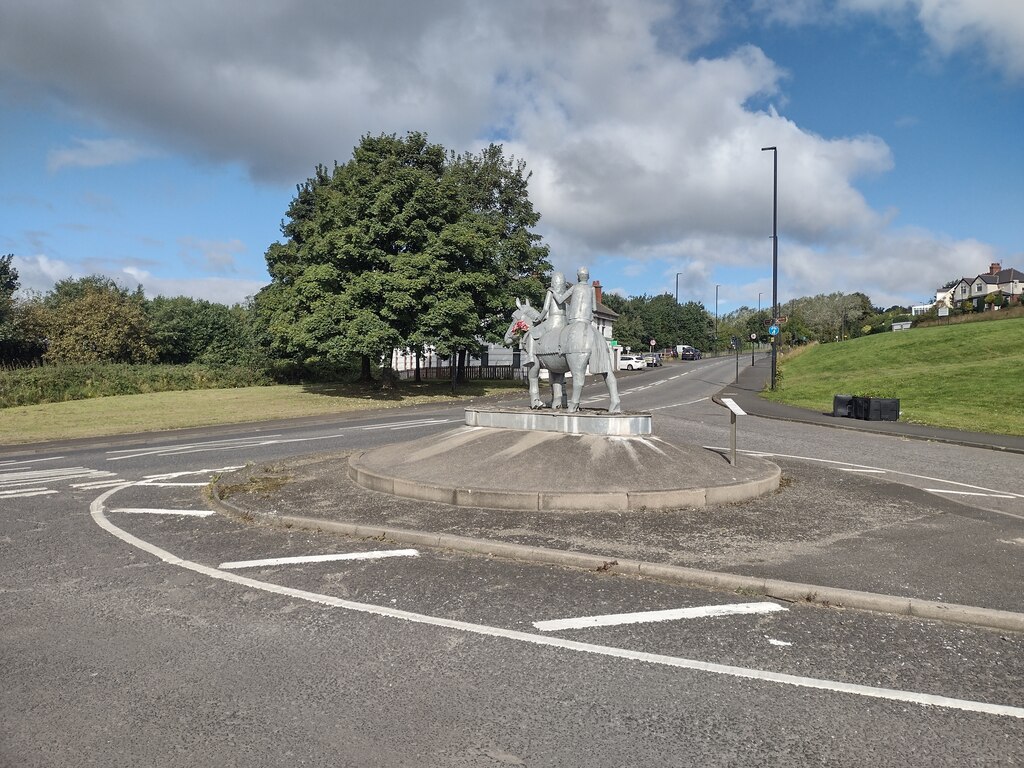
An area of Elswick Cemetery was set aside for the coffins to be buried together, and a covered cross by William Curry of Birtley was unveiled there on 6 June 1926. 'Yesterday, Today, Forever', a steel sculpture of a pitman, a pony and two children, was installed in 2012 at the junction of Fowberry Road and Denton Road. For the centenary in 2025 a memorial service was held at St Margaret's, Scotswood, on 29 March with displays of photographs, maps, documents, paintings, poetry and pottery models, and Benwell's St James Heritage and Environment Group and the Newcastle Mining Institute published a booklet, The Montagu Pit Disaster.
People
35 of the 38 who died are named in the archive; the rest are not named in the sources read for this record.
- Christopher Batey · victim, from 1925 — Named among the dead by NMRS: 9 Providence Terrace, Scotswood.
- Thomas Batey · victim, from 1925 — Named among the dead by NMRS: 24 Prospect Terrace, Scotswood.
- Isaac Both · victim, from 1925 — Named among the dead by NMRS: 898 Scotswood Road, Scotswood.
- Ralph Carr · victim, from 1925 — Named among the dead by NMRS: 2 Chapel Terrace, Scotswood.
- Alfred Dent · victim, from 1925 — Named among the dead by NMRS: 232 Whitfield Road, Scotswood.
- D. G. Dixon · victim, from 1925 — Named among the dead by NMRS: 58 Joan Street, Benwell.
- Matthew Erington · victim, from 1925 — Named among the dead by NMRS: the Pit Yard, Delaval; the hewer who sent word that he thought he had 'holed'.
- Sam Evans · victim, from 1925 — The back overman, who died going back through the flooding swelly towards the missing men.
- Sam Evans · rescuer, from 1925 — Warned others and pointed them to safety when he could have escaped; awarded a place on the Carnegie Roll of Honour (Cultured North East).
- John Fitzpatrick · victim, from 1925 — Named among the dead by NMRS: 71 Norwich Street, Delaval.
- William Fowler · victim, from 1925 — Named among the dead by NMRS: 5 Prospect Terrace, Scotswood.
- Charles Gray · victim, from 1925 — Named among the dead by NMRS: 38 Aline Street, Benwell.
- William Guthrie · victim, from 1925 — Named among the dead by NMRS: Chapel Terrace, Scotswood; one of the two men who got permission to work in the flat that morning.
- William Halliday · victim, from 1925 — Named among the dead by NMRS: 2 Swinburn Terrace, Bell's Close.
- Robert Havelock · victim, from 1925 — Named among the dead by NMRS: 10 Suntet Street, Delaval.
- George Hetherington · victim, from 1925 — Named among the dead by NMRS: 2 Front Street, Bell's Close; found with his brother on 19 October.
- Matt Hetherington · victim, from 1925 — Named among the dead by NMRS: St George Terrace, Bell's Close; found with his brother on 19 October.
- Robert Hislop · victim, from 1925 — Named among the dead by NMRS: Pumping Engine, Scotswood.
- Charles Hudson · rescuer, from 1925 — Vicar of St Margaret's, Scotswood, who went down the pit to help at every opportunity, per Chronicle reports.
- Edward Jackson · victim, from 1925 — Named among the dead by NMRS: 15 Norwich Street, Delaval.
- John Lea · victim, from 1925 — Named among the dead by NMRS: 45 Blackett Terrace, Scotswood.
- Alex Learmouth · victim, from 1925 — Named among the dead by NMRS: 55 Norwich Street, Delaval.
- Thomas Letcham Jnr · victim, from 1925 — Named among the dead by NMRS: 100 Norwich Street, Delaval; Cultured North East gives the youngest of the dead as Thomas Latcham, aged 14, five weeks out of school.
- Wiliam Lyons · victim, from 1925 — Named among the dead by NMRS: 39 Norwich Street, Delaval.
- Hugh Pattison Macmillan · official, from 1926 — Conducted the public inquiry at the Moot Hall in January 1926 and wrote its report (Cmd 2607).
- John Martin Snr · victim, from 1925 — Named among the dead by NMRS: 16 Ridley Terrace, Scotswood.
- John Murthwaite · victim, from 1925 — Named among the dead by NMRS: 65 Aline Street, Benwell.
- James Nixon · victim, from 1925 — Named among the dead by NMRS: 25 Giuehouse Lane, Elswick.
- Joseph Nixon · victim, from 1925 — Named among the dead by NMRS: 9 Danskin Place, Scotswood.
- James Robson · survivor, from 1925 — Joseph Robson's son; coupled up tubs and was drawn out to the main road by a pony with two drivers.
- Joseph Robson · survivor, from 1925 — The deputy in charge of the district: inspected the flat that morning, charged the three shots, and escaped ahead of the water.
- Joseph Robson · rescuer, from 1925 — Went into the Dip Hitch Flat workings after the inrush and brought out five men.
- Richard Rodgers · victim, from 1925 — Named among the dead by NMRS: 212 Whitfield Road, Scotswood.
- John Salmon · victim, from 1925 — Named among the dead by NMRS: 26 High Street, Benwell; Cultured North East gives his age as 17.
- Charles Simpson · victim, from 1925 — Named among the dead by NMRS: 43 Providence Terrace, Scotswood.
- James Steel · victim, from 1925 — Named among the dead by NMRS: Pumping Engine, Scotswood.
- John Thompson · victim, from 1925 — Named among the dead by NMRS: 69 Deval Road, Benwell.
- Robert Thompson · victim, from 1925 — Named among the dead by NMRS: 77 St Margaret's Road, Scotswood.
- William Thompson · victim, from 1925 — Named among the dead by NMRS: 80 Shaftoe Street, Scotswood; named by Cultured North East as a deputy on the Carnegie Roll of Honour.
- James Tracy · survivor, from 1925 — The putter who carried Errington's message to the deputy and was sent to run when the water broke in.
- John Thoms Trewicks · victim, from 1925 — Named among the dead by NMRS: 9 Cabbon Street, Elswick.
- William Trewicks · victim, from 1925 — Named among the dead by NMRS: 18 Boat House Street, Delaval.
- Henry Walker · inspector, from 1926 — HM Chief Inspector of Mines, technical assessor to the 1926 inquiry.
- Nurse Walker · rescuer, from 1925 — Called 'the Lady with the Lamp': first to the pit and asked to go down on the day of the flood.
- Bill Wheeler · survivor, from 1925 — Escaped the inrush, grabbing young lads as he went, as his daughter Alma Wheeler of Parmontley Street later recalled.
What's uncertain
Points where sources disagree or the record could not be settled; both accounts are kept. All open questions in the archive.
- Accounts of the recovery differ: the Tyne and Wear HER says the first body took seven weeks and all of them five months; Cultured North East says about half had been recovered by the funeral of 24 May 1925, with eight more funerals and the last five months later; the Chronicle says the last body was not recovered until January 1926. (disputed) 3,2,4
- Cultured North East says three of the dead were awarded places on the Carnegie Roll of Honour for heroism: the overman Sam Evans, who could have escaped but went back to warn others, and the deputies William Johnson and William Thompson. NMRS's list of the dead includes a William Thompson but no William Johnson. (disputed) 1,2
Recorded claims
Individual factual claims, each attached to the source(s) that support it below. Where sources disagree, both are kept.
- The inquiry found that three shots fired in a jud of unworked coal broke the barrier to the flooded Paradise Pit workings, leaving about six inches of coal holding water at an estimated 80 pounds per square inch, which held for about half an hour. 1
- 107 men and 41 boys were working the Brockwell seam when the water broke in; 38 died. 1,2
- Seventeen were found together in the 4th Headway in attitudes suggesting they had been suffocated by blackdamp before the water reached them; thirteen were recovered from the lower districts, where they drowned, and the eight working closest to the inrush drowned almost at once. 1
- Plans and tracings of the abandoned Paradise workings were held by the royalty owner's mining engineers and by the neighbouring lessees, and 1887 letters found in Thomas Walter Benson's desk had advised precautionary boreholes, but none of it was in the possession of Montagu's lessees. 1
- The inquiry sat at the Moot Hall, Newcastle, on 26 and 27 January 1926 under Hugh Pattison Macmillan KC, with HM Chief Inspector of Mines Henry Walker as technical assessor; the report is Command Paper 2607. 1
- Accounts of the recovery differ: the Tyne and Wear HER says the first body took seven weeks and all of them five months; Cultured North East says about half had been recovered by the funeral of 24 May 1925, with eight more funerals and the last five months later; the Chronicle says the last body was not recovered until January 1926. (disputed) 3,2,4
- The mass funeral on 24 May 1925 went in procession from the pithead to Elswick Cemetery, watched by thousands, with an area set aside for the coffins to be buried together; thirteen pit ponies also died. 3,2
- Cultured North East says three of the dead were awarded places on the Carnegie Roll of Honour for heroism: the overman Sam Evans, who could have escaped but went back to warn others, and the deputies William Johnson and William Thompson. NMRS's list of the dead includes a William Thompson but no William Johnson. (disputed) 1,2
- The brothers George and Matthew Hetherington of Bell's Close, working together at the coalface, were the last to be recovered, found on 19 October with their arms around each other. 2
- Cultured North East records the youngest killed as Thomas Latcham, aged 14, who had left school five weeks earlier, and also names John Salmon of Benwell, aged 17. 2
- A covered cross by William Curry of Birtley was unveiled at Elswick Cemetery on 6 June 1926, and the steel sculpture 'Yesterday, Today, Forever' — a pitman, a pony and two children — was installed in 2012 at Fowberry Road and Denton Road. 5,3
- A memorial service was held at St Margaret's, Scotswood, on 29 March 2025, and St James Heritage and Environment Group and the Newcastle Mining Institute published a booklet, The Montagu Pit Disaster. 2
Related terminology
Mining terms this disaster is structurally linked to, with the nature of the relationship.
- Deputy (contextual relationship)
Joseph Robson, the deputy in charge of the district, inspected the flat that morning, charged the shots and brought five men out of the Dip Hitch Flat. - Hewer (contextual relationship)
Fenton and Perkins had been hewing in the flat until 11 p.m. on the Friday, leaving the jud to be worked next. - Inrush (direct cause)
Water broke in from the Brockwell workings of the Paradise Pit, abandoned and flooded since 1848. - Overman (rescue/recovery concept)
Sam Evans, the back overman, died going back through the flooding swelly towards the missing men. - Putter (contextual relationship)
The putter James Tracy carried Errington's message that he thought he had 'holed'. - Shot-firing (direct cause)
Three shots fired to straighten the face broke the last six inches of coal holding the water back.
Sources
- (secondary) Montagu Colliery Inrush – Scotswood – 1925 — Northern Mine Research Society
- (secondary) Pit disaster centenary to be commemorated (Tony Henderson, 28 March 2025) — Cultured North East
- (primary) Elswick Cemetery, Montague Pit Disaster Memorial (HER 5047) — Tyne and Wear Historic Environment Record (Sitelines)
- (secondary) Montagu pit disaster: How 38 men and boys died in a Tyneside tragedy (ChronicleLive, 30 March 2015) — ChronicleLive (reposted by Andy Jehring)
- (observational) Yesterday, Today, Forever in Denton Burn — Fabulous North
- (secondary) Montagu Main Colliery (Durham Mining Museum) — Durham Mining Museum
Record created: 17 September 2026 · Last researched: 17 September 2026