 MineArchive
Hamstead Colliery fire, 1908
A fire at the pit bottom staging of Hamstead Colliery, near Great Barr, killed 26 men on 4 March 1908, including a rescuer, after poisonous fumes filled the workings before most of the underground shift could escape.
| Date | 4 March 1908 |
|---|---|
| Mine | Hamstead Colliery |
| Region | West Midlands |
| Type | Fire |
| Fatalities | 26 (Of 31 men underground when the fire broke out, only 6 escaped before fumes overwhelmed the workings; 25 miners and one rescuer, John Welsby of the Altofts colliery rescue team, died. Recovery of all the bodies took a week. Named victims included two deputies, three stallmen, several loaders, drivers and haulage men, and a 17-year-old timekeeper, John Hodgkins; three members of the Summerfield family and Joseph Titley were among those working the north side when the fire broke out.) |
| Context | During active mining |
Cause
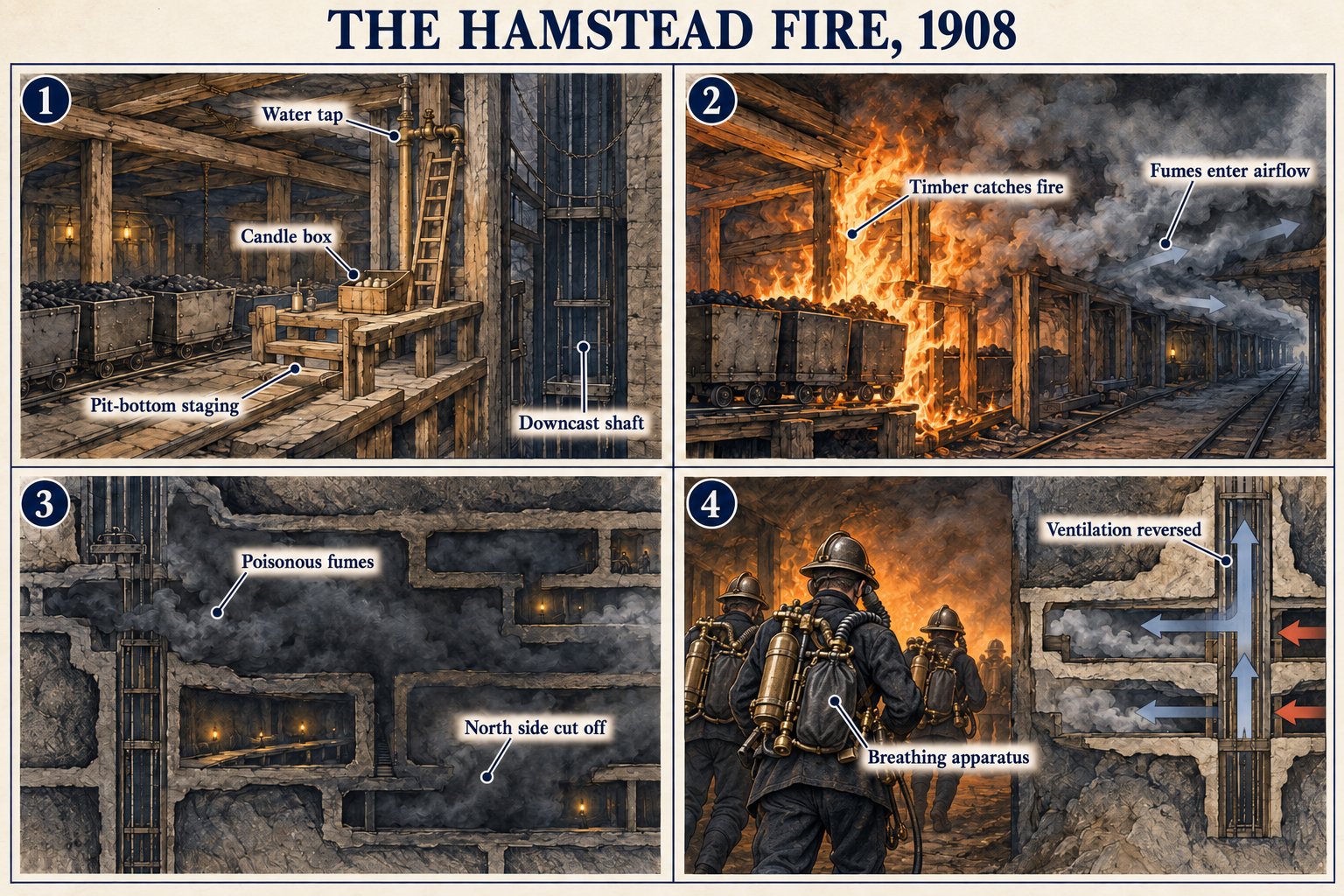
The fire began around 5-5.30am at the pit bottom staging on the south side, near the downcast shaft, apparently ignited from candles kept in a wooden box, though the precise mechanism was never conclusively established; Inspector Redmayne noted it was 'greatly to be regretted' that the water pipe needed to fight it was not more easily reached, requiring a ladder to access the tap.
What happened
The fire spread rapidly through coal tubs and wooden pit-bottom staging before racing along connecting roadways via the ventilation system. Of the 31 men underground, 6 escaped before poisonous fumes filled the workings; eleven men working the north side may have been unable to pass frightened horses stabled in their path. Rescue teams from Hamstead itself, and from Tankersley and Altofts in Yorkshire, made repeated attempts over the following days using Weg and Draeger breathing apparatus, finding two horses still alive in the Rock stables but no surviving miners; the intense heat and smoke eventually forced rescuers to reverse the ventilation system rather than continue. It took a week for the mine to clear of fumes before recovery could be completed: 14 bodies were recovered on 11 March and 6 more the following day.
Rescue & recovery
Rescuer John Welsby, of the Altofts colliery rescue team, collapsed from heat exhaustion some 600 yards from the shaft bottom while searching the return airways and died on 5 March; he was posthumously awarded the King Edward VII Medal, with James Hopwood, James Whittingham and James Cranswick also receiving Silver Medals for their part in the rescue.
Investigation & inquiry
Professor Redmayne of Birmingham University was appointed by the Home Secretary to conduct a formal investigation, confirmed in Parliament on 31 March 1908 following a question from Dr. Hazel MP. Redmayne's inquiry identified poor access to firefighting water, inadequate means to reverse the ventilation system quickly, the stables' distant placement from the shaft bottoms, and a telephone system that had been out of order shortly before the fire as contributing factors, and noted a second-hand fan installed in 1886 had already needed shaft replacements within three years.
Memorials & commemoration
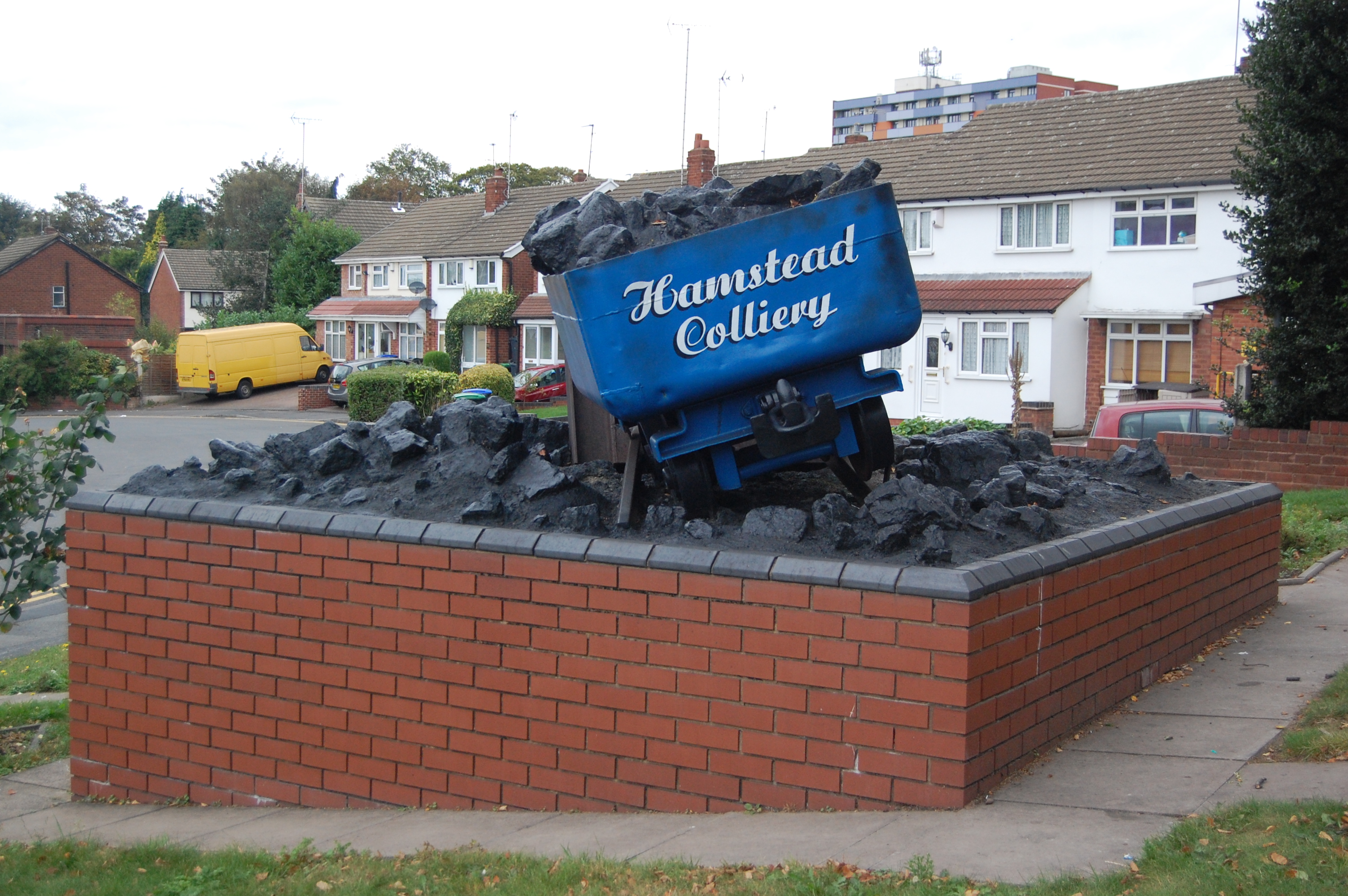
A memorial to the 26 dead — a derailed tramway wagon full of coal with a buffer-stop and commemorative plaques — was erected by the Hamstead Miners Memorial Trust in 2008, the disaster's centenary, near the former pithead at the junction of Hamstead Road and Old Walsall Road.
Recorded claims
Individual factual claims, each attached to the source(s) that support it below. Where sources disagree, both are kept.
- A fire at the pit bottom staging, apparently ignited from a candle box, killed 26 of the 31 men underground on 4 March 1908; only 6 escaped before fumes filled the workings. 1,2
- Rescue teams from Hamstead, Tankersley and Altofts attempted repeated descents; Altofts rescuer John Welsby collapsed from heat exhaustion and died on 5 March, later awarded the King Edward VII Medal posthumously. 2
- Professor Redmayne of Birmingham University was appointed by the Home Secretary to investigate, confirmed in a Parliamentary answer on 31 March 1908; his inquiry identified poor water access, inadequate ventilation reversal, and stable placement as contributing factors. 3
Related terminology
Mining terms this disaster is structurally linked to, with the nature of the relationship.
- Breathing Apparatus (contextual relationship)
Named in this record’s narrative: “…made repeated attempts over the following days using Weg and Draeger breathing apparatus, finding two horses still alive in the Rock stables but no surviving…” - Pipe Vein (contextual relationship)
Named in this record’s cause: “…Redmayne noted it was 'greatly to be regretted' that the water pipe needed to fight it was not more easily reached, requiring a ladder…” - Pithead (contextual relationship)
Named in this record’s memorials: “…Memorial Trust in 2008, the disaster's centenary, near the former pithead at the junction of Hamstead Road and Old Walsall Road.” - Return Airway (contextual relationship)
Named in this record’s rescue and recovery: “…exhaustion some 600 yards from the shaft bottom while searching the return airways and died on 5 March; he was posthumously awarded the King Edward VII…” - Tub (contextual relationship)
Named in this record’s narrative: “The fire spread rapidly through coal tubs and wooden pit-bottom staging before racing along connecting…”
Sources
- (secondary) Hamstead Colliery — Wikipedia
- (primary) Hamstead Colliery. 1908. 26 Killed (including 1 rescue man). — Durham Mining Museum
- (primary) Hamstead Colliery Disaster (Hansard, 31 March 1908) — UK Parliament, House of Commons (Historic Hansard)
- (secondary) Hamstead Colliery Fire - Great Barr - 1908 — Northern Mine Research Society
Record created: 27 August 2026 · Last researched: 27 August 2026