 MineArchive
Gethin Colliery explosion, 1862
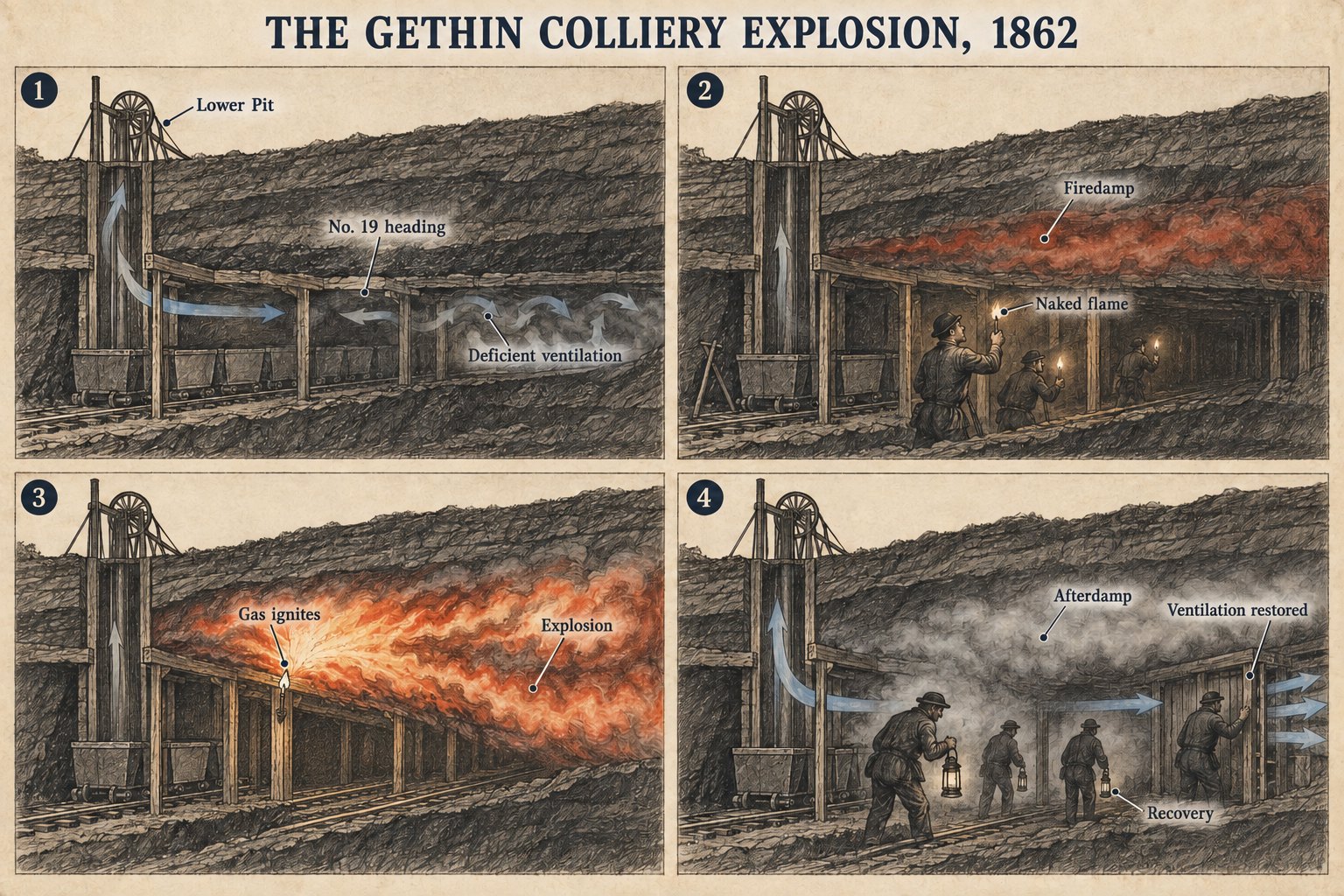
Gas ignited at a naked flame in the No. 19 heading of Gethin's Lower pit on 19 February 1862, killing 47 men and boys. The inquest found the ventilation deficient and returned a verdict of manslaughter against the manager; a grand jury then found no case to answer.
| Date | 19 February 1862 |
|---|---|
| Mine | Gethin Colliery |
| Region | Merthyr Tydfil |
| Primary type | Explosion |
| Associated types | Gas / Asphyxiation |
| Fatalities | 47 (Forty-six were recovered from the mine and one more died the following morning. Death was by suffocation in the afterdamp and by burns from the blast.) |
| Context | During active mining (An explosion in the Lower pit of a works colliery supplying the Cyfarthfa furnaces.) |
Cause
Ignition of accumulated gas at a naked flame in the No. 19 heading.
Contributing factors
The inquest found the pit's ventilation 'deficient in quantity, badly arranged, and liable to frequent interruption'. Naked lights were in general use, safety lamps being issued only to men working in stalls where gas had already been found.
What happened
Gethin was the first Merthyr colliery to suffer a serious disaster, and it did so as the district's pits were being driven deeper than the old levels and needed better gas management than they were getting. On 19 February 1862 gas that had gathered in the No. 19 heading of the Lower pit met a naked flame. Forty-six men and boys were brought out dead; a forty-seventh died the next morning. Those who were not burned by the blast were suffocated by the afterdamp behind it. Around 800 people worked the colliery's six pits at the time.
Rescue & recovery
Recovery of the bodies from the affected heading, hampered by afterdamp.
Investigation & inquiry
The inquest ran for nine days. It found the ventilation deficient in quantity, badly arranged and liable to frequent interruption, and identified the irresponsible use of naked lights as a root cause alongside the firedamp itself. The jury returned a verdict of manslaughter against John Moody, the general manager, holding that he had disregarded safety regulations and allowed his officers to do the same. Moody was bailed to appear at the Assizes, where the grand jury found 'no true bill' — no case to answer — and he was freed without restriction.
Changes to practice & legislation
The case is a clear instance of the gap, in this period, between what a coroner's jury was willing to find against colliery management and what the criminal courts would actually try.
Recorded claims
Individual factual claims, each attached to the source(s) that support it below. Where sources disagree, both are kept.
- The explosion occurred in the No. 19 heading and was caused by gas igniting at a naked flame. 1
- Forty-seven men and boys died — 46 recovered from the mine and one who died the following morning — from suffocation by afterdamp and burns. 1
- The inquest found the ventilation 'deficient in quantity, badly arranged, and liable to frequent interruption' and returned a verdict of manslaughter against the general manager, John Moody. 1
- A grand jury at the Assizes found 'no true bill' and Moody was freed without restriction. 1,2
Related terminology
Mining terms this disaster is structurally linked to, with the nature of the relationship.
- Afterdamp (hazard involved)
Men not killed by the blast were suffocated by the afterdamp behind it. - Firedamp (direct cause)
Gas accumulated in the No. 19 heading and was ignited by a naked flame. - Naked Light (contextual relationship)
Named 3 times in this record, first in the summary: “Gas ignited at a naked flame in the No. 19 heading of Gethin's Lower pit on 19 February 1862,…” - Safety Lamp (contributing factor)
Naked lights were in general use; safety lamps were issued only where gas had already been found. - Stall (contextual relationship)
Named in this record’s contributing factors: “…in general use, safety lamps being issued only to men working in stalls where gas had already been found.”
Sources
- (primary) Gethin Colliery Explosion, Merthyr, 1862 — Northern Mine Research Society
- (secondary) The Gethin Pit Explosion, 1862 — Merthyr Tydfil's History and Culture
- (secondary) Gethin Colliery, Abercanaid — Welsh Coal Mines
Record created: 24 August 2026 · Last researched: 24 August 2026