 MineArchive
Ferndale Colliery explosion, 1869
A second major explosion at Ferndale Colliery, in the fiery Four Foot Seam, killed 53 men and boys on 10 June 1869, less than two years after the pit's 1867 disaster.
| Date | 10 June 1869 |
|---|---|
| Mine | Ferndale Collieries |
| Region | Rhondda Cynon Taf |
| Type | Explosion |
| Fatalities | 53 (The dead included several young 'doorboys' aged 13 to 14.) |
| Context | During active mining |
Cause
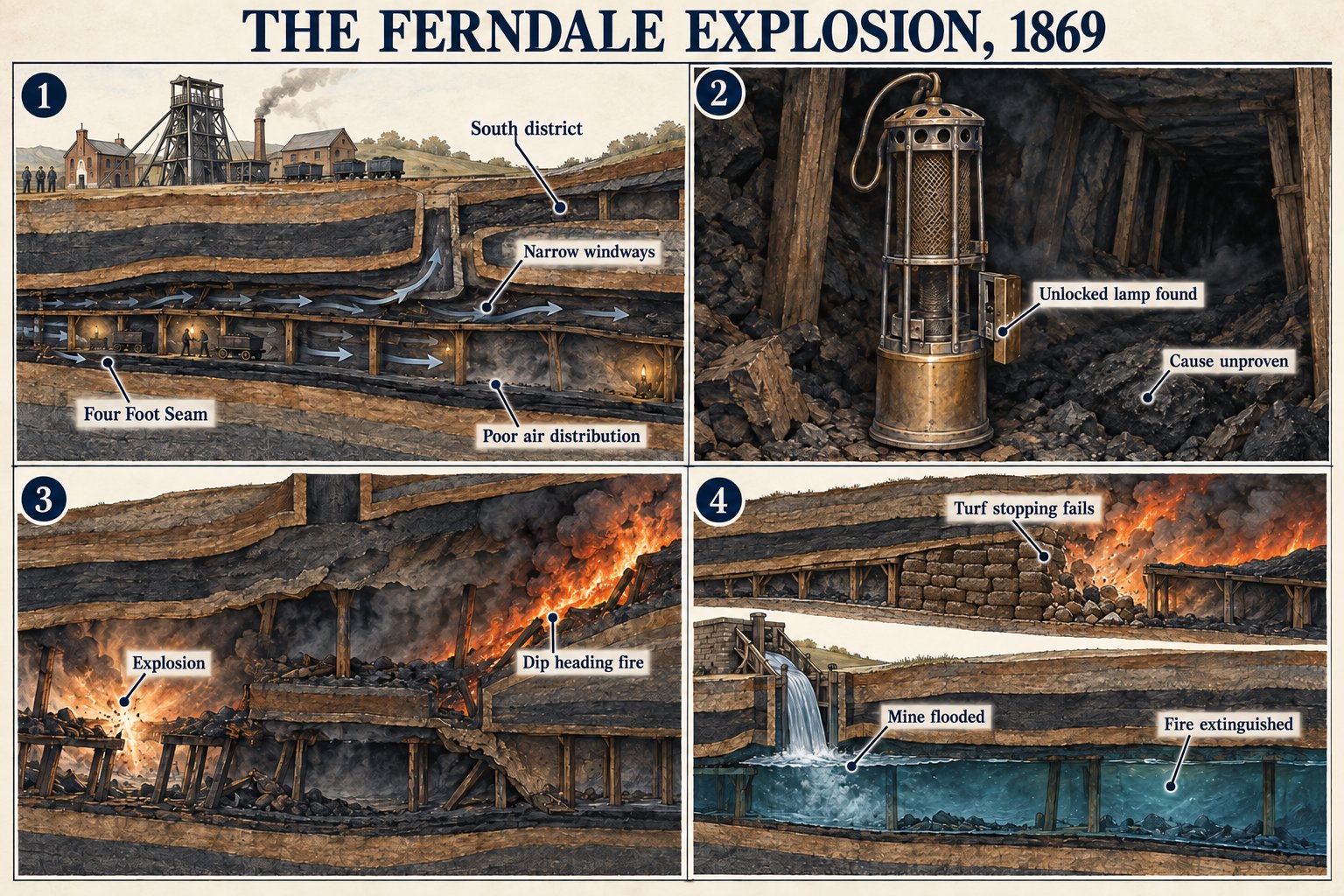
The investigation could not conclusively determine the cause, but an unlocked safety lamp, found in contravention of the rules, was suspected as a contributing factor.
Contributing factors
The inquest jury found that air was not properly distributed throughout the workings and that the ventilation ways ('windways') were not of sufficient size, describing a 'lamentable want of care' by pit officials — echoing failings identified at the same colliery less than two years earlier.
What happened
Around 600 men entered the mine at 7am, 120 of them in the South (Duffryn) District; fireman Thomas James had completed a safety inspection an hour earlier and reported all was well. The explosion sent a cloud of dust rising up the shaft, and a fire subsequently broke out in a dip heading, becoming dangerously hot; water pipes were brought in from Birmingham and a turf stopping was tried but failed to contain the fire, which was ultimately extinguished by flooding the mine.
Rescue & recovery
53 bodies were recovered following the explosion and the fire that followed it.
Investigation & inquiry
The inquest jury concluded that air was not properly distributed over the whole of the workings and that the windways were not of sufficient size, finding a lamentable want of care by pit officials, and recommended that Government Inspectors visit the colliery quarterly.
Memorials & commemoration
A joint memorial to the dead of both the 1867 and 1869 disasters was renovated for the 150th anniversary in 2017, featuring a statue of a coal cart surrounded by four benches.
Recorded claims
Individual factual claims, each attached to the source(s) that support it below. Where sources disagree, both are kept.
- The investigation could not conclusively determine the cause, though an unlocked safety lamp, found in contravention of the rules, was suspected as a contributing factor. 1
- 53 men and boys died, including several doorboys aged 13 to 14. 1
- The inquest jury found air was not properly distributed and the ventilation ways were undersized, describing a lamentable want of care by pit officials — failings closely echoing those identified after the colliery's 1867 disaster. 1
Related terminology
Mining terms this disaster is structurally linked to, with the nature of the relationship.
- Coal (contextual relationship)
Named in this record’s memorials: “…renovated for the 150th anniversary in 2017, featuring a statue of a coal cart surrounded by four benches.” - Colliery (contextual relationship)
Named 3 times in this record, first in the summary: “A second major explosion at Ferndale Colliery, in the fiery Four Foot Seam, killed 53 men and boys on 10 June…” - Fireman (contextual relationship)
Named in this record’s narrative: “…the mine at 7am, 120 of them in the South (Duffryn) District; fireman Thomas James had completed a safety inspection an hour earlier and…” - Safety Lamp (contextual relationship)
Named in this record’s cause: “…could not conclusively determine the cause, but an unlocked safety lamp, found in contravention of the rules, was suspected as a…” - Shaft (contextual relationship)
Named in this record’s narrative: “…all was well. The explosion sent a cloud of dust rising up the shaft, and a fire subsequently broke out in a dip heading, becoming…”
Sources
- (secondary) Ferndale Colliery Explosion - Rhondda Valley - 1869 — Northern Mine Research Society
- (secondary) Ferndale Colliery — Wikipedia
Record created: 27 August 2026 · Last researched: 27 August 2026