 MineArchive
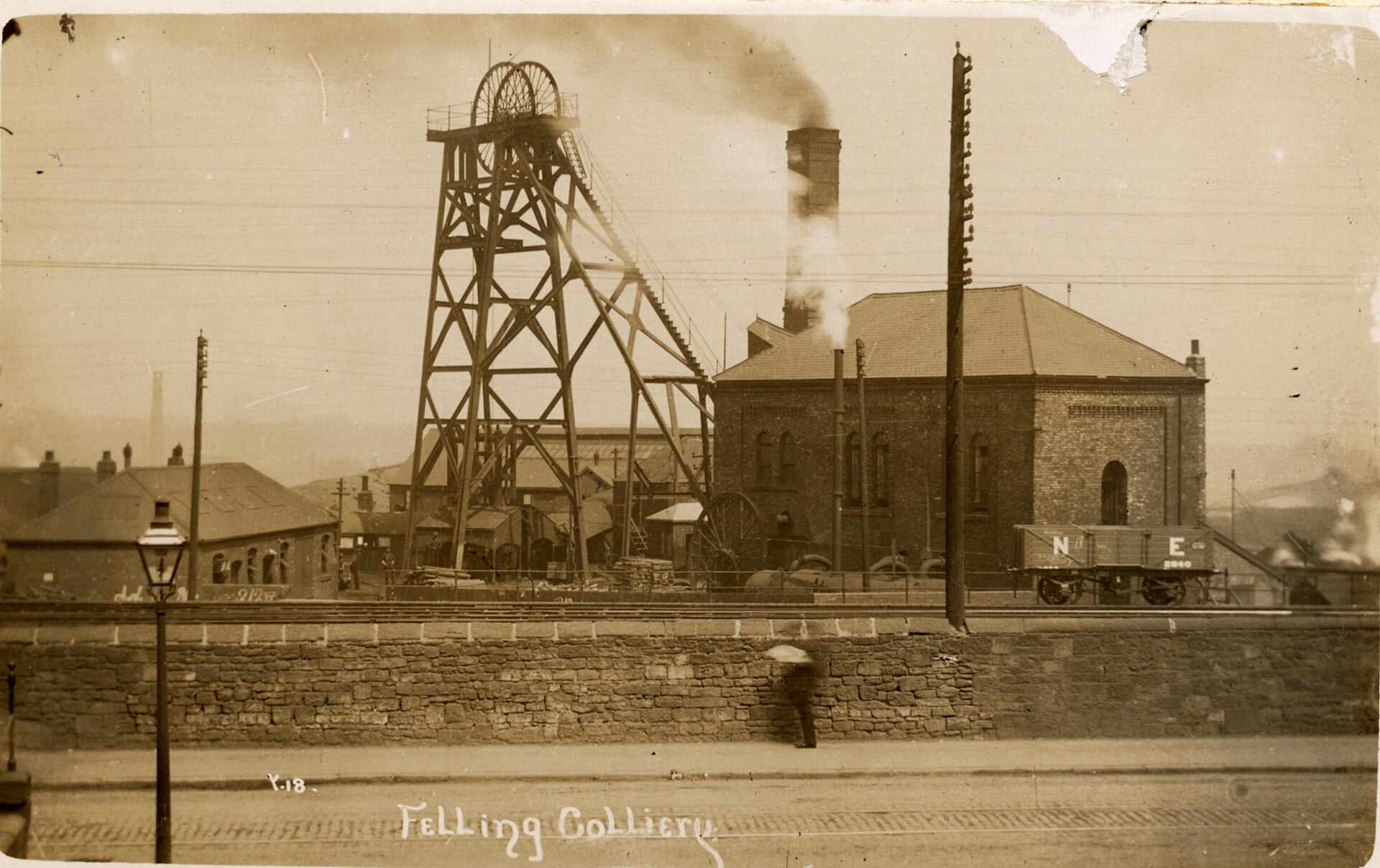
Felling Colliery explosion, 1847
| Date | 22 June 1847 |
|---|---|
| Mine | Felling Colliery |
| Region | Tyne and Wear |
| Primary type | Explosion |
| Associated types | Fire |
| Fatalities | 6 (Four killed outright, two of them by a fall of rock and two by afterdamp, and two more died of their injuries over the next two days.) |
| Context | During active mining (An evening at Felling Colliery, a pit its viewer called as well ventilated as any on the Tyne, with Davy lamps in use throughout.) |
Shortly after nine on the evening of 22 June 1847 an explosion at Felling Colliery killed six miners, four outright and two from their injuries, and eighteen horses. It began not in the coal but at an underground haulage engine, whose fire had been banked with the damper shut so that it made gas like a retort. The jury found accidental death and asked for the damper to be pinned open.
Cause
Gas produced by the partial combustion of the fire of an underground haulage engine, left with its damper closed, which escaped and exploded, badly damaging the boiler and flue.
Contributing factors
The engineman had banked the fire with small coal before going off shift at 4 p.m.; he said he left the damper open about an inch and three-quarters, but the viewer believed it had closed fully.
What happened
The workings were ventilated with 60,000 cubic feet of air a minute, confirmed at the inquest, and written instructions on the Davy lamp had been issued. Peter Gibbon noticed from his lamp that the air had changed and told George Chapman, who was in charge of the pit; Chapman went to investigate, was rescued, and died the next day. Gibbon, trying to escape after an hour, broke his lamp and was blocked by a roof fall in the dark before he was rescued. Some men heard and felt nothing despite the damage done.
Rescue & recovery
The overman John Greener went down after the explosion, found the separation stoppings blown down and the stables on fire, and got 600 yards from the shaft before foul air forced him back. The owners' surgeon tried without success to save the injured.
Investigation & inquiry
The coroner's inquest opened two days later, was adjourned for an inspection, and resumed the following Wednesday. Foster and four viewers from other collieries placed the seat at the haulage engine, and the jury returned Accidental Death.
Changes to practice & legislation
The jury recommended fitting a pin to the engine damper so that it could not close to less than four inches.
Recorded claims
Individual factual claims, each attached to the source(s) that support it below. Where sources disagree, both are kept.
- Wikipedia, citing the Newcastle Guardian of 26 June and 3 July 1847, dates the explosion to shortly after 9 p.m. on Tuesday 22 June 1847. (disputed) 1
- The Tyne and Wear Historic Environment Record gives 22 January 1847. (disputed) 2
- Six miners died, four outright and two of their injuries over the next two days, and eighteen horses were killed. 1,2
- The viewer Thomas Foster found the seat at an underground haulage engine whose fire had been left with the damper closed, so that it acted as a retort and produced gas which escaped and exploded. 1
- The coroner's jury returned Accidental Death and recommended a pin in the damper so it could not close to less than four inches. 1
Related terminology
Mining terms this disaster is structurally linked to, with the nature of the relationship.
- Afterdamp (hazard involved)
Two of the dead were killed by afterdamp. - Overman (rescue/recovery concept)
The overman went down to explore after the explosion. - Retort (contextual relationship)
Named in this record’s summary: “…fire had been banked with the damper shut so that it made gas like a retort. The jury found accidental death and asked for the damper to be…” - Safety Lamp (contextual relationship)
Davy lamps were in use throughout the colliery. - Viewer (contextual relationship)
Named twice in this record, first in the contributing factors: “…he left the damper open about an inch and three-quarters, but the viewer believed it had closed fully.”
Sources
- (secondary) Felling mine disasters — Wikipedia
- (primary) Felling Colliery (Brandling Main/John Pit), HER 3801 — Tyne and Wear Sitelines (Historic Environment Record)
Record created: 9 September 2026 · Last researched: 13 September 2026