 MineArchive
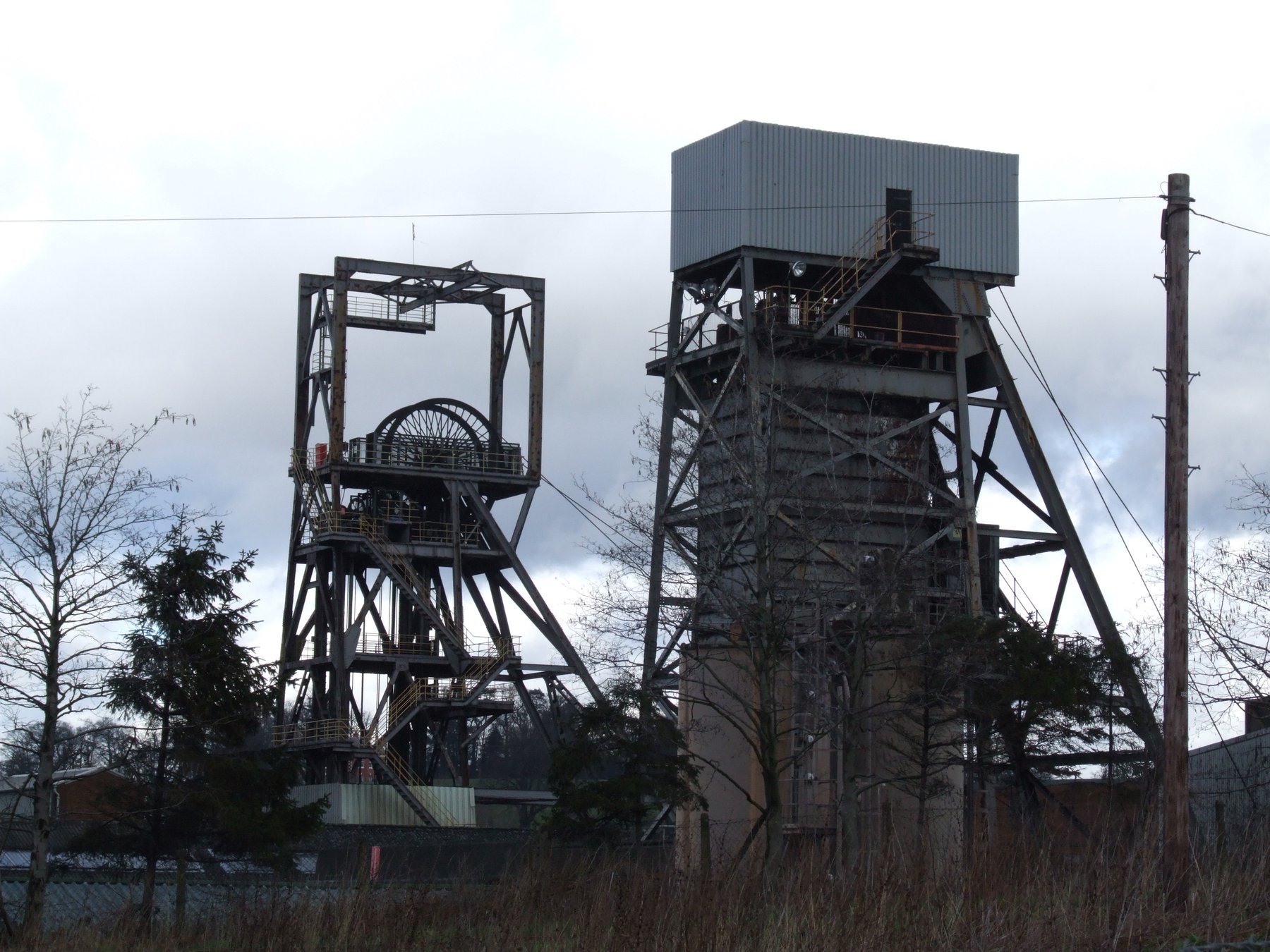
Daw Mill Colliery fire, 2013
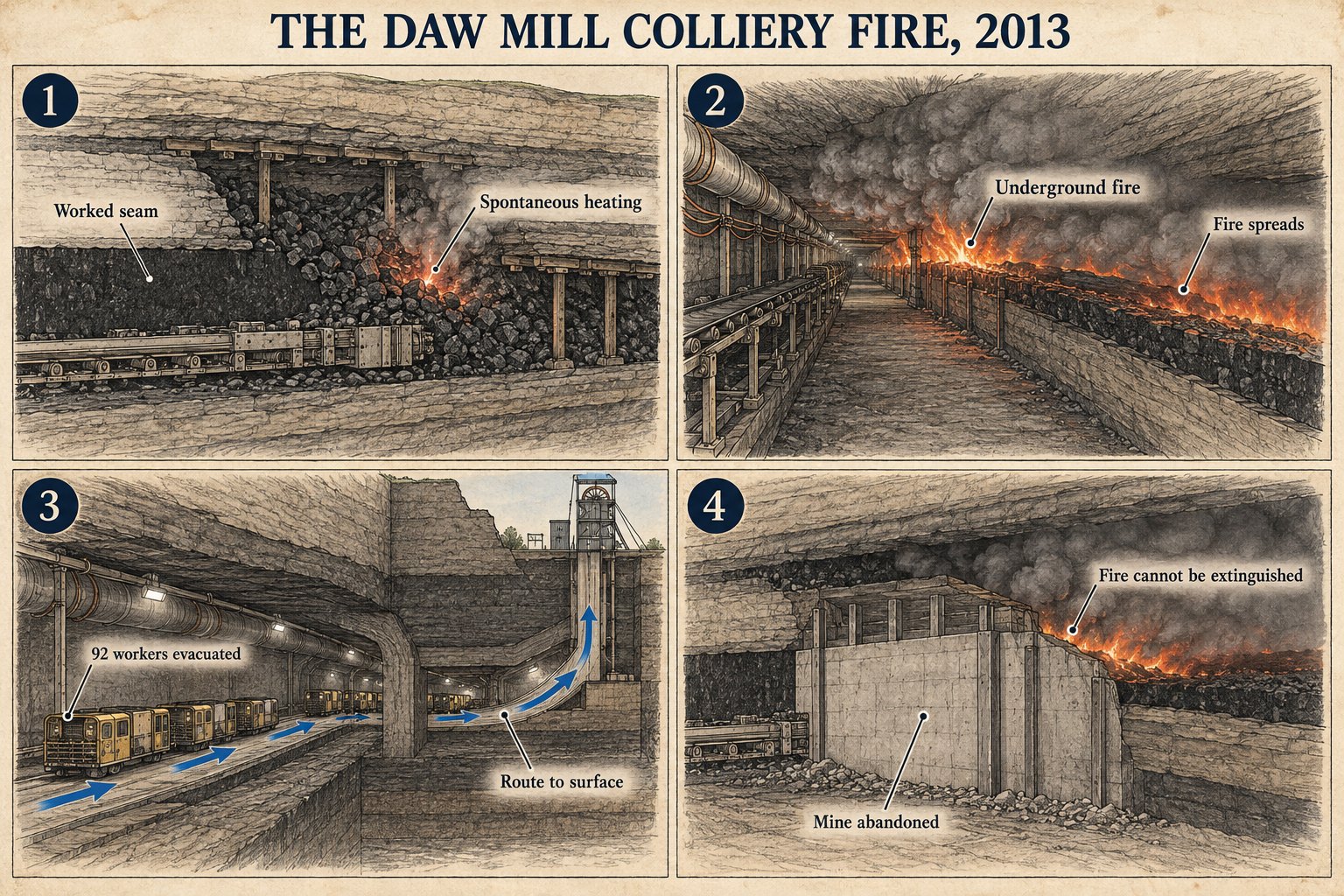
An underground fire caused by spontaneous combustion broke out at Daw Mill Colliery, Britain's biggest coal producer, described as the worst underground blaze in the UK for thirty years; all 92 workers underground were safely evacuated, but the fire could not be extinguished and led directly to the mine's permanent closure and UK Coal's collapse into administration.
| Date | 22 February 2013 |
|---|---|
| Mine | Daw Mill Colliery |
| Region | Warwickshire |
| Type | Fire |
| Fatalities | 0 (No deaths or reported injuries — all 92 workers below ground were safely brought to the surface.) |
| Context | During active mining |
Cause
Spontaneous combustion within a worked coal seam ignited the underground fire.
Contributing factors
Daw Mill's scale and continuous high-output working of a very large coal reserve created conditions in which a spontaneous-combustion fire, once started, proved impossible to bring under control before it forced abandonment of the affected workings.
What happened
In the early hours of 22 February 2013, a fire caused by spontaneous combustion broke out deep underground at Daw Mill Colliery in Warwickshire. Around 100 workers were evacuated to safety; 14 men remained underground for approximately four hours in an attempt to contain the blaze before being forced to withdraw. All 92 workers who had been underground at the time were safely brought to the surface, and there were no injuries. The fire, however, could not be extinguished.
Rescue & recovery
No rescue was required, since all workers reached the surface safely; recovery efforts instead focused on attempting to contain and extinguish the underground fire itself over the following days and weeks, without success.
Investigation & inquiry
The colliery's closure was significant enough to be debated in the House of Commons on two separate occasions, on 11 March and 15 April 2013.
Legal & regulatory aftermath
UK Coal announced Daw Mill's permanent closure on 7 March 2013, with the loss of around 650 jobs; the scale of the financial loss from losing Britain's most productive coal mine helped tip UK Coal Operations Ltd into administration in July 2013, reshaping the future of the wider UK coal industry.
Related terminology
Mining terms this disaster is structurally linked to, with the nature of the relationship.
- Coal (contextual relationship)
Daw Mill was Britain's biggest coal producer when it burned; the fire could not be put out, closed the mine permanently and brought down UK Coal with it. - Colliery (contextual relationship)
Named 4 times in this record, first in the summary: “…fire caused by spontaneous combustion broke out at Daw Mill Colliery, Britain's biggest coal producer, described as the worst underground…” - Spontaneous Combustion (contextual relationship)
Coal heating and igniting itself, with nothing to light it, caused what was described as the worst underground blaze in the UK for thirty years — and ended Britain's biggest colliery.
Sources
- (primary) Closure of Daw Mill Colliery (Hansard, 15 April 2013) — UK Parliament (Hansard)
- (primary) Daw Mill Colliery Closure (Hansard, 11 March 2013) — UK Parliament (Hansard)
- (secondary) Daw Mill — Wikipedia
- (secondary) Daw Mill Colliery — Our Warwickshire
Record created: 21 August 2026 · Last researched: 21 August 2026