 MineArchive
Coppice Colliery explosion, 1943
A firedamp explosion after a ripping shot at Coppice Colliery, Shipley, burned seven men on 28 June 1943; four of them, all from Heanor, died of their burns.
| Date | 28 June 1943 |
|---|---|
| Mine | Coppice Colliery, Shipley |
| Region | Derbyshire |
| Type | Explosion |
| Fatalities | 4 (Wilfred Amos Noon (25, or 35 in another list), John Holmes, 31, James Draper, 50, and Archibald Bestwick, 52, all of Heanor, died of their burns. Three had died by 6 July 1943; the dates of death given for them differ between sources.) |
| Injuries | Seven men were burned in all; besides the four who died, two were in a serious condition on 6 July 1943. |
| Context | During active mining |
Location
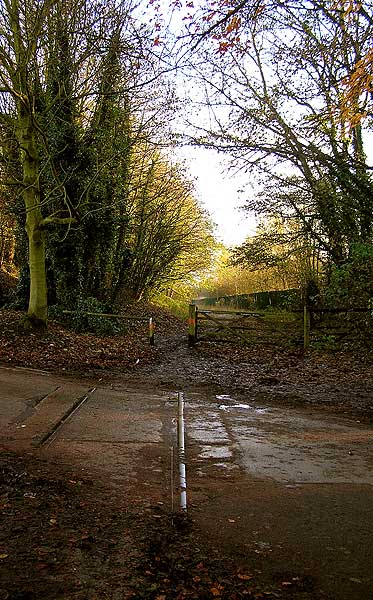
Plotted at Coppice Colliery, Shipley. Recorded location. The large pin is the mine; the small round markers are the nearest mines on record. Click one for its page. View on full map
Cause
Firedamp, probably released by a roof movement heard as a loud bump just beforehand, was ignited by the firing of a ripping shot in a gate road.
What happened
At about ten in the morning of Monday 28 June 1943 shotfiring was going on in a gate road at the Coppice pit of Shipley Collieries Ltd, near Heanor, when a ripping shot was fired and the firedamp exploded. Just before the shot there had been a loud bump, probably part of the roof giving way, and it is thought that this let out the methane that the shot then lit. The explosion was confined to a fairly small area, but seven men were burned. Three of them had died by 6 July, when the Minister of Fuel and Power answered a question in the Commons, and two more were then in a serious condition.
Four men died in all, all of Heanor: Wilfred Amos Noon, John Holmes, James Draper and Archibald Bestwick. It was the middle of the war and the accident got less notice than it would otherwise have had. There was no public inquiry, though the coroner said he hoped the technical evidence given at the inquest would help prevent such accidents in future.
Investigation & inquiry
The Minister of Fuel and Power told the Commons on 6 July 1943 that the cause of the ignition was not yet known and that a full investigation was being made.
Legal & regulatory aftermath
No public inquiry was held. At the inquest the coroner said he hoped the technical evidence would help prevent similar accidents.
What's uncertain
Points where sources disagree or the record could not be settled; both accounts are kept. All open questions in the archive.
- A loud bump, probably part of the roof giving way, was heard just before the shot was fired, and is thought to have released the methane the shot ignited. (uncertain) 1
Recorded claims
Individual factual claims, each attached to the source(s) that support it below. Where sources disagree, both are kept.
- On Monday 28 June 1943 an explosion of firedamp followed the firing of a ripping shot in a gate road at Coppice Colliery, Shipley, near Heanor. 1,2,3
- Seven men were burned; four of them, Wilfred Amos Noon, John Holmes, James Draper and Archibald Bestwick, died of their injuries. 1,2,3,4
- A loud bump, probably part of the roof giving way, was heard just before the shot was fired, and is thought to have released the methane the shot ignited. (uncertain) 1
- There was no public inquiry; the coroner hoped the technical evidence given at the inquest would help prevent such accidents. 1
Related terminology
Mining terms this disaster is structurally linked to, with the nature of the relationship.
- Bump (contextual relationship)
Named twice in this record, first in the cause: “Firedamp, probably released by a roof movement heard as a loud bump just beforehand, was ignited by the firing of a ripping shot in a…” - Colliery (contextual relationship)
Named in this record’s summary: “A firedamp explosion after a ripping shot at Coppice Colliery, Shipley, burned seven men on 28 June 1943; four of them, all from…” - Firedamp (contextual relationship)
Named 3 times in this record, first in the summary: “A firedamp explosion after a ripping shot at Coppice Colliery, Shipley, burned…” - Gate Road (contextual relationship)
Named twice in this record, first in the cause: “…just beforehand, was ignited by the firing of a ripping shot in a gate road.” - Ripping (contextual relationship)
Named 3 times in this record, first in the summary: “A firedamp explosion after a ripping shot at Coppice Colliery, Shipley, burned seven men on 28 June 1943;…”
Sources
- (secondary) Mine accidents (Heanor & District Local History Society) — Heanor & District Local History Society
- (primary) Durham Mining Museum: Coppice, 28 June 1943 — Durham Mining Museum
- (primary) Colliery Explosion, North Derbyshire, HC Deb 6 July 1943 vol 390 c1939 — Hansard (UK Parliament, historic Hansard)
- (secondary) Mapperley Village: Coppice colliery managers and fatal accidents — Mapperley Village history
Record created: 27 November 2026 · Last researched: 27 November 2026