 MineArchive
Burngrange Oil Shale Mine explosion and fire, 1947
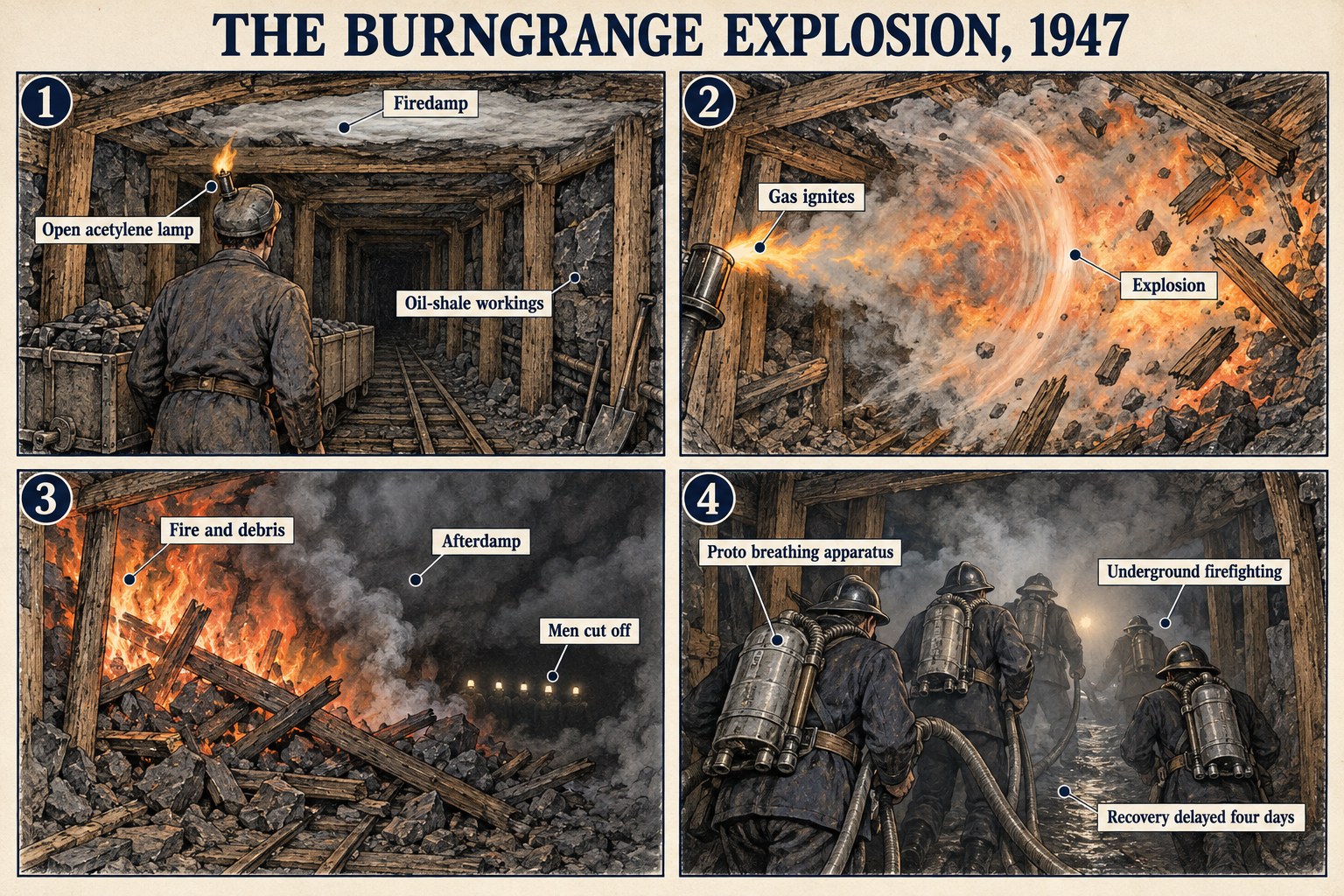
An open acetylene cap lamp ignited firedamp underground at Burngrange Oil Shale Mine on the evening of 10 January 1947, triggering an explosion and fire that killed 15 of the 53 men underground that shift — the greatest single loss of life in the history of Scotland's shale oil industry.
| Date | 10 January 1947 |
|---|---|
| Mine | Burngrange Oil Shale Mine |
| Region | Midlothian |
| Primary type | Explosion |
| Associated types | Rescue |
| Fatalities | 15 (Fourteen men were trapped behind fire and debris and confirmed dead, mostly from afterdamp poisoning; a fifteenth body was recovered alongside the survivors brought out at the time of the explosion.) |
| Context | During active mining |
Cause
An open acetylene cap lamp ignited a pocket of firedamp (methane) underground.
Contributing factors
The resulting explosion and fire spread rapidly through the workings' timbers and oil shale, and sustained burning trapped fourteen men behind fire and debris for days.
What happened
On the evening of 10 January 1947, an open acetylene cap lamp ignited firedamp underground at Burngrange Oil Shale Mine, West Calder. Fifty-three men were underground at the time; only 38 came out alive at once, with one further body recovered alongside them. Fourteen men remained trapped behind debris and fire, and all were later confirmed dead, mostly from afterdamp. It was, and remains, the greatest single loss of life recorded anywhere in the history of the Scottish shale oil industry.
Rescue & recovery
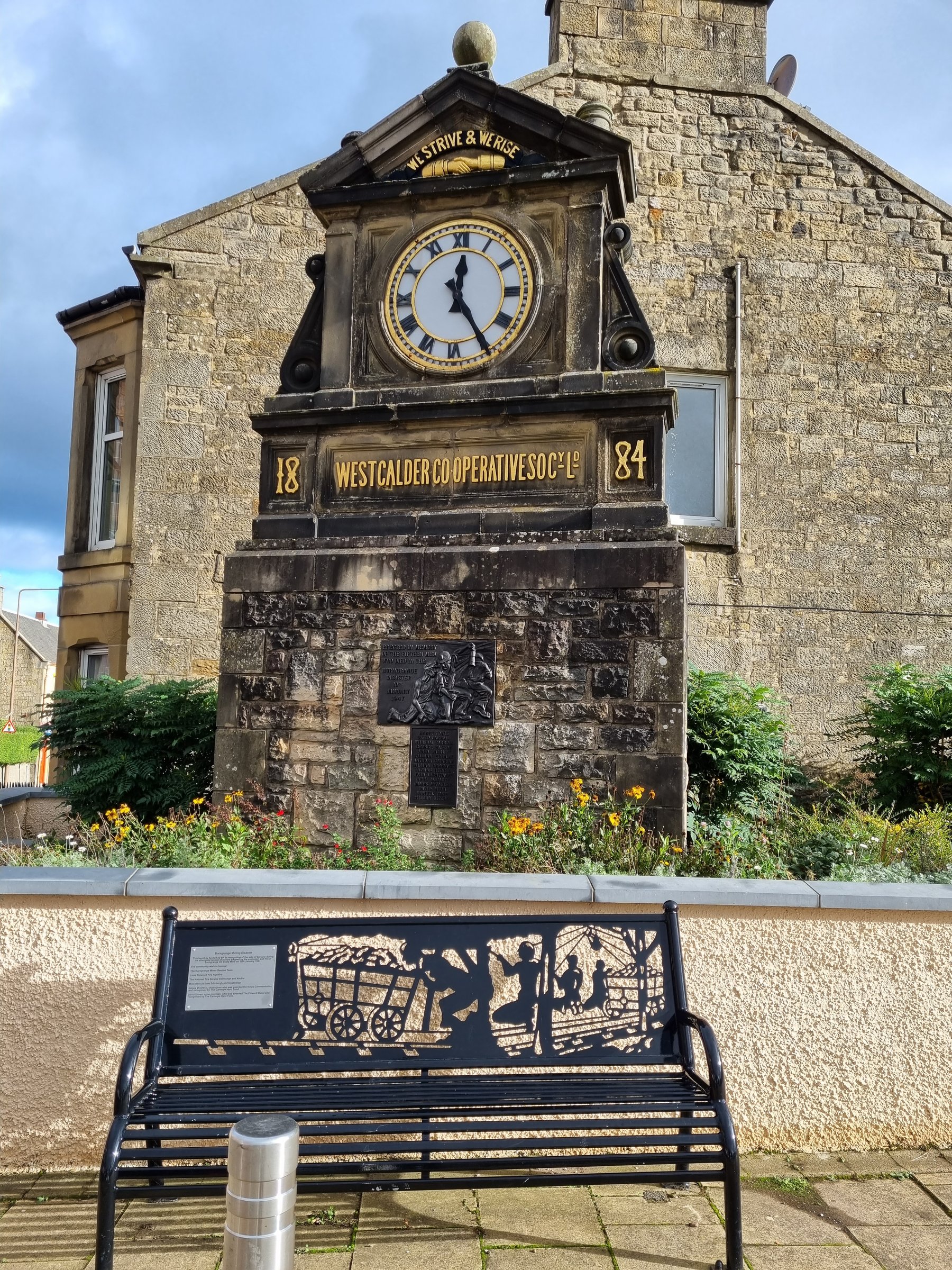
Overman David Brown made repeated descents in an attempt to reach the trapped men. Members of the National Fire Service volunteered for underground firefighting work well outside their normal remit, using Proto breathing apparatus; sustained fire prevented rescue teams from safely reaching the affected area for four days, and recovery of the trapped men's bodies began on the night of 13-14 January 1947. David Brown was later awarded the Edward Medal for his gallant rescue attempts and leadership, and miner James McArthur received the King's Commendation for Brave Conduct; both also received Carnegie Hero Fund certificates and monetary grants.
Investigation & inquiry
A formal government report documented the causes and circumstances of the explosion.
Related terminology
Mining terms this disaster is structurally linked to, with the nature of the relationship.
- Afterdamp (contextual relationship)
Fourteen men trapped behind debris and fire died mostly of afterdamp rather than the explosion itself — the greatest single loss of life in Scotland's shale oil industry. - Breathing Apparatus (contextual relationship)
National Fire Service men volunteered for underground firefighting far outside their normal remit, working in Proto breathing apparatus while fire kept rescue teams from the affected area for four days. - Oil Shale (hazard involved)
The 1947 Burngrange disaster was a firedamp explosion in an oil shale mine, a direct illustration of the underground hazards this term describes. - Overman (contextual relationship)
Named in this record’s rescue and recovery: “Overman David Brown made repeated descents in an attempt to reach the…” - Proto Apparatus (relevant method/equipment)
The disaster's own recorded rescue account explicitly describes rescue workers using Proto breathing apparatus.
Sources
- (secondary) Burngrange Mining Disaster — Scottish Places
- (secondary) Burngrange mining disaster — Wikipedia
- (secondary) Remembering the Burngrange Disaster — West Lothian's Story
Record created: 21 August 2026 · Last researched: 21 August 2026