 MineArchive
Bentinck Colliery cage collision, 1915
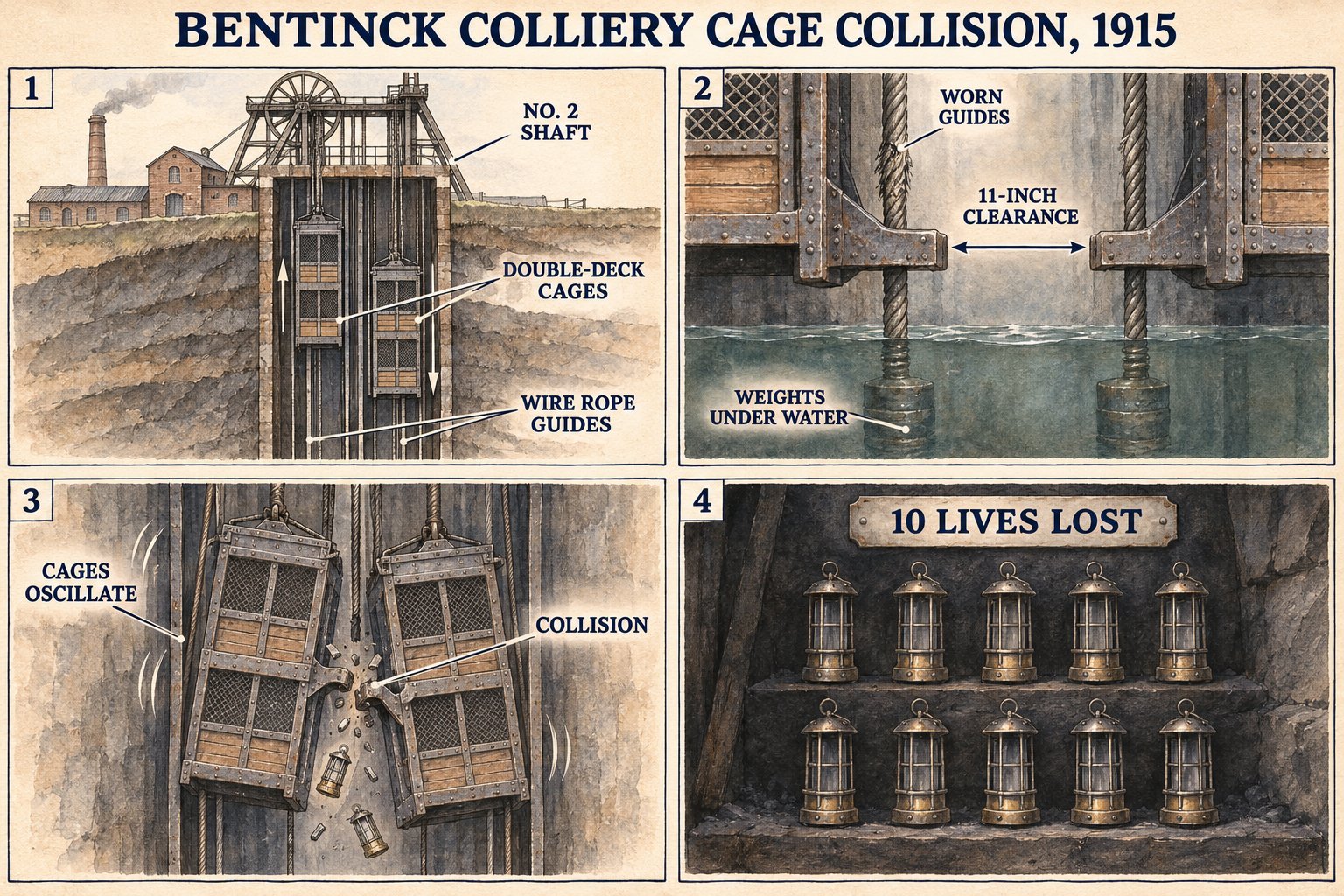
On 30 June 1915 the two cages in the No. 2 shaft at Bentinck Colliery, Kirkby-in-Ashfield, struck each other as fourteen men were being lowered and two raised. Seven men were thrown out of the descending cage and two more died in it; ten were killed and six injured.
| Date | 30 June 1915 |
|---|---|
| Mine | Bentinck Colliery |
| Region | Nottinghamshire |
| Type | Winding / Shaft Accident |
| Fatalities | 10 (Willie Syson, 18; William Bacon, 40, who left a widow and seven children; Harold Brown, 14; Ferdinand Wright, 45; Percy Staton, 32; Amos Allen, 32; Charles Henry Bacon, 36; John C. Fletcher, 39; Willis King, 25; George Simpson, 54.) |
| Injuries | Six, including the two men in the ascending cage. |
| Context | During active mining |
Location
Plotted at Bentinck Colliery. Approximate location. The large pin is the mine; the small round markers are the nearest mines on record. Click one for its page. View on full map
Cause
The cages swung into each other as they passed; the inspector put the oscillation down most probably to insufficient tension on the wire rope guides, possibly with a broken thimble bracket on the ascending cage.
Contributing factors
The guides fitted in 1896 were worn, one reduced to an inch in diameter, and their bottom weights had been under water and unseen for five years. Daily examinations stopped at the Low Main inset, and the report books recorded neither the true times nor the adjustments made.
What happened
The No. 2 shaft, sunk in 1895 to the Low Main at 440 yards and deepened to the Blackshale, was 14 feet across and carried two double-decked cages on three wire rope conductors each, with only about 11 inches between their projections. Men rode on the lower decks behind iron gates that opened outwards.
As the day shift went down, both the banksman and the onsetter heard a terrible bang. Lamps, parts of the cages and some of the men fell to the bottom. Seven men were knocked out of the descending cage and killed; two more were dead inside it and five injured. The two men in the ascending cage were hurt, though not dangerously. One of the men in the down cage, Charles Simpson, clung to the ironwork for two hours until the cage was lowered, answering the shouts of the night men above.
Rescue & recovery
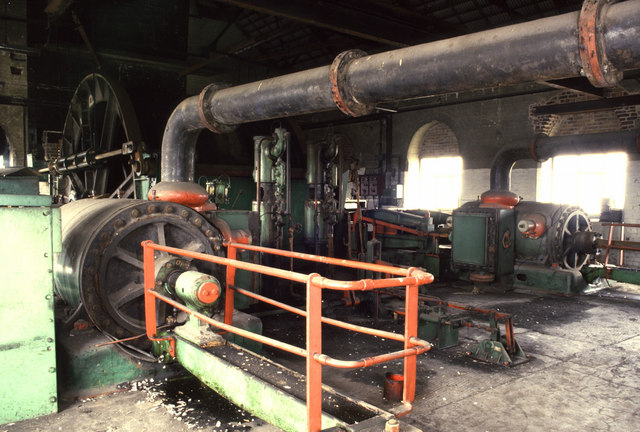
The winding engines were stopped at once and the cages hung on their ropes; the damaged descending cage was lowered to the bottom about two hours later.
Investigation & inquiry
The coroner, D. Whittingham, held the inquest. The manager, Percy Francis Day, and the enginewright admitted the daily shaft reports did not record the true times or the adjustments made, having misread the Coal Mines Act. The jury returned accidental death through oscillation of the cages or guide ropes, regretted that the miners had not used their rights under the Mines Act after earlier rumours of the cages rubbing, and recommended a better method of recording examinations. The inspector, Mottram, could not say definitely what caused the oscillation.
Changes to practice & legislation
Mottram recommended an additional guide for each cage, isolating guides to stop the cages colliding, weights to give adequate tension in the guides, and sliding cage gates instead of gates that swung outwards. He also urged ready access below insets so that guides in wet shafts could be examined in full.
Recorded claims
Individual factual claims, each attached to the source(s) that support it below. Where sources disagree, both are kept.
- On 30 June 1915 the two cages collided in Bentinck's No. 2 shaft as fourteen men went down and two came up; ten were killed and six injured. 1,2
- The No. 2 shaft was 440 yards deep to the Low Main and worked two double-decked cages on wire rope conductors with about 11 inches' clearance between them. 2
- The conductors installed in 1896 were worn, and their bottom weights had been under water and unseen for five years, the guides being held by clamps instead. 2
- The inquest found the men accidentally killed when the cages came into violent contact through oscillation of the cages or guide ropes, and recommended better recording of examinations. 2
- The inspector, Mottram, recommended an additional guide for each cage, isolating guides, weights to keep the guides tensioned and sliding cage gates. 2
- The dead ranged from Harold Brown, aged 14, to George Simpson, aged 54. 1,3
Related terminology
Mining terms this disaster is structurally linked to, with the nature of the relationship.
- Banksman (contextual relationship)
Named in this record’s narrative: “…the day shift went down, a terrible bang was heard by both the banksman and the onsetter. Lamps, parts of the cages and some of the men fell…” - Cage (contextual relationship)
Named 17 times in this record, first in the summary: “On 30 June 1915 the two cages in the No. 2 shaft at Bentinck Colliery, Kirkby-in-Ashfield, struck…” - Inset (contextual relationship)
Named twice in this record, first in the contributing factors: “…unseen for five years. Daily examinations stopped at the Low Main inset, and the report books recorded neither the true times nor the…” - Onsetter (contextual relationship)
Named in this record’s narrative: “…went down, a terrible bang was heard by both the banksman and the onsetter. Lamps, parts of the cages and some of the men fell to the bottom.…” - Winding Engine (contextual relationship)
Named in this record’s rescue and recovery: “The winding engines were stopped at once and the cages hung on their ropes; the damaged…”
Sources
- (primary) Bentinck Colliery (Durham Mining Museum) — Durham Mining Museum
- (secondary) Bentinck Colliery Shaft Accident - Kirkby-in-Ashfield - 1915 (Northern Mine Research Society) — Northern Mine Research Society
- (secondary) Bentinck Colliery fatalities (Healey Hero, Mines Rescue) — Healey Hero
Record created: 5 November 2026 · Last researched: 6 November 2026