 MineArchive
Astley Deep Pit explosion, 1874
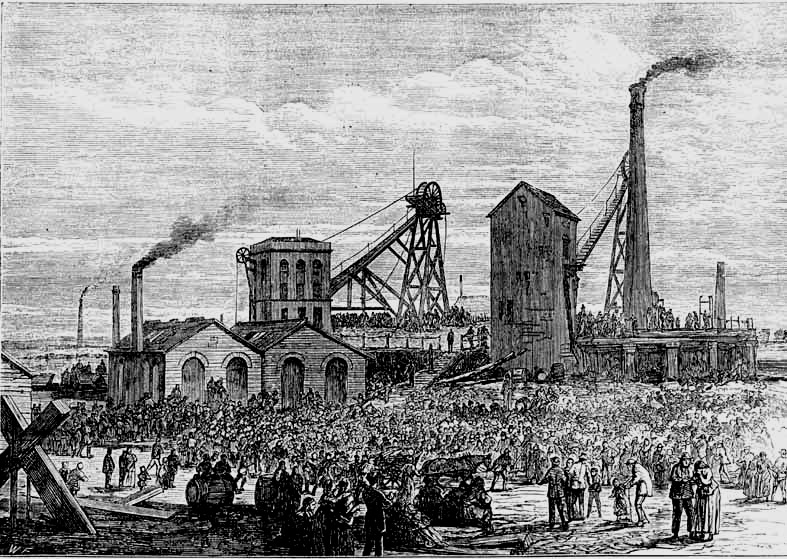
On 14 April 1874 a roof fall in the Half Moon Tunnel at Astley Deep Pit, Dukinfield, then the deepest coal mine in Britain, released gas that exploded and set the workings on fire, killing 54 men and boys. The jury blamed the bricking-up of a ventilating mouthing and a pit in a state of anarchy.
| Date | 14 April 1874 |
|---|---|
| Mine | Astley Deep Pit |
| Region | Greater Manchester |
| Primary type | Explosion |
| Associated types | Fire |
| Fatalities | 54 (49 killed by the explosion, one rescuer by chokedamp and four who died in Lancashire; some accounts give 51 or 53.) |
| Context | During active mining |
Cause
A fall of earth in the Half Moon Tunnel during repairs released firedamp, ignited at open lights, in a district deprived of ventilation by the bricking-up of the mouthing to the Smithy Mine.
Contributing factors
A tunnel weakened by the 1865 fire and insufficiently timbered; the ventilating mouthing blocked; incompetent people placed in authority; facts about the old fire kept from the manager.
What happened
The pit was sunk 686 yards to the Lancashire Black Mine, a prized four-foot seam, and the night shift of 150 to 170 had gone down. The Half Moon Tunnel near the downcast had caught fire in 1865; the fire burned for weeks, and a mouthing was driven from the shaft into the Smithy Mine, where a cavity was found, timbered over and filled. The mouthing was later bricked up, though for that part of the mine it was the only means of ventilation. The manager since 1871, James Hilton, was told nothing of it until earth fell from the cavity in 1872.
On the day of the explosion men were propping the tunnel roof when there was a heavy fall of earth and an explosion. The hooker-on George Harrison was blown several yards, then carried out a youth, Henry Fielding, and went back for Joseph Fletcher, aged 13. Underlookers led parties round by the dumb drift, put out a fire at the boiler house and found survivors beyond a fall in the No. 2 tunnel. Forty-nine died in the explosion and a rescuer, Charles Jones, of chokedamp; four more who died in Lancashire brought the toll to 54. The fire was still burning fiercely two days later.
Rescue & recovery
George Harrison, the underlookers David Holmes and Abraham Else, and volunteers explored the workings through the night; Charles Jones died of chokedamp trying to save others. The inspector, Wynne, praised the men who went down.
Investigation & inquiry
The inquest at the Astley Arms, Dukinfield, before the Cheshire coroner F. W. Johnson, was attended by the inspectors Wynne and Bell, with the Recorder of Chester for the Crown. The disaster was raised in the House of Commons on 21 April 1874.
Legal & regulatory aftermath
The jury found the primary cause was the blocking of the mouthing to the Smithy Mine, an act of gross ignorance or culpable negligence done under the previous manager, Walshaw, with the underlooker Holmes's knowledge; that the pit had been in a state of anarchy through the proprietor Benjamin Ashton's interference; and that the system of inspection was imperfect.
Memorials & commemoration
A Tameside council blue plaque on Woodbury Crescent, Dukinfield, commemorates the disaster.
Recorded claims
Individual factual claims, each attached to the source(s) that support it below. Where sources disagree, both are kept.
- The explosion on 14 April 1874 killed 54 men and boys. 1,2
- A roof collapse in the Half Moon Tunnel, which had been damaged by an earlier fire, released firedamp that exploded. 1,2
- The jury found the primary cause was the blocking of the mouthing to the Smithy Mine, an act of gross ignorance or culpable negligence. 1,2
- At 686 yards Astley Deep Pit was the deepest coal mine in Britain when it opened. 1,2
- Charles Jones died of chokedamp trying to save his fellow workmen. 1
Related terminology
Mining terms this disaster is structurally linked to, with the nature of the relationship.
- Boiler House (contextual relationship)
Named in this record’s narrative: “…led parties round by the dumb drift, put out a fire at the boiler house and found survivors beyond a fall in the No. 2 tunnel. Forty-nine…” - Chokedamp (contextual relationship)
Named twice in this record, first in the narrative: “…Forty-nine died in the explosion and a rescuer, Charles Jones, of chokedamp; four more who died in Lancashire brought the toll to 54. The fire…” - Furnace Ventilation (contextual relationship)
Named in this record’s narrative: “…for Joseph Fletcher, aged 13. Underlookers led parties round by the dumb drift, put out a fire at the boiler house and found survivors beyond a…” - Naked Light (contextual relationship)
Named in this record’s cause: “…in the Half Moon Tunnel during repairs released firedamp, ignited at open lights, in a district deprived of ventilation by the bricking-up of the…” - Onsetter (contextual relationship)
Named in this record’s narrative: “…roof when there was a heavy fall of earth and an explosion. The hooker-on George Harrison was blown several yards, then carried out a youth,…”
Photographs & further reading
This page doesn't try to reproduce everything — these are the best original sources found for this disaster.
The 1865 fire, the explosion, the rescue, the dead and the jury's verdict.
View sourceThe pit, its accidents, the 1874 disaster and its aftermath.
View sourceSources
- (secondary) Astley Deep Colliery Explosion - Dukinfield - 1874 — Northern Mine Research Society
- (secondary) Astley Deep Pit disaster — Wikipedia
Record created: 3 October 2026 · Last researched: 3 October 2026