 MineArchive
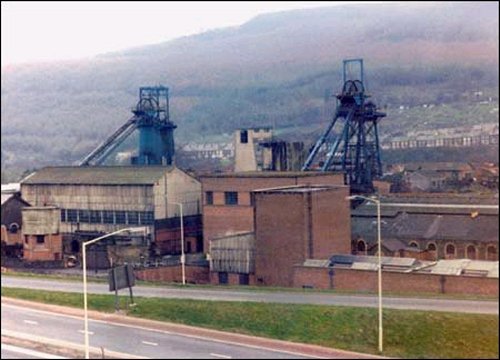
Abercynon Colliery Haulage Accident, 1906
On the afternoon of Saturday 28 April 1906, about fifteen minutes before the end of the shift, a journey of twenty-four full trams of coal ran away underground at Abercynon Colliery and into the men waiting at the pit bottom to go up. Five were killed and at least six seriously injured.
| Date | 28 April 1906 |
|---|---|
| Mine | Abercynon Colliery |
| Region | Rhondda Cynon Taf |
| Type | Haulage / Transport |
| Fatalities | 5 (Morgan Richards (39), airwayman; Henry Campbell Jones (38), airwayman; Herbert Moon (31), labourer; Ernest Watts (31), airwayman; and Alfred Alexander Harpur (37), assistant repairer. Three died where they lay, one two hours later of internal bleeding, one four hours after the accident, and Harpur on the Sunday morning. Welsh Coal Mines records the last two names as Ernest Watts and Alfred Harper; the contemporary newspaper gives Watte and Harpur.) |
| Injuries | At least six men were severely injured: Jeremiah Dunn, who needed his leg amputated, and Joseph Morris, the rider, both taken at once to Cardiff Infirmary for operations; William Jones (lacerated foot), William Stephens (contusion of the groin), John Henry Price (scalp wound) and Sidney Hopkins (contusions to both feet and legs). |
| Context | During active mining |
Cause
A journey of twenty-four full trams of coal ran away down the incline into the men gathered at the pit bottom.
Contributing factors
The men were caught in the worst possible place and at the worst possible moment: gathered at the pit bottom in numbers, fifteen minutes before the end of the shift, waiting their turn to be wound to the surface, with a loaded journey standing above them.
What happened
It was a Saturday afternoon and about fifteen minutes before finishing time. A number of workmen had congregated at the pit bottom, waiting to go up after their day's work. In the Aberdare Leader's account there was 'suddenly a roar and a crash, and before they had time to collect their thoughts 24 full trams of coal were upon them, scattering them in all directions'. Many were caught under the trams and were got out only with considerable difficulty. Three men were killed on the spot and two more died afterwards of their injuries.
Among the dead was Morgan Richards, an airwayman who kept the Royal Oak Inn at Incline Top and was well known in the district — twenty-one years on the Taff Vale Railway, first as a porter and then fifteen as a signalman, before going underground at Abercynon three years earlier. He had been late leaving the house that morning and had run most of the way from the bottom of the canal to reach the colliery in time to descend. Henry Campbell Jones had worked at Abercynon only since the previous August; he had served six or seven years with the 21st Regiment, mostly at Malta, and volunteered again for South Africa, serving twenty months in the Boer War. Herbert Moon, a native of Canton in Cardiff, was also an old soldier, having served with the Dorsetshire Regiment in South Africa.
Rescue & recovery
Help was obtained at once. Bruce Jones, the colliery manager, sent messengers for medical aid, and Dr Griffith, Dr Morris, Dr Proctor of Abercynon and other medical men were quickly at the scene. Dunn and Morris were taken straight to Cardiff Infirmary for operations.
Investigation & inquiry
The inquest opened before the coroner, Mr Rhys, at Abercynon Police Court on 1 May 1906, with all interested parties represented: F. A. Gray, chief inspector of mines, and Mr Trump, assistant inspector, for the Home Office; Tom Richards MP, general secretary of the Miners' Federation, with Ben Davies, miners' agent, and A. T. James, solicitor, for the men; and for Guest, Keen and Nettlefolds H. W. Martin of Dowlais, Bruce Jones, the manager of the Dowlais-Cardiff Colliery, and F. P. Charles, solicitor, of Merthyr.
Memorials & commemoration
Morgan Richards left a wife and five children, Alfred Harpur a widow and seven, and Ernest Watts a wife and two.
What's uncertain
Points where sources disagree or the record could not be settled; both accounts are kept. All open questions in the archive.
- The mechanism of the runaway is not settled. The Northern Mine Research Society's account attributes it to the breaking of the big link of the chain attaching the haulage rope to the journey. (uncertain) 2
Recorded claims
Individual factual claims, each attached to the source(s) that support it below. Where sources disagree, both are kept.
- Five men were killed: Morgan Richards (39), Henry Campbell Jones (38), Herbert Moon (31), Ernest Watts (31) and Alfred Alexander Harpur (37). Three died on the spot, and the others two hours, four hours and a day after the accident. 1,2
- Twenty-four full trams of coal ran down onto the men gathered at the pit bottom about fifteen minutes before the end of the shift on Saturday 28 April 1906. 2
- At least six men were severely injured, Jeremiah Dunn requiring the amputation of a leg and he and the rider Joseph Morris being taken to Cardiff Infirmary for operations. 2
- The inquest opened before the coroner Mr Rhys at Abercynon Police Court on 1 May 1906, attended by the chief inspector of mines F. A. Gray for the Home Office, Tom Richards MP for the Miners' Federation, and representatives of Guest, Keen and Nettlefolds. 2
- The mechanism of the runaway is not settled. The Northern Mine Research Society's account attributes it to the breaking of the big link of the chain attaching the haulage rope to the journey. (uncertain) 2
Related terminology
Mining terms this disaster is structurally linked to, with the nature of the relationship.
- HM Chief Inspector of Mines (contextual relationship)
Named in this record’s investigation: “…on 1 May 1906, with all interested parties represented: F. A. Gray, chief inspector of mines, and Mr Trump, assistant inspector, for the Home Office; Tom…” - Incline (contextual relationship)
Named twice in this record, first in the cause: “A journey of twenty-four full trams of coal ran away down the incline into the men gathered at the pit bottom.” - Journey (contextual relationship)
Named 3 times in this record, first in the summary: “…28 April 1906, about fifteen minutes before the end of the shift, a journey of twenty-four full trams of coal ran away underground at Abercynon…” - Miners' Federation of Great Britain (contextual relationship)
Named in this record’s investigation: “…for the Home Office; Tom Richards MP, general secretary of the Miners' Federation, with Ben Davies, miners' agent, and A. T. James, solicitor, for the…” - Tub (contextual relationship)
Named 4 times in this record, first in the summary: “…minutes before the end of the shift, a journey of twenty-four full trams of coal ran away underground at Abercynon Colliery and into the men…”
Photographs & further reading
This page doesn't try to reproduce everything — these are the best original sources found for this disaster.
The contemporary report, naming all five dead with their ages, injuries and families, the six severely injured, the doctors who attended and the men who had run for help.
View sourceSources
- (secondary) Abercynon Colliery — Welsh Coal Mines
- (primary) 'Abercynon Disaster: Five Men Killed — Several Injured', The Aberdare Leader, 5 May 1906 — Welsh Newspapers Online, National Library of Wales
Record created: 3 September 2026 · Last researched: 3 September 2026