 MineArchive

The Bee Hole End, Turf Moor
| Category | Sports |
|---|---|
| Dates | Land leased for Burnley FC beside Bee Hole Colliery January 1883; supporters' club hut and scoreboard 1932; terracing added 1950s; new terracing 1970; terrace replaced 1990s. |
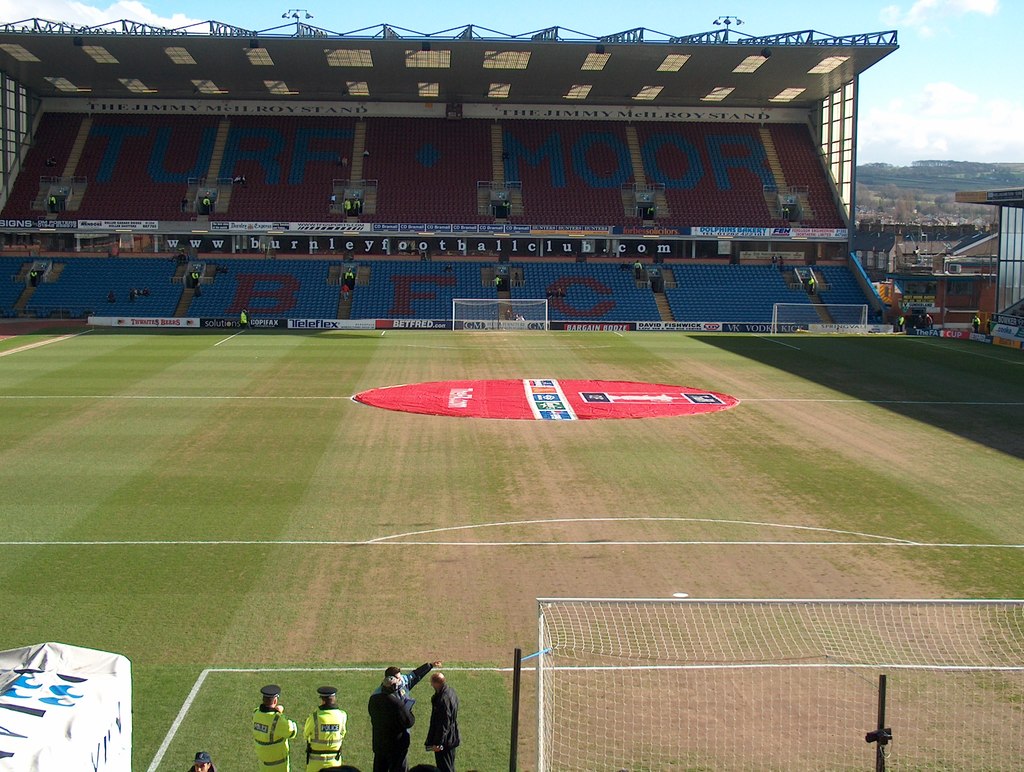
The Bee Hole End was the terrace at the end of Burnley's Turf Moor nearest the Bee Hole Colliery, from which it took its name; the colliery adjoined the land leased for the football club in 1883, and the terrace was replaced in the 1990s by the Jimmy McIlroy Stand.
The mining history in this record
When Burnley Cricket Club leased seven acres to the young Burnley football club in January 1883, the land lay between the cricket field and the Bee Hole Colliery to the east. The colliery stood just south of the ground, near where the memorial gardens are now, and was linked to the Bank Hall and Rowley pits by narrow-gauge ginny tracks that carried coal from the Ridge to Bank Hall. A 'bee-hole', like a bell pit, is a short shaft sunk to a shallow seam; the Bee Hole Colliery is thought to have worked a seam near the surface and then a deeper one.
The terrace at that end of Turf Moor took the colliery's name. In 1932 Burnley's newly formed supporters' club paid for a hut and scoreboard on the Bee Hole End embankment, and terracing was added to the banking in the 1950s. In 1970 new terracing was built there, and the directors hoped it would become the ground's only standing area, holding 20,000.
People
Roger Frost, Burnley local historian, whose Burnley Express column recalls the Beehole Colliery and its ginny tracks.
Legacy today
The Taylor Report ended that plan. In the 1990s the Bee Hole End terrace, like the Longside, was replaced by an all-seated stand, now the Jimmy McIlroy Stand, but the name survives in the town's memory of the ground: as the Burnley Express put it, there are many Kops but no other end in football called the Bee Hole End.
Recorded claims
Individual factual claims, each tagged with how solidly it's grounded and attached to the source(s) that support it. Where sources disagree, both are kept.
- In January 1883 the cricket club leased seven acres to Burnley FC between the cricket field and the Bee Hole Colliery to the east. (documented fact) 1
- The Bee Hole End of Turf Moor was named after the Bee Hole Colliery, which stood just south of the ground. (documented fact) 1,2
- In 1932 a hut and scoreboard were installed at the Bee Hole End with funds from the newly founded supporters' club. (documented fact) 1
- In 1970 new terracing was built at the Bee Hole End, which the directors hoped would become the ground's only standing area. (contemporary account) 2
- The Bee Hole End terrace was replaced by an all-seated stand in the 1990s, after the Taylor Report. (documented fact) 1
- The Beehole Colliery was linked to the Bank Hall and Rowley mines by narrow-gauge ginny tracks. (later recollection) 2
Mines
- Bee Hole Colliery — Lancashire
The terrace at that end of Turf Moor took its name from the Bee Hole Colliery, which adjoined the land leased for the ground in 1883.
Real-world mining concepts used here
Bell Pit, Coal, Colliery, Shaft, Terrace
Sources
- (secondary) Turf Moor (Wikipedia) — Wikipedia
- (secondary) From the Burnley Express Archive: Clearly recognisable as Turf Moor, but so much has changed in 50 years (Roger Frost, 7 July 2020) — Burnley Express
Record created: 23 October 2026 · Last researched: 25 October 2026