 MineArchive
The Brave Don't Cry
| Category | Screen |
|---|---|
| Dates | 7 September 1950: the Knockshinnoch inrush. August 1952: premiere at the Edinburgh Film Festival. September 1952: shown at the Venice Film Festival. |
The Brave Don't Cry (1952), directed by Philip Leacock for John Grierson's Group 3, is a feature film of the Knockshinnoch Castle Colliery disaster of September 1950, when liquid peat broke into the workings at New Cumnock and more than a hundred men were trapped. Made in documentary style with Glasgow Citizens Theatre actors and the National Coal Board's help, it premiered before an audience of miners at the Edinburgh Film Festival.
The mining history in this record
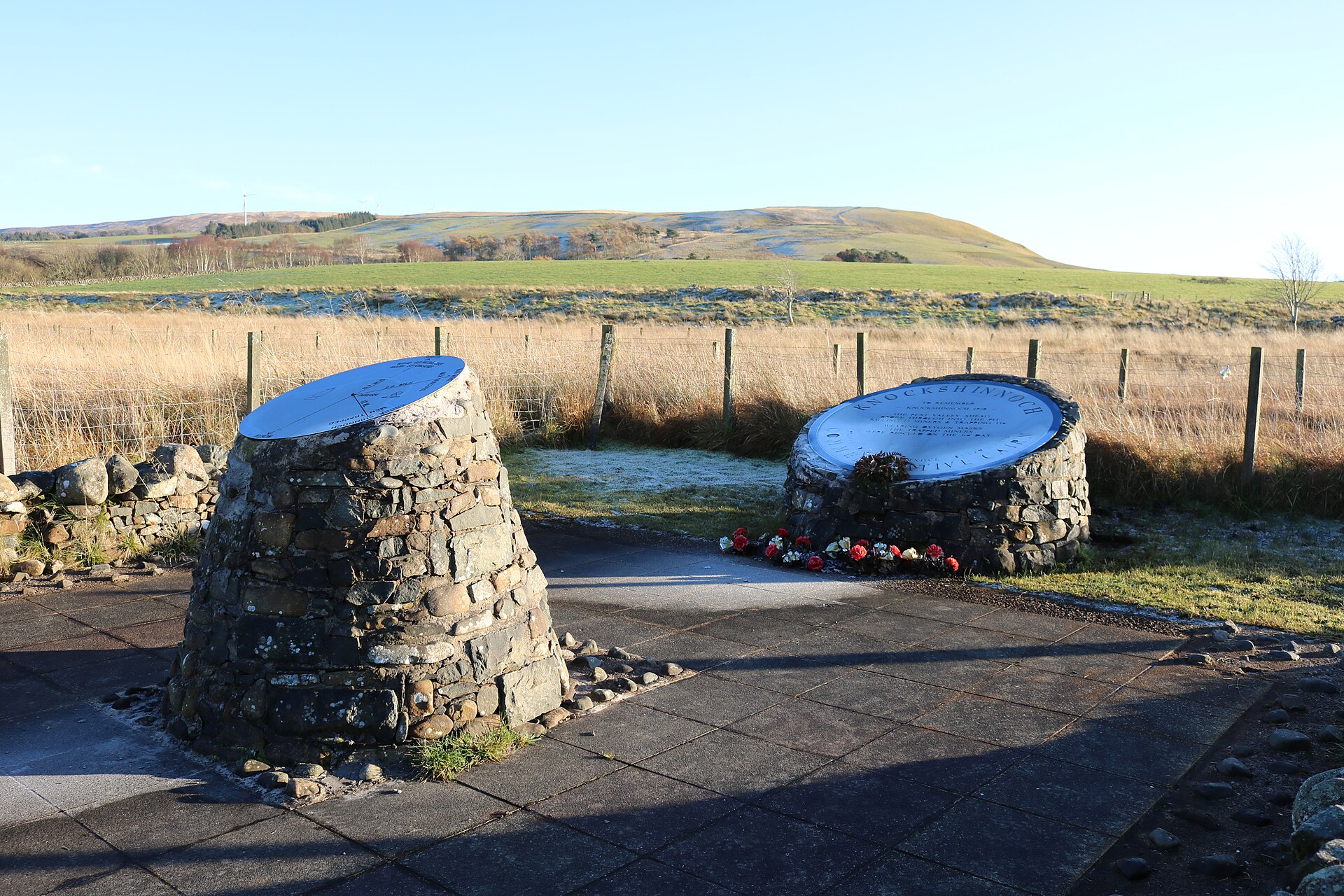
On the evening of 7 September 1950 liquid peat or moss broke through from the surface into a heading of Knockshinnoch Castle Colliery at New Cumnock in Ayrshire, filling miles of workings and sealing the way out; 116 men were cut off from the pit bottom. After two days, with a telephone line to the surface still working, they were led out through the gas-filled old workings of the neighbouring Bank No. 6 mine wearing oxygen rebreathers. Thirteen men working at the heading could not be reached.
Within two years the story had become a film. Group 3, a production company funded by the state through the National Film Finance Corporation with John Grierson as producer, made it in a six-week shoot at Southall Studios and on Scottish locations, among them Rosewell in Midlothian. Philip Leacock, who had come from documentaries, directed his first feature from a screenplay by the documentarist Montagu Slater, and the National Coal Board provided, in its own words, every material facility that was required. Originally to be called What God Forgot, and also known as Knockshinnoch Story, it premiered as The Brave Don't Cry at the Edinburgh Film Festival in August 1952 before an invited audience of miners, and was screened at Venice the following month.
People
Philip Leacock, director. Montagu Slater, screenwriter. John Grierson, producer (Group 3). John Gregson, Meg Buchanan and John Rae, leading players.
Legacy today
Described variously as drama-documentary, semi-documentary and neo-realist, the film is counted among Group 3's better works and was both a critical and a commercial success; early unease about filming a recent tragedy gave way to agreement that it had been handled with sensitivity and dignity. Its cast, drawn largely from the Glasgow Citizens Theatre, included John Gregson, Meg Buchanan, John Rae, Andrew Keir, Fulton Mackay and Russell Hunter. It has been restored and released on DVD.
Recorded claims
Individual factual claims, each tagged with how solidly it's grounded and attached to the source(s) that support it. Where sources disagree, both are kept.
- The Brave Don't Cry (1952) dramatises the disaster and rescue at Knockshinnoch Castle Colliery in September 1950. (documented fact) 1,2,3,4
- It was directed by Philip Leacock from a screenplay by Montagu Slater, for Group 3 with John Grierson as producer. (documented fact) 1,2
- Originally to be titled What God Forgot, it premiered at the Edinburgh Film Festival in August 1952 before an invited audience of miners, and was shown at Venice that September. (documented fact) 1,2,3
- The National Coal Board gave the production every material facility it needed. (contemporary account) 2
- Its cast drew on the Glasgow Citizens Theatre, among them Andrew Keir and Fulton Mackay. (documented fact) 1,3
- Initial disquiet at a film of a recent tragedy gave way to agreement that it was handled with sensitivity, and it was a critical and commercial success. (documented fact) 2
- The film's sources give the men trapped as 129 and as 118; 129 were underground when the inrush came, and 116 were cut off. (documented fact, disputed) 1,2,4
Mines
- Knockshinnoch Castle Colliery — East Ayrshire
The film dramatises the inrush of September 1950 at Knockshinnoch Castle Colliery, New Cumnock, and the rescue of the trapped men through the old Bank workings.
Disasters
- Knockshinnoch Castle Colliery Inrush — 7 September 1950
Real-world mining concepts used here
Sources
- (secondary) The Brave Don't Cry — Wikipedia
- (secondary) BFI Screenonline: Brave Don't Cry, The (1952) — BFI Screenonline
- (secondary) The Brave Don't Cry - Docu-drama from John Grierson — Panamint Cinema
- (secondary) The Knockshinnoch Mining Disaster — Dr Ian Adamson
Record created: 5 October 2026 · Last researched: 5 October 2026