 MineArchive
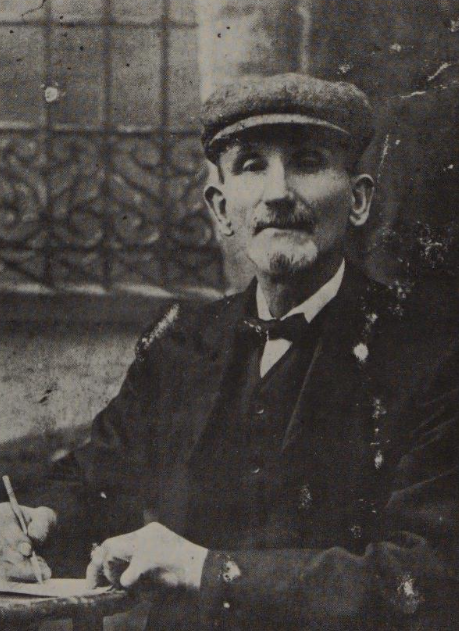
Tommy Armstrong, the Pitman's Poet
| Category | Music |
|---|---|
| Dates | 15 August 1848: born at Shotley Bridge. 1866: putter and hewer at Addison Colliery, then East Tanfield. 1882: The Trimdon Grange Explosion. 1909: first Song Book. 30 August 1920: died at Tantobie. 1952: songs in A. L. Lloyd's Come All Ye Bold Miners. 1965: Tommy Armstrong of Tyneside (Topic Records). 11 June 2016: plaque at Tanfield Church. |
Tommy Armstrong (1848-1920), 'the Pitman Poet' of the Stanley district of County Durham, worked as a boy and a man at East Tanfield and Addison collieries and wrote songs in pit dialect about the lives, strikes and disasters of the Durham coalfield, among them The Trimdon Grange Explosion and The Sooth Medomsley Strike.
The mining history in this record
Thomas Armstrong was born on 15 August 1848 at 17 Wood Street, Shotley Bridge, the son of a miner. In the early 1850s the family moved east to the Stanley district, first to South Pontop and then to East Tanfield. Rickets in childhood left him bow-legged and under five feet tall, and his son recalled that Tommy's older brother had to carry him to his first job, as a trapper opening and shutting the air doors underground.
Where he first worked is told differently: the local press said Medomsley Colliery at eight, his eldest son East Tanfield at nine. Official records place him at Addison Colliery in 1866, first as a putter and then as a hewer, and his younger brother said he moved to East Tanfield Colliery late that year and worked there for several years. The 1901 census calls him a coal worker underground, and his death certificate a retired colliery shifter. He lived for most of his life at Tanfield Lea, apart from a few years from 1902 when he kept a newsagent's at Whitley Bay.
He wrote in the Pitmatic and Geordie dialects, usually to an existing tune, and sold his songs printed on sheets to keep himself in beer and to support a family of fourteen children. Many deal with the work and struggles of the pits: strikes, lock-outs, evictions and the candymen who carried them out, and disasters. He sang The Trimdon Grange Explosion at the local Mechanics' Hall within days of the explosion of 1882, wrote The Durham Strike to raise money in the strike of 1892, and wrote Oakey's Strike at the Red Row public house at Beamish Burn. He was never well off, and concerts were got up to help him in his last years. He died at Tantobie on 30 August 1920, aged 72, and was buried in the churchyard at Tanfield, with lines from The Durham Strike on his headstone.
People
Tommy Armstrong (1848-1920), miner and songwriter. William H. Armstrong, his son, who compiled the Song Book. A. L. Lloyd, folklorist, who collected and printed his songs.
Legacy today
A Song Book of his work, compiled by his son William, appeared in 1909, 1930 and 1953. A. L. Lloyd printed several of his ballads in Come All Ye Bold Miners (1952), and in 1965 Topic Records issued Tommy Armstrong of Tyneside, fourteen of his songs sung by Johnny Handle, Louis Killen and Maureen Craik. The Trimdon Grange Explosion has been recorded by many singers since 1962. Stanley Town Council unveiled a plaque to him at Tanfield Church on 11 June 2016, beside his original headstone and a second dedicated in 1986, and the Tanfield Railway named its tea room, in the East Tanfield station building on the site of East Tanfield Colliery, after him.
Recorded claims
Individual factual claims, each tagged with how solidly it's grounded and attached to the source(s) that support it. Where sources disagree, both are kept.
- Tommy Armstrong was born at Wood Street, Shotley Bridge, on 15 August 1848. (documented fact) 1,2
- Official records show him at Addison Colliery in 1866, first as a putter and then as a hewer. (documented fact) 1
- He worked as a miner at East Tanfield Colliery. (documented fact) 1,2,3
- His son recalled that his older brother carried him to his first job as a trapper, because rickets had left him lame. (later recollection) 2
- The local press said he first went down Medomsley Colliery at eight; his eldest son said East Tanfield at nine. (later recollection, disputed) 1
- He was known as the Pitman Poet. (documented fact) 1,2,3
- He died at Tantobie on 30 August 1920 and is buried at Tanfield. (documented fact) 1,2,3
- Stanley Town Council unveiled a plaque to him at Tanfield Church on 11 June 2016. (documented fact) 1
Mines
- Addison Colliery — Tyne and Wear
Official records show Armstrong employed at Addison Colliery in 1866, first as a putter and then as a hewer. - East Tanfield Colliery — County Durham
Armstrong worked at East Tanfield Colliery as a young man, by his brother's account from late 1866 for several years; the Tanfield Railway's tea room on the colliery site carries his name. - Tanfield Lea Colliery — County Durham
Armstrong lived for most of his life at Tanfield Lea, the colliery's village, and wrote of its band and its pits.
Real-world mining concepts used here
Coal, Colliery, Hewer, Putter, Trapper
Sources
- (secondary) Tommy Armstrong (singer-songwriter) — Wikipedia
- (secondary) Tommy Armstrong The Pitman Poet — Sunniside Local History Society
- (secondary) Tanfield Railway Blog: Tommy Armstrong — Tanfield Railway
Record created: 6 October 2026 · Last researched: 6 October 2026