 MineArchive
Sixteen Tons
| Category | Music |
|---|---|
| Dates | Written/first recorded 1946 (Merle Travis); Tennessee Ernie Ford's hit version recorded Sept 1955, UK #1 Jan-Feb 1956 |
Merle Travis's 1946 song about a Kentucky coal miner trapped by the company-store system — not itself about a British mine, but a song whose subject, the truck system, was lived out almost identically in Britain's own coalfields, and whose 1955 hit version by Tennessee Ernie Ford topped the UK singles chart the following year.
The mining history in this record
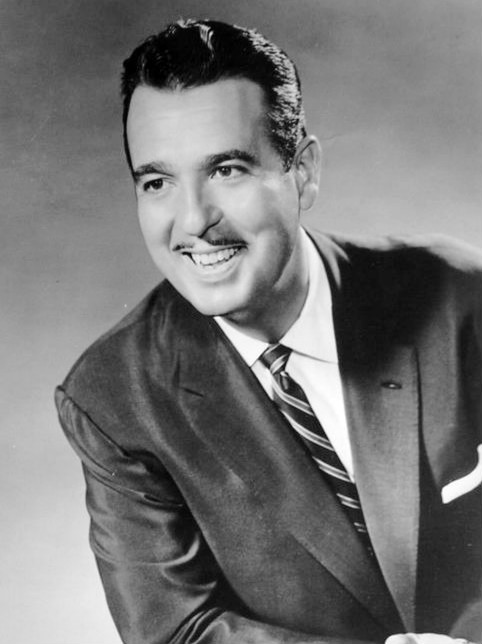
Merle Travis, born into a Kentucky coal-mining family, wrote Sixteen Tons in 1946 for his album Folk Songs of the Hills, first recording it on 8 August that year at Radio Recorders Studio B in Hollywood; it was released the following year on Capitol Records. Two specific pieces of his own family's life went directly into the song. The chorus line 'another day older and deeper in debt' came from a letter Travis's brother John wrote him about the death of the war correspondent Ernie Pyle, likening Pyle's dangerous, thankless job to a coal miner's: 'you load 16 tons and what do you get?' The song's most-quoted line, 'I owe my soul to the company store', drew on something Travis's own father had told him about scrip — credit tokens issued instead of cash wages, redeemable only at a store the mining company itself owned (see MineArchive's own Truck System term, below). The song's other memorable image, sixteen tons loaded 'and what do you get', reflects a specific pit custom: a new miner would often be helped to an artificially high first-day tonnage by more experienced men quietly slacking off around him, a rite of passage rather than a realistic daily output.
The song reached a far larger audience nine years later. Tennessee Ernie Ford recorded it on 20 September 1955, reportedly under pressure from Capitol Records to deliver a single, with a six-piece band; the finger-snaps on the record came from Ford snapping to keep the producer's tempo. Released 17 October 1955, it became, at the time, the fastest-selling single in Capitol's history — 400,000 copies by 28 October, a million by 10 November, two million by 15 December — and reached number one on both the US country and pop charts. In Britain, Ford's recording topped the UK Singles Chart for four weeks from 20 January to 17 February 1956, introducing an American coalfield's own version of a system British miners had lived under too, and had only had illegal decades earlier (see Truck System).
People
Written by Merle Travis, drawing directly on his own coal-mining family's experience in Kentucky; its best-known recording is by Tennessee Ernie Ford (1955).
Legacy today
Ford's 1955 recording was added to the US Library of Congress's National Recording Registry in 2015 for its cultural, artistic and historical significance, and the song continues to be referenced widely, from films to television (Mad Men, The Wire, Fargo) to video games (Fallout 76) — a Kentucky coal miner's complaint about debt bondage that outlived the specific system, and the country, it was written about.
Mining language in this record
Words and phrases in this record that are genuine mining terminology, occupations, methods or economic practice — not scenery or ordinary regional language that merely appears in a mining-adjacent work.
| Expression | Meaning | MineArchive connection |
|---|---|---|
| Straw boss | A subordinate crew leader who supervises a small group of workers while still doing the same work himself, rather than a full-time manager. (US mining/industrial usage) | Overman — Broadly comparable to a British Overman — a working supervisor of one underground section — though a straw boss was not a certificated safety official the way a Deputy was; the closest British equivalent varies by period and colliery. |
| Company store / scrip | Company-run stores paid for with scrip — credit tokens issued by the company itself instead of ordinary cash wages — that could leave a worker permanently indebted to their own employer. (US Appalachian coalfield term) | Truck System — The same underlying system MineArchive's Truck System term describes: wages paid in company-controlled credit rather than cash, redeemable only at a company-owned store. Britain outlawed the practice for its own miners in 1817, more than a century before Travis's family lived under its American equivalent. |
| No. 9 coal | A reference to a specific numbered coal seam, not a literal count of nine pieces of coal — an American convention of naming individual seams by number, most likely pointing to the Western Kentucky No. 9 seam given Travis's own Muhlenberg County background. (Appalachian/US coalfield convention) | British collieries generally named individual seams rather than numbering them under one shared national scheme, so no single MineArchive term corresponds directly. |
| Sixteen tons (the tonnage itself) | Tonnage was the standard measure a face-worker's output — and often pay — was reckoned by. The song's title figure reflects a real pit custom: other miners quietly slackening their own pace so a new man could reach an artificially high tonnage on his first day, a rite of passage rather than a realistic daily total. | Hewer — British coalfields' equivalent output-measured face-workers were Hewers, whose cut tonnage was likewise the basic measure of a day's work — though this record doesn't establish that British hewers were paid by an identical per-tonnage mechanism to Travis's mine. |
Recorded claims
Individual factual claims, each tagged with how solidly it's grounded and attached to the source(s) that support it. Where sources disagree, both are kept.
- The chorus line 'another day older and deeper in debt' came from a letter Merle Travis's brother John wrote him about war correspondent Ernie Pyle's death, likening Pyle's job to a coal miner's. (documented fact) 1,2
- The line 'I owe my soul to the company store' drew on something Travis's own father had told him about the scrip/company-store system. (documented fact) 1
- The song's title figure reflects a real pit custom: other miners would slacken their own pace so a new man could reach an artificially high tonnage on his first day. (documented fact) 1
- Tennessee Ernie Ford's 1955 recording topped the UK Singles Chart for four weeks, from 20 January to 17 February 1956. (documented fact) 2
- Ford's recording became, at the time, the fastest-selling single in Capitol Records' history, selling two million copies by 15 December 1955. (documented fact) 1
- ‘Straw boss’ denotes a subordinate crew leader who supervises a small group of workers while still doing the same work himself, rather than a full-time manager — used in American mining and other US trades, and confirmed as mining terminology (not just general slang) by Mindat's own glossary. (documented fact) 3
- ‘No. 9 coal’ is not a literal count of nine pieces of coal but a reference to a specific numbered coal seam — an American convention of naming individual seams by number. Given Merle Travis's own Muhlenberg County, Kentucky background, this most plausibly points to the Western Kentucky No. 9 seam, a real and well-documented seam of the Western Kentucky coalfield. (reasonable inference) 4
Commodities
Real-world mining concepts used here
Sources
- (secondary) Sixteen Tons — Wikipedia
- (secondary) Sixteen Tons by Tennessee Ernie Ford — Songfacts
- (secondary) Straw boss (glossary) — Mindat.org
- (secondary) Western Kentucky coalfield — Wikipedia
Record created: 27 August 2026 · Last researched: 27 August 2026