 MineArchive
How Green Was My Valley
| Category | Literature |
|---|---|
| Dates | 1939: novel published. 1940: National Book Award, favourite novel. 28 October 1941: film released. 1990: film added to the National Film Registry. |
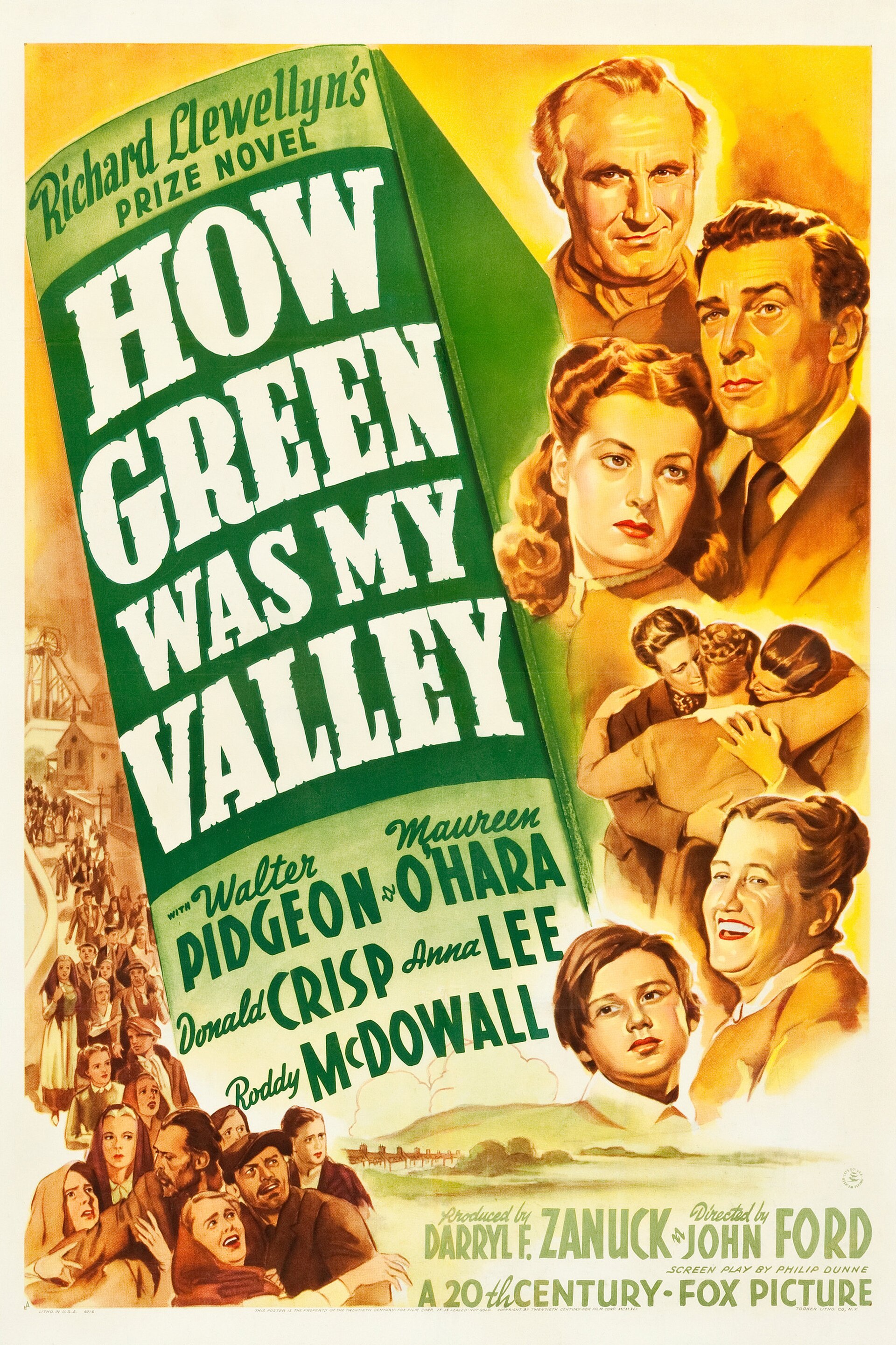
Richard Llewellyn's 1939 novel of the Morgans, a mining family of the South Wales valleys, told by the youngest son Huw and set in a village based on Gilfach Goch; John Ford's 1941 film of it won five Academy Awards, including Best Picture.
The mining history in this record
How Green Was My Valley was published in 1939 and found a huge readership at once; in the United States it won the National Book Award for favourite novel of 1940, voted by the members of the American Booksellers Association. Its narrator Huw Morgan looks back on his boyhood in a South Wales mining village in the reigns of Victoria and Edward VII: his father Gwilym and his brothers work in the colliery, his brother Davy leads the men in the union, a strike divides the family, his brother Ivor is killed in a pit accident, and the book closes with Gwilym dying underground as the spoil tips swallow the green valley of the title.
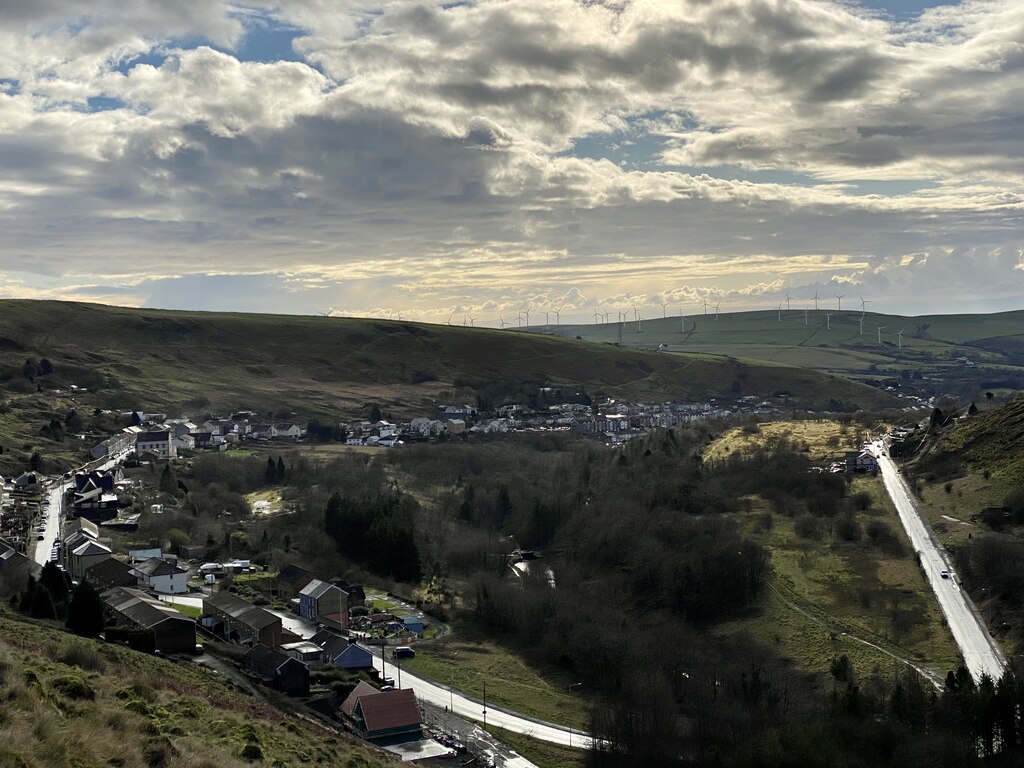
The village is fictional, but it rests on Gilfach Goch, a dead-end valley between the Ogmore and the Rhondda where three pits were sunk from the 1860s: the Dinas Main, which reached the Rhondda No. 3 seam in 1868, the Britannic Merthyr, sunk into the steam coal between 1894 and 1896, and the Trane. Seven men died in an explosion at the Dinas Main in 1907; the Trane closed in 1953 and the Britannic in 1960. Llewellyn spent time in the village with his grandfather and gathered his material from conversations with its mining families. The poet Sam Adams, who grew up there, remembered a valley where one side was hidden from the other by black mountains of pit waste, and recognised Glenavon Terrace and the Ogwr Fach behind the author's hat in the publicity photographs of Llewellyn printed on the novel's sixtieth anniversary.
Llewellyn himself was not what he said he was. He claimed to have been born in St Davids and to have drawn the book from his own life; after his death in 1983 it emerged that he was born Richard Lloyd in Hendon, Middlesex, in 1906, the son of a hotel clerk of Welsh descent, and had spent little time in Wales, though he had worked for a period as a coal miner before the war.
People
Richard Llewellyn (1906-1983), author. John Ford, director of the 1941 film; Philip Dunne, screenwriter; Darryl F. Zanuck, producer. Roddy McDowall as Huw, Walter Pidgeon as Mr Gruffydd, Donald Crisp as Gwilym Morgan, Sara Allgood as Beth Morgan, Maureen O'Hara as Angharad.
Legacy today
Twentieth Century-Fox filmed the novel in 1941. William Wyler was to direct and chose the young Roddy McDowall for Huw from his screen test; John Ford replaced him. Wartime made shooting in Wales impossible, so the studio built an eighty-acre Welsh mining village at Brent's Crags in the Santa Monica Mountains near Malibu, its design based, according to the film's pressbook, on real Welsh villages. Walter Pidgeon played the preacher Gruffydd, Donald Crisp the father, Sara Allgood the mother and Maureen O'Hara Angharad, and all the songs but one are sung in Welsh. The film was nominated for ten Academy Awards and won five, Best Picture, Best Director, Best Supporting Actor for Crisp, Best Cinematography and Best Art Direction, beating Citizen Kane, Sergeant York and The Maltese Falcon to the top award. It was placed on the United States National Film Registry in 1990.
Llewellyn returned to Huw Morgan in later novels, and the BBC adapted the book for television in 1960 and 1975. The novel has stayed in print since 1939 in many languages.
Recorded claims
Individual factual claims, each tagged with how solidly it's grounded and attached to the source(s) that support it. Where sources disagree, both are kept.
- The novel is narrated by Huw Morgan and follows the Morgans, a mining family of the South Wales valleys, in the reigns of Victoria and Edward VII. (documented fact) 1
- The fictional village rests on Gilfach Goch, where Llewellyn spent time with his grandfather and gathered material from conversations with mining families. (documented fact) 1,2,3
- Llewellyn's claim to have been born in St Davids was found after his death to be false; he was born in Hendon, Middlesex, in 1906. (documented fact) 4
- In the United States the novel won the National Book Award for favourite novel of 1940. (documented fact) 1,4
- John Ford's 1941 film won five of its ten Academy Award nominations, including Best Picture, Best Director and Best Supporting Actor for Donald Crisp. (documented fact) 2,5
- The film was shot on an eighty-acre village set built by the studio at Brent's Crags in the Santa Monica Mountains near Malibu. (documented fact) 2,5
- Three pits were sunk at Gilfach Goch: the Dinas Main, which reached the Rhondda No. 3 seam in 1868, the Britannic Merthyr, sunk between 1894 and 1896, and the Trane; the Trane closed in 1953 and the Britannic in 1960. (documented fact) 3
- Sam Adams, who grew up in Gilfach Goch, recalled a valley where one side was hidden from the other by mountains of pit waste. (later recollection) 6
Mines
- Britannic Colliery — Rhondda Cynon Taf
The novel's valley is based on Gilfach Goch, whose pits were the Britannic Merthyr, sunk 1894-96 and closed 1960, the Dinas Main and the Trane; Llewellyn gathered his material from the village's mining families. - Dinas Main Colliery — Rhondda Cynon Taf
The first pit at Gilfach Goch, the village on which the novel's valley is based; it reached the Rhondda No. 3 seam in 1868 and closed after the explosion of 1907 that killed seven men.
Regions
Real-world mining concepts used here
Coal, Colliery, Screens, Spoil Heap
Sources
- (secondary) How Green Was My Valley (novel) — Wikipedia
- (secondary) How Green Was My Valley (film) — Wikipedia
- (secondary) Gilfach Goch — Wikipedia
- (secondary) Richard Llewellyn — Wikipedia
- (secondary) How Green Was My Valley (1941) — AFI Catalog of Feature Films
- (secondary) Letter from Wales (PN Review 132) — PN Review
Record created: 10 October 2026 · Last researched: 10 October 2026