 MineArchive
Children of Darkness: A Romance of Mining Life
| Category | Literature |
|---|---|
| Dates | Serialised in the Weekly Mail, Cardiff, winter 1891 to 1892 (chapter 31 on 12 December 1891); Perth Western Mail 2 January to 14 May 1892; author born Scholes 1857, left the pits 1888, died November 1930. |
J. Monk Foster's serial of 1891 to 1892 opens on the lane from Kingsmoss to Pewfall Colliery and follows the honest collier Reuben Calvert, the cad Richard Orrell and the farmer's daughter Mary Farrington through a flood, a colliery explosion and Orrell's exposure; its author had spent twenty-one years in the Wigan pits before he exchanged the pick for the pen.
The mining history in this record
Children of Darkness: A Romance of Mining Life was syndicated by Tillotsons of Bolton and printed week by week in the Cardiff Weekly Mail through the winter of 1891 to 1892, under a byline that already listed A Miner's Million, Slaves of Fate, A Pit Brow Lassie, A Prophet of the Mines, Passion's Aftermath, The Black Moss Mystery, Queen of the Factory and Nineteenth Century Tragedy. Its first chapter puts the reader on the dusty highroad at dawn, among the men with cans in their hands and picks on their shoulders on their way to the Pewfaw, as the village pits were termed, and lads of ten to twenty swinging their Davy lamps; the lane runs from the mining village of Kingsmoss to Pewfall Colliery and on to a town three miles off. The story is a romance in the Victorian serial manner: Mary Farrington chooses the wrong man, Richard Orrell squanders her money and leaves her, and Reuben Calvert comes back from America to expose him. The later chapters move to the fictional Park Fold Colliery, bought for an old song when the coal trade was at its lowest and now owned by the widow Mrs Jonathan Scowcroft, where an explosion has killed men and a stranger calling himself John Hardcastle takes the management and the distribution of relief to the widows and orphans into his hands; Orrell dies underground there, and the lovers set forth hand in hand to the life they had so bravely won.
The author knew the ground. John Monk Foster was born in the Weavers Arms Yard in Scholes, Wigan, in 1857, the eldest of seven brothers, and went to work at nine in the cannel pit at Rylands, in a seam not much over two feet high where the drawers pushed the tubs with their heads and went bald in front by the age of ten. He spent twenty-one years underground, rose to colliery contractor employing six men at Moss Hall, and lost that work when his article on mines inspection in the Nineteenth Century, quoted in the House of Commons, brought the district's chief inspector to his door. His first full-length serial, A Miner's Million, ran through half a dozen newspapers at once in 1888 and let him leave the pit for Tillotsons' fiction bureau; in 1889 he and the Scottish journalist James MacNab launched The Comet, a radical Wigan paper that lasted five brilliant years, pleaded the cause of the working class and told injured miners to join the union. He was one of the earliest advocates of state ownership of the coal industry. By his own count he wrote about thirty novels, most of them of Lancashire mining life, with others of the cotton mills and the ironworks, romances of industry in which the toilers' conditions were set forth; failing eyesight stopped him at fifty-five, every word written by hand with a finger maimed in the pits. He died in November 1930, and the Wigan Observer headed his obituary Death of Miner Author.
People
John Monk Foster (1857-1930), the author: a Scholes drawer at nine, a Wigan collier and contractor for twenty-one years, a serial novelist for Tillotsons of Bolton from 1888 and a freelance from 1904, editor of The Comet from 1889 with James A. MacNab, father of nine. His characters are fictional: Reuben Calvert the collier, Richard Orrell, Mary Farrington the farmer's daughter, Mrs Jonathan Scowcroft the owner of Park Fold, and John Hardcastle its new manager.
Legacy today
Foster's novels were never collected in book form in his lifetime and survive in the newspaper columns that carried them; Welsh Newspapers Online holds the Weekly Mail run of Children of Darkness, and the Perth Western Mail's run is on Trove. A Pit-brow Lassie and A Miner's Million have been transcribed for Project Gutenberg Australia, and A Pit-brow Lassie has drawn academic attention as the fullest Victorian fiction of the pit-brow women. His grandson Don Rayner told his story in Wigan Heritage Service's Past Forward in 2002, and some of his manuscripts are in Wigan Archives. Pewfall Colliery itself was worked out in 1911; a marked shaft beside Liverpool Road and the lane the novel opens on are what remain.
Mining language in this record
Words and phrases in this record that are genuine mining terminology, occupations, methods or economic practice — not scenery or ordinary regional language that merely appears in a mining-adjacent work.
| Expression | Meaning | MineArchive connection |
|---|---|---|
| Pewfaw | What the colliers of Kingsmoss call the village pits: Pewfall Colliery in the Lancashire voice. (Lancashire) | A dialect form of a real place name; explained on its own terms. |
| drawer | The lad who drew the tubs from the coal face to the roadway; Foster himself was one at nine in a seam two feet high, pushing the waggons with his head. (Lancashire) | Putter — The Lancashire word for the North East's putter: the same job, linked to the archive's Putter term with that caveat. |
| Davy lamp | The safety lamp the lads swing from their fingers or coat collars on the way to the pit in the opening chapter. | Safety Lamp — The novel uses the maker's name for the safety lamp as every Lancashire pit did. |
| Park Fold Colliery | The fictional pit whose explosion drives the later chapters and whose widowed owner takes on a stranger as manager. (Lancashire) | A made-up colliery in a real district; the novel's own, with no archive record to link. |
Recorded claims
Individual factual claims, each tagged with how solidly it's grounded and attached to the source(s) that support it. Where sources disagree, both are kept.
- Children of Darkness: A Romance of Mining Life, by J. Monk Foster, ran as a weekly serial in the Cardiff Weekly Mail through the winter of 1891 to 1892; chapter 31 appeared on 12 December 1891. (documented fact) 1,2
- The novel opens on the lane from the mining village of Kingsmoss to Pewfall Colliery, the 'Pewfaw' of its colliers, and its story turns on the honest collier Reuben Calvert, the cad Richard Orrell and the farmer's daughter Mary Farrington. (contemporary account) 3
- The later chapters turn on an explosion at the fictional Park Fold Colliery, whose widowed owner Mrs Jonathan Scowcroft hands its management to the stranger John Hardcastle while he distributes relief to the widows and orphans. (documented fact) 1
- John Monk Foster (1857-1930) was born in Scholes, Wigan, went down the cannel pit at Rylands as a drawer at nine, worked twenty-one years underground, and left the pits in 1888 after his first serial, A Miner's Million, ran in half a dozen newspapers at once. (later recollection) 4
- Foster wrote about thirty novels, most of them of Lancashire mining life, for Tillotsons of Bolton and as a freelance; his Nineteenth Century article on mines inspection cost him his work as a colliery contractor at Moss Hall and was quoted in the House of Commons. (later recollection) 4
- The Perth Western Mail printed the serial in forty-four chapters between 2 January and 14 May 1892. (unverified claim, uncertain) 3
Mines
- Pewfall Colliery — Greater Manchester
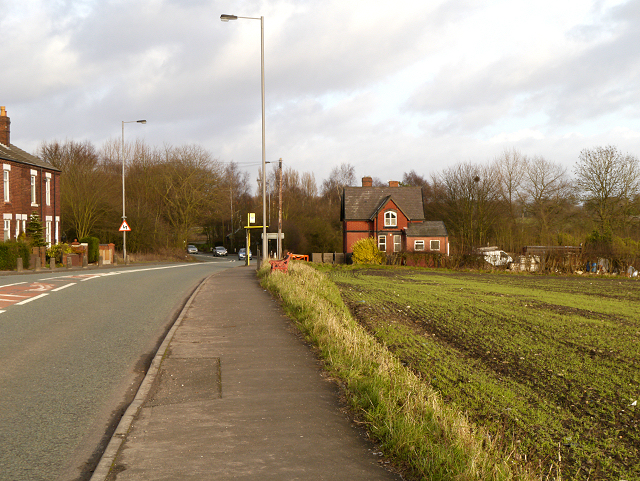
The novel opens on the lane from Kingsmoss to Pewfall Colliery, the 'Pewfaw' of its collier characters, and is set in and around the real pit south-west of Ashton-in-Makerfield where its author's own district lay.
Real-world mining concepts used here
Coal, Colliery, Putter, Safety Lamp, Tub
Sources
- (primary) Children of Darkness: A Romance of Mining Life, by J. Monk Foster, chapter XXXI (Weekly Mail, 12 December 1891, p. 4) — Welsh Newspapers Online, National Library of Wales
- (primary) Children of Darkness instalments in the Weekly Mail, 1891 to 1892 (search listing) — Welsh Newspapers Online, National Library of Wales
- (observational) The Makerfield Rambler: photographs tagged Pewfall — Flickr (The Makerfield Rambler)
- (secondary) Rayner, Don. John Monk Foster: a Wigan miner, author and publisher, 1857-1930. Past Forward 31 (2002), pp. 9-13 — Wigan Heritage Service
Record created: 16 October 2026 · Last researched: 16 October 2026