 MineArchive
Starvationer
| Also known as | Starvationers (plural form, as used in most historical sources) |
|---|---|
| Category | Structures & Machinery |
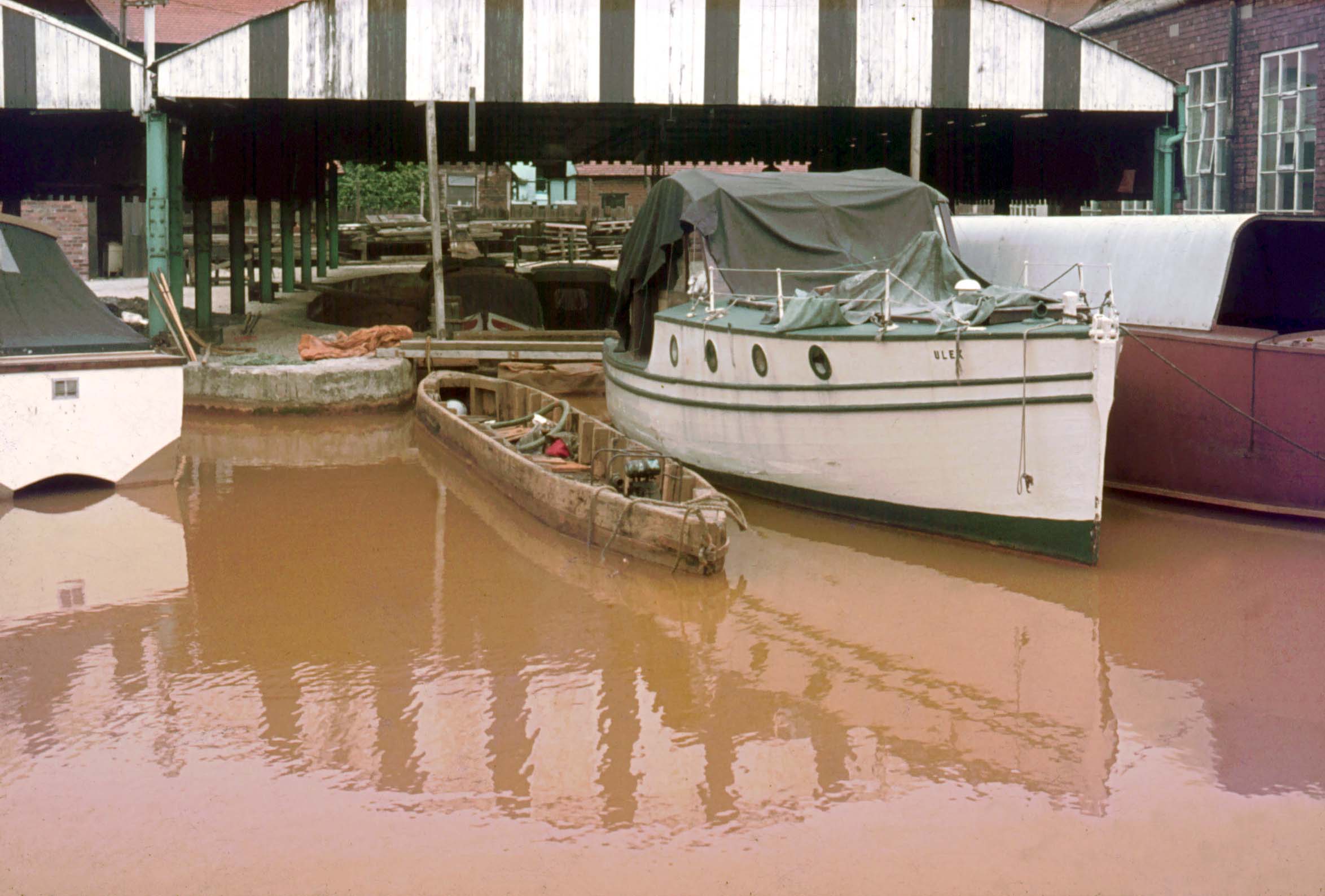
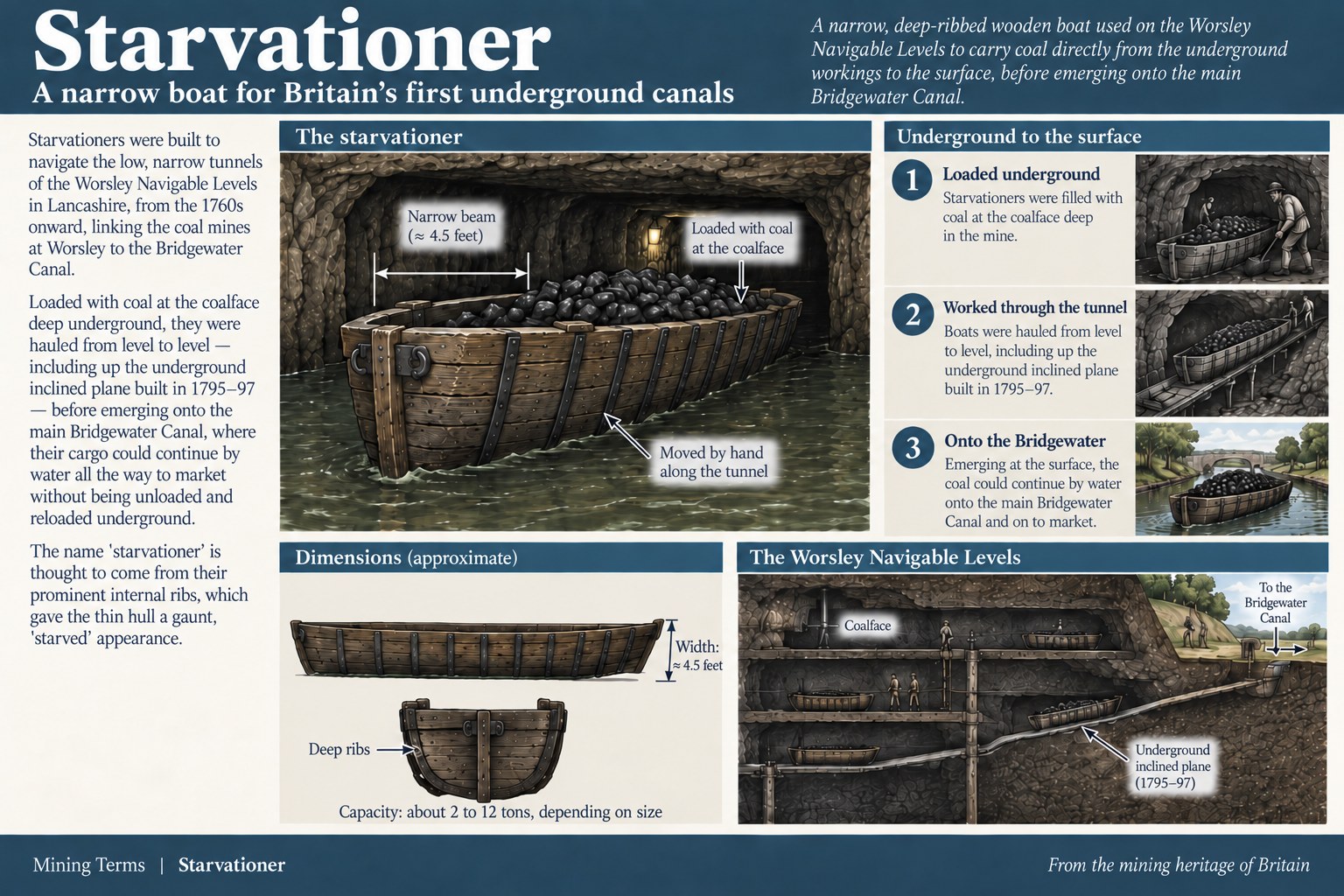
A narrow, deep-ribbed wooden boat, only around four and a half feet wide, built to fit the cramped underground canal tunnels of the Worsley Navigable Levels and carry coal directly from the coalface to the surface.
Historical usage
Starvationers took their name from their exposed, prominent internal ribs, which gave the thin hull a gaunt, 'starved' appearance. Built from the 1760s to serve the Duke of Bridgewater's underground canal system at Worsley, they are widely credited as the design ancestor of the modern canal narrowboat, whose standard dimensions were fixed soon afterwards by James Brindley's agreement with the Trent & Mersey Canal Company.
How it worked
Loaded with coal at the coalface deep underground, starvationers were hauled from level to level -- including up the underground inclined plane built in 1795-97 -- before emerging onto the main Bridgewater Canal, where their cargo could continue by water all the way to market without being unloaded and reloaded underground.
Why it was used
The underground levels at Worsley were driven only as wide as necessary to keep costs down, so a standard-width canal barge could not pass through them; a narrower, purpose-built boat was needed that could still carry a useful cargo of coal.
Risks & limitations
Capacity varied considerably by size, from around 2 to 12 tons -- far less than a standard-gauge canal barge of the period, a direct trade-off for fitting the narrow tunnels.
Mines associated with this term
Included only where MineArchive's own research gives a reasonable evidential basis — not every mine where this might plausibly apply.
- Neston Colliery — Cheshire (well documented example)
Named twice in this record, first in the history: “…itself, along which coal was carried in small wooden boats known as 'starvationers', propelled by workers 'legging' them along by pushing against the…” - Worsley Navigable Levels — Lancashire (well documented example)
Worsley Navigable Levels' own record names starvationers directly as the boats used to carry coal through its underground canal tunnels.
Sources
- (secondary) Worsley Delph and the Duke of Bridgewater's Underground Canals — Pennine Waterways
- (secondary) Worsley Navigable Levels — Wikipedia
Record created: 2 September 2026 · Last researched: 2 September 2026