 MineArchive
Jet
| Category | Commodities |
|---|---|
| Commodity page | Jet → |
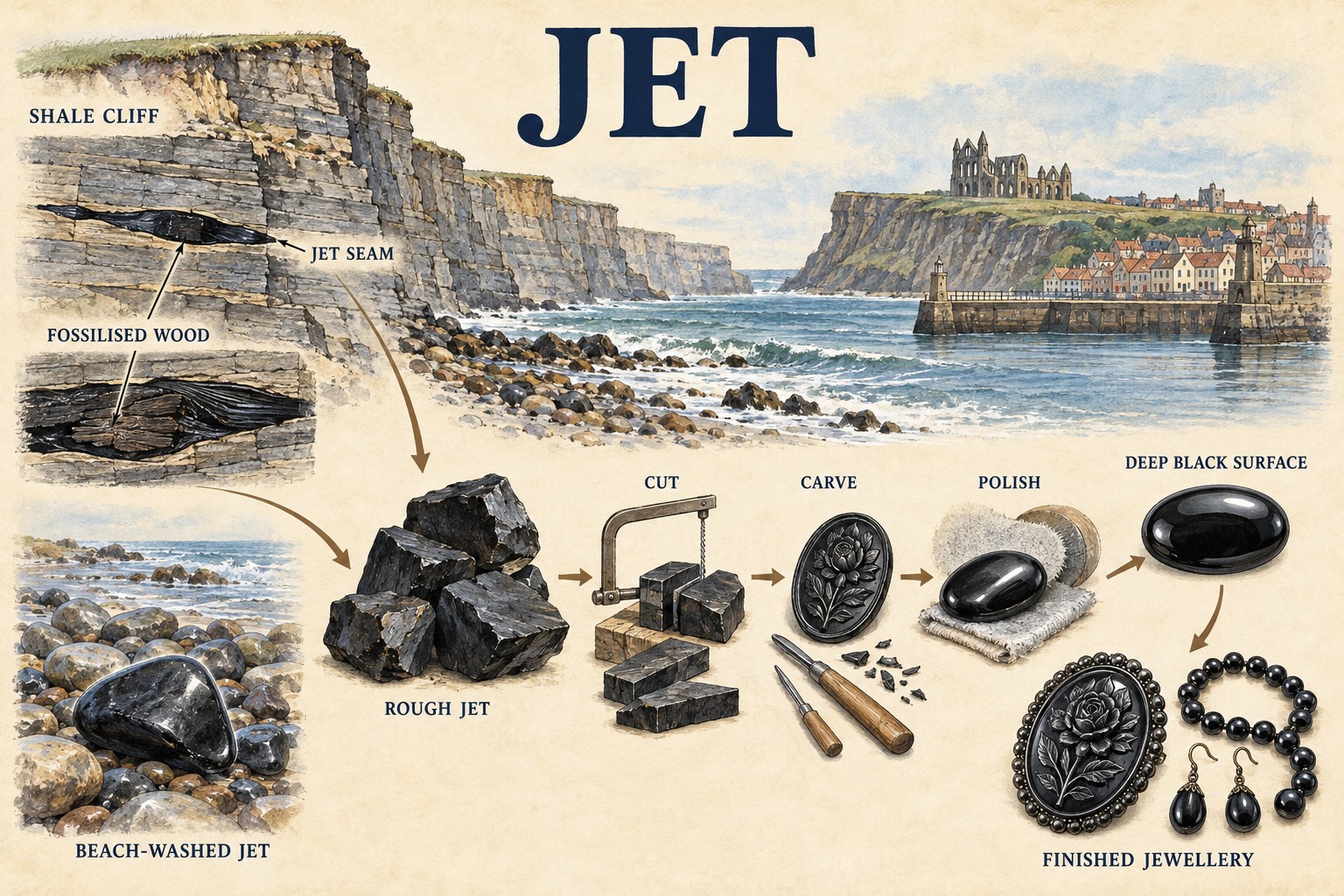
Jet is a hard, black, fossilised form of ancient driftwood, a relative of coal, dug or gathered along the North Yorkshire coast around Whitby and carved into jewellery and ornament.
Historical usage
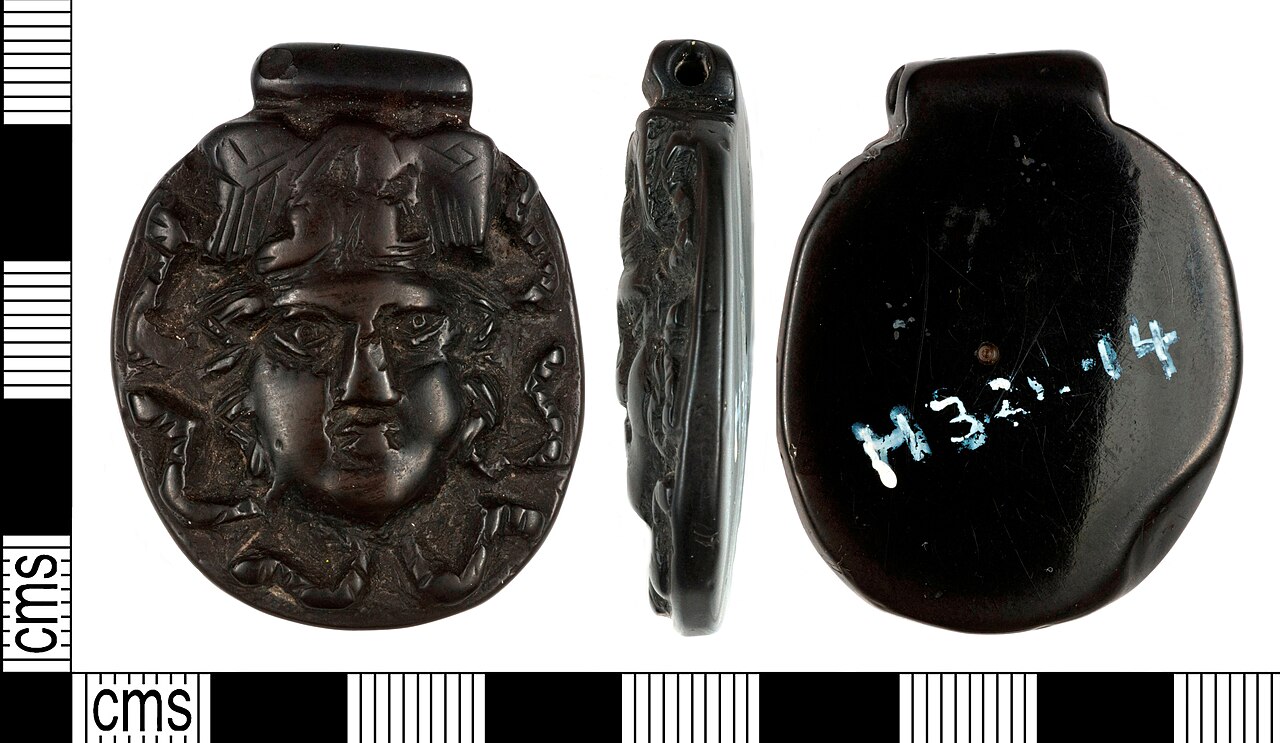
Jet has been worked on the Yorkshire coast since prehistory and was carved into jewellery as early as the Roman period, but its great boom came in the Victorian era: Queen Victoria's own mourning jewellery after Prince Albert's death in 1861 made jet fashionable on a mass scale, and the Whitby trade was most prosperous between about 1850 and 1880, employing some 1,500 men and boys at its peak in the 1870s.
How it worked
The best jet was traditionally dug directly from the shale cliffs and moorland around Whitby, with men sometimes lowered by rope down unstable cliff faces to reach productive seams — a genuinely dangerous task on ground prone to sudden cliff falls. Loose jet washed out onto the beach by the sea was, and still is, a much safer source. Once gathered, jet was cut, carved and polished by hand into finished jewellery.
Why it was used
Jet's deep black colour, light weight and ability to take a high polish made it the material of choice for mourning jewellery, worn as a visible sign of grief under strict Victorian mourning etiquette, and it was also simply fashionable as an ornamental gemstone in its own right.
Value over time
Demand collapsed almost as fast as it had boomed: the best hard jet seams were worked out by the 1880s, forcing workshops toward softer imported jet from Spain and France that cracked easily and damaged the trade's reputation, while cheap imitations — French jet (black glass), vulcanite and Irish bog oak — undercut it on price. Changing fashion away from strict Victorian mourning customs from the 1880s accelerated the decline, and by 1936 only five jet craftsmen were left working in Whitby. Genuine Victorian Whitby jet pieces remain collectible today, ranging from a few hundred to several thousand pounds depending on quality and maker.
Hazards & challenges
The dominant hazard was never chemical but physical: cliff-based jet digging on the unstable shale cliffs around Whitby caused fatal falls, and gathering on the beach itself carries a real tidal risk, since incoming tides can cut off careless collectors along that stretch of coast. Cutting and polishing jet in the workshop also produces a fine dust, though — unlike coal or silica-bearing rock dust — it has not been documented as a major occupational lung-disease hazard for the trade.
Risks & limitations
Genuine Whitby jet was always a scarce, hard-to-distinguish material, readily confused with (and undercut by) cheaper imitations, and its economics rested overwhelmingly on a narrow fashion for mourning jewellery rather than on any industrial demand, leaving it unusually exposed to a change in taste.
Related terminology
Mines associated with this term
Included only where MineArchive's own research gives a reasonable evidential basis — not every mine where this might plausibly apply.
- Whitby Jet Workings — North Yorkshire (well documented example)
Whitby Jet Workings is the site this term's whole history centres on.
See every mine that worked jet →
Sources
- (observational) Jetting and fossiling — Ebor Jetworks
- (secondary) Discover Whitby Jet — Art of Mourning
- (secondary) Whitby Jet and Jet Jewellery — Whitby Museum
Record created: 20 August 2026 · Last researched: 20 August 2026