 MineArchive
Headington Quarry
| Location | Headington, Oxford, Oxfordshire — 51.7600, -1.2000 (exact) |
|---|---|
| Commodity | Freestone |
| Type | Stone |
| Worked | 1396–1949 |
| Operators | Magdalen College, Oxford (1474–1899) |
Overview
The historic source of Headington stone, quarried from 1396 to build New College's bell-tower and, over the following five centuries, much of Oxford itself — Christ Church, the Radcliffe Camera, and buildings as far away as Eton College and Windsor Castle — worked by the city's own colleges until the last pit finally closed in 1949.
History
Quarrying at Headington began in earnest in 1396, when New College built its bell-tower from stone hauled into Oxford in 1,386 cart-loads along what are now Beaumont Road, Green Road, Old Road and Cheney Lane. All Souls College's construction between 1438 and 1443 used a further 6,140 loads, principally as ragstone for foundations and walls, cut and squared on site by a gang of seven stonecutters under Thomas Brackley before more skilled masons finished the work at the college itself. By the 1550s nine Oxford colleges owned their own quarries at Headington; Magdalen College's own pit had already been worked since as early as 1474, and was later known as the Workhouse Pit and then, after Oxford City Council took it over in 1899, the Corporation Pit. Headington stone's ease of carving in any direction made it prized well beyond Oxford, used at Eton College and Windsor Castle among other prestige commissions. But the stone weathered poorly in damp air, and by the late 18th century the better deposits were exhausted; the lower courses of the Radcliffe Camera, built using later, inferior Headington stone, became a notorious example of the resulting decay. Small-scale extraction nonetheless continued into the 20th century, with the former Magdalen/Corporation Pit the last Headington quarry still working when it finally closed in 1949.
Geology
Headington stone is a Corallian Limestone of Late Jurassic age, around 160 million years old, formed at the boundary of an ancient coral reef and the shallow sea surrounding it — the same origin that left the exposed rock faces at former pits like Rock Edge and Magdalen Quarry rich in fossil coral, sea urchins and shells.
Workings
Early quarrying used a 'puggle', a flat spear-headed piece of steel on a long pole, to work stone loose from open pits — the only method used at Headington until mechanisation in the late 19th century. Cut stone was squared and dressed on site by local stonecutters before being carted into Oxford for final finishing by college masons.
Closure
The better-quality deposits were exhausted by the late 18th century, and demand fell away as the remaining stone's poor weathering became notorious. Small-scale extraction nonetheless continued at scattered pits into the 20th century, with the former Magdalen (Workhouse, later Corporation) Pit the last to close, in 1949.
What remains
Several former quarry pits survive today as protected green spaces valued for their exposed Jurassic geology: Rock Edge, a Site of Special Scientific Interest for its fossil coral and marine life, and Magdalen Quarry, a Local Nature Reserve and SSSI since 1988, now home to harvest mice and water voles alongside its exposed fossil-bearing rock face.
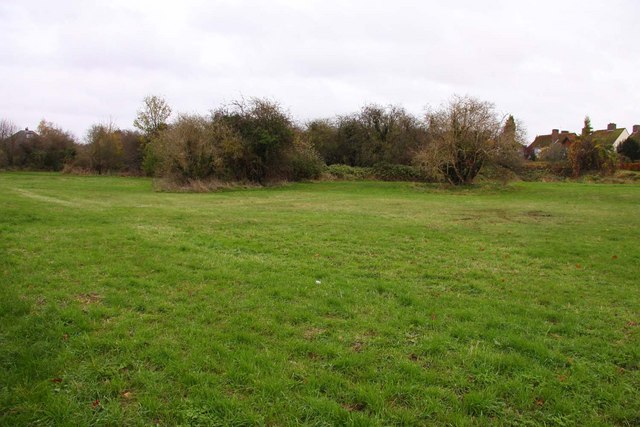
The workings themselves were open pits rather than deep mines, and several survive as shallow, grassed-over hollows within their respective nature reserves.
Recorded claims
Individual factual claims, each attached to the source(s) that support it below. Where sources disagree, both are kept.
- Quarrying at Headington began in earnest in 1396, when New College built its bell-tower from stone hauled to the college in 1,386 cart-loads. 1
- All Souls College's construction between 1438 and 1443 used a further 6,140 loads of Headington stone, principally ragstone for its foundations and walls. 1
- By the 1550s nine Oxford colleges owned their own quarries at Headington. 1
- Magdalen College's own quarry, later known as the Workhouse Pit and then the Corporation Pit after Oxford City Council took it over in 1899, had been worked since as early as 1474 and was the last Headington quarry still working when it finally closed in 1949. 2
Sources
- (secondary) Introduction to the Quarries of Headington — Headington History (headington.org.uk)
- (secondary) Magdalen Quarry — Wikipedia
- (secondary) Headington stone — Wikipedia
- (secondary) Rock Edge Nature Reserve — Wikipedia
Record created: 22 August 2026 · Last researched: 22 August 2026