 MineArchive
Braichgoch Slate Mine
| Also known as | Braich Goch Quarry, Braich Goch Mine, Braich Goch Slate Quarries |
|---|---|
| Location | Corris Uchaf, near Machynlleth, Gwynedd — 52.6546, -3.8505 (exact) |
| Commodity | Slate |
| Type | Slate |
| Worked | 1787 (lease)–1970 or 1971 |
| Maximum depth | Unknown. |
| Operators | Braich Goch Slate Quarry Ltd (1859–1906) |
Overview
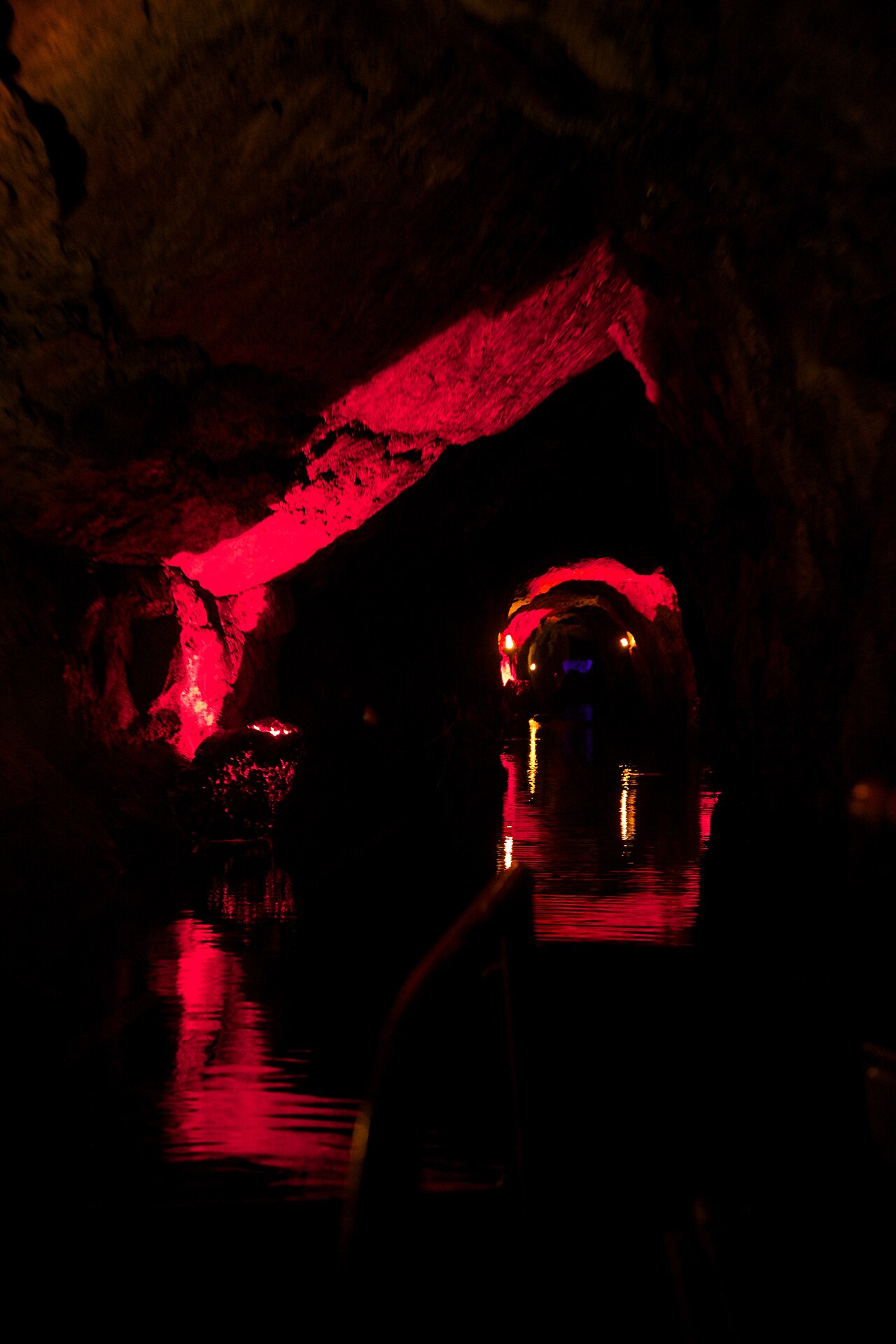
The largest slate mine south of Blaenau Ffestiniog at its Victorian peak, worked at Corris Uchaf from 1787 until 1970, whose underground caverns today host the tourist attraction King Arthur's Labyrinth.
History
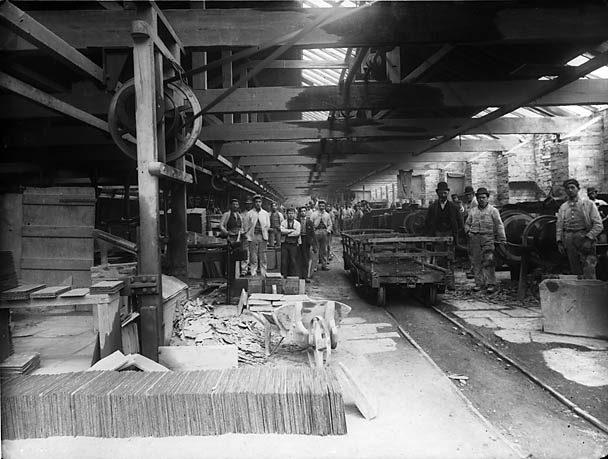
David Williams leased quarrying and mineral rights at Gaewern and Braich Goch from John Edwards, representing the Vane estate, in 1787, with slate extraction beginning at Gaewern by 1812 under the Merionethshire Slate Company. Quarrying at Braich Goch itself began in 1836 under the North Wales Slate & Slab Company. Ownership changed hands repeatedly over the following decades: Arthur Causton, a civil engineer, took the lease in 1843; the company was reformed as the Braich Goch Slate and Slab Company in 1851; and the Birley family purchased the lease in 1859, establishing Braich Goch Slate Quarry Ltd, which absorbed the neighbouring Gaewern quarry in 1880. The Corris Mine Explorers history dates the operating company to 1864 rather than 1859, and has it employing 250 men by 1878 and producing 7,000 tons of slab and roofing slate that year. The mine reached its peak in the mid-1890s, when it employed 350 men and produced over 6,000 tons of finished slate a year, making it the largest slate quarry south of Blaenau Ffestiniog and the economic backbone of the Corris community. Rising costs and falling demand brought the company down in 1906, and the mine closed; it reopened after the First World War but worked only sporadically thereafter, six further companies taking it on in turn, before Dewi and Gwilym Lloyd of Aberllefenni bought the site in 1962 and worked it until final closure around 1970-71. Part of its underground workings were commercialised in 1994 as King Arthur's Labyrinth, a boat-ride attraction built around Arthurian legend inside the old slate caverns, alongside the separate, more conventional Corris Mine Explorers, which shows visitors the mine's genuine 19th-century working conditions.
Geology
The mine worked slate beds within the Cambrian slate belt of Snowdonia, the same formation worked at the neighbouring Corris-area quarries including Aberllefenni.
Geological setting: Slate and Regional Metamorphism (well documented example)
Workings
Underground slate mine workings at Braich Goch, later absorbing the neighbouring Gaewern quarry from 1880. The two were connected in their early years under common ownership, and the combined mine was worked as an extensive underground complex; output peaked at 7,000 tons of slab and roofing slate in 1878.
Closure
Closed in 1906 amid falling slate demand, reopened after the First World War, and closed for good around 1970-71.
What remains
Part of the underground workings are open to the public as King Arthur's Labyrinth, a fantasy-themed tourist attraction, and as the separate Corris Mine Explorers, alongside the Corris Craft Centre on the surface site.
The Corris Craft Centre occupies the surface site; underground, King Arthur's Labyrinth and Corris Mine Explorers preserve and present the old workings.
Related mines
- Gaewern Quarry — Braich Goch absorbed the neighbouring Gaewern quarry in 1880.
Nearby mines
- Gaewern Quarry — 0.4 miles (0.7 km) N
- Abercorris Slate Quarry — 0.6 miles (1.0 km) N
- Abercwmeiddaw Slate Quarry — 0.8 miles (1.3 km) N
- Aberllefenni Slate Quarry — 1.9 miles (3.0 km) NE
- Cambergi Quarry — 2.0 miles (3.2 km) NE
Straight-line distance, within 9 miles (15 km). Show on the map.
What's uncertain
Points where sources disagree or the record could not be settled; both accounts are kept. All open questions in the archive.
- The Corris Mine Explorers history dates the Braich Goch Slate Quarry Company to 1864, while Wikipedia's account has the Birley family establishing Braich Goch Slate Quarry Ltd on purchasing the lease in 1859. (disputed) 1,2
Recorded claims
Individual factual claims, each attached to the source(s) that support it below. Where sources disagree, both are kept.
- By the mid-1890s Braichgoch employed 350 men and produced over 6,000 tons of finished slate a year, the largest slate quarry south of Blaenau Ffestiniog. 1
- The mine closed in 1906 amid falling slate demand, reopened after the First World War, worked only sporadically afterward, and closed for good around 1970-71; part of its workings were commercialised as the King Arthur's Labyrinth tourist attraction in 1994. 1
- The Corris Mine Explorers history gives 250 men employed by 1878, producing 7,000 tons of slab and roofing slate that year, rising to over 350 men at the 1890s peak. 2
- After the 1906 collapse six further companies worked the site intermittently; Dewi and Gwilym Lloyd of Aberllefenni bought it in 1962 and worked it until final closure. 2
- The Corris Mine Explorers history dates the Braich Goch Slate Quarry Company to 1864, while Wikipedia's account has the Birley family establishing Braich Goch Slate Quarry Ltd on purchasing the lease in 1859. (disputed) 1,2
Photographs & further reading
A detailed account of the mine's ownership history, peak production and afterlife as a tourist attraction.
View sourceA December 2017 trip into the neighbouring Gaewern workings, absorbed into Braich Goch in 1880, which needed an inflatable dinghy to cross the flooded lower levels.
View sourceThe current operator's own history of the mine, with the 1787 Vane estate lease, the 1864 company, the 1878 output and workforce figures and the Lloyd brothers' final working to 1970.
View sourceSources
- (secondary) Braichgoch slate mine — Wikipedia
- (secondary) History of Braich Goch Mine — Corris Mine Explorers
- (observational) King Arthur's Labyrinth — Wikimedia Commons (Tom Parnell)
- (primary) Braich Goch Slate Quarries (BGS Mine Plans Catalogue) — British Geological Survey / Gwynedd Archives Service
.jpg)
Record created: 30 August 2026 · Last researched: 11 September 2026