 MineArchive
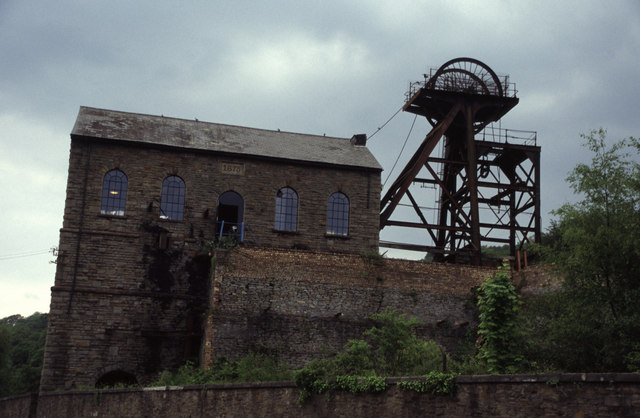
Tymawr Colliery roof fall, 1923
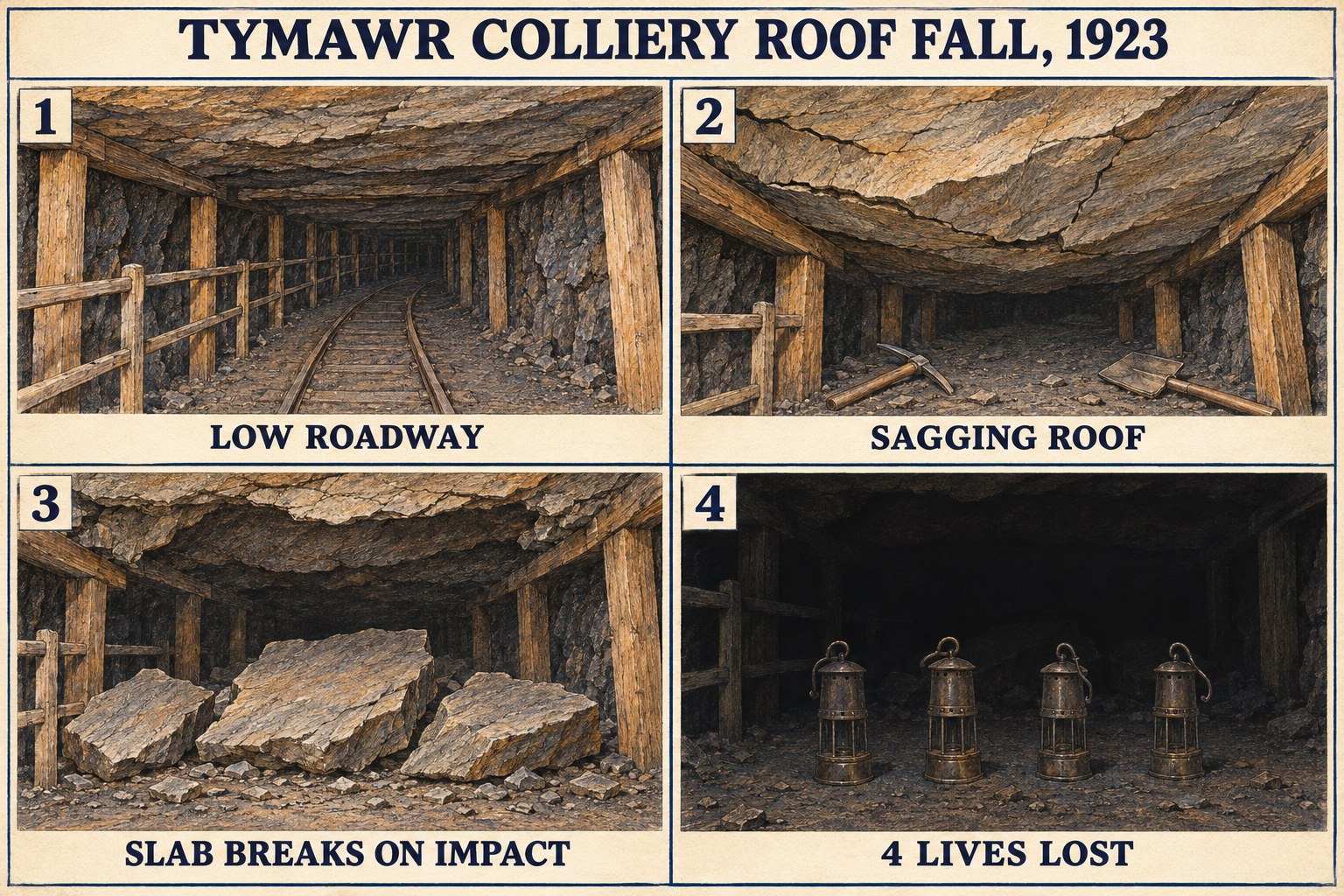
An eighteen-foot slab of stone fell on four men repairing a sagging roof at Tymawr Colliery, Hopkinstown, on 4 July 1923, killing them all instantly.
| Date | 4 July 1923 |
|---|---|
| Mine | Tymawr Colliery |
| Region | Rhondda Cynon Taf |
| Type | Collapse / Roof Fall |
| Fatalities | 4 (William Lewis James, 48, fireman; William T. Wheech, 38, ripper; Alfred W. Gwilliam, 47, assistant repairer; Frank G. Millarship, 34, haulier.) |
| Context | During active mining |
Location
Plotted at Tymawr Colliery. Approximate location. The large pin is the mine; the small round markers are the nearest mines on record. Click one for its page. View on full map
Cause
A large slab of stone fell from the roof while the men were taking down a sagging section.
What happened
At Tymawr Colliery, Hopkinstown, near Porth, there had been a complaint to the fireman that a horse was 'roofing', rubbing its back against the roof of a roadway. On 4 July 1923 four men went to take down the sagging roof under the supervision of the fireman, William Lewis James, 48. A huge stone came away, a slab 18 feet long, 8 feet wide and 3 feet thick, which broke into three pieces as it hit the floor, and all four were crushed and killed instantly: James, William T. Wheech, 38, a ripper, Alfred W. Gwilliam, 47, an assistant repairer, and Frank G. Millarship, 34, a haulier. One of the pit examiners said that a week before he had sat in that very spot, thinking it the safest place in the district.
Wheech was not meant to be there. The ripper due on that shift, Llewellyn Williams, was trainer to the boxer Frank Moody and had gone to watch Moody's fight against Gypsy Daniels; Wheech took his place. James had worked at the colliery for twenty years and was a keen mining student who had taken certificates at mining school and qualified as a second-class manager.
Recorded claims
Individual factual claims, each attached to the source(s) that support it below. Where sources disagree, both are kept.
- On 4 July 1923 a slab of stone 18 feet long, 8 feet wide and 3 feet thick fell on four men taking down sagging roof at Tymawr Colliery, Hopkinstown, killing them all instantly. 1,2
- The fireman, William Lewis James, was supervising the removal of the sagging roof after complaints that a horse's back was rubbing against it. 1
Related terminology
Mining terms this disaster is structurally linked to, with the nature of the relationship.
- Colliery (contextual relationship)
Named 3 times in this record, first in the summary: “…slab of stone fell on four men repairing a sagging roof at Tymawr Colliery, Hopkinstown, on 4 July 1923, killing them all instantly.” - Fireman (contextual relationship)
Named twice in this record, first in the narrative: “…Colliery, Hopkinstown, near Porth, there had been a complaint to the fireman that a horse was 'roofing', rubbing its back against the roof of a…” - Haulier (contextual relationship)
Named in this record’s narrative: “…Gwilliam, 47, an assistant repairer, and Frank G. Millarship, 34, a haulier. One of the pit examiners said that a week before he had sat in that…” - Ripping (contextual relationship)
Named twice in this record, first in the narrative: “…were crushed and killed instantly: James, William T. Wheech, 38, a ripper, Alfred W. Gwilliam, 47, an assistant repairer, and Frank G.…”
Sources
- (secondary) Welsh mining fatalities, 1923 — Welsh Coal Mines
- (primary) Durham Mining Museum: Tymawr, 4 July 1923 — Durham Mining Museum
Record created: 27 November 2026 · Last researched: 27 November 2026