 MineArchive
Tower Colliery explosion, 1962
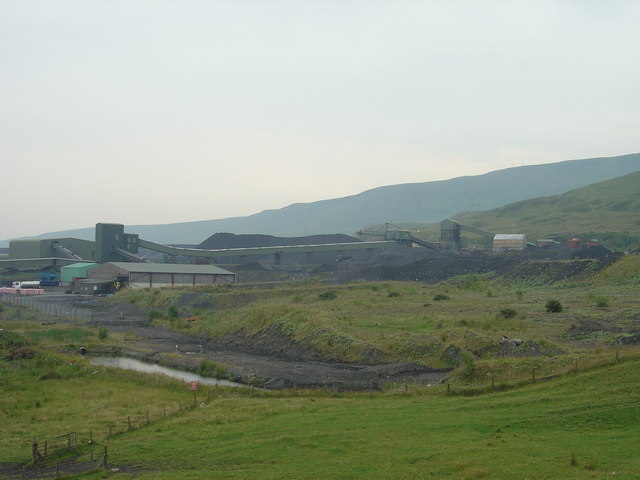
At 10.30 a.m. on 12 April 1962 firedamp exploded in the MC3 heading at Tower Colliery, Hirwaun, as electricians restored power after extending a cable. The heading's auxiliary fan had been stopped for about ninety minutes; nine men resting at the foot of the heading were killed and nine injured.
| Date | 1962 |
|---|---|
| Mine | Tower Colliery |
| Region | Rhondda Cynon Taf |
| Type | Explosion |
| Fatalities | 9 (Nine killed, two of them deputies; nine injured.) |
| Injuries | 9 |
| Context | During active mining |
Cause
Firedamp that accumulated while the auxiliary fan was off was ignited by arcing from a short circuit to earth inside a sharp loop of newly inserted cable when the power was switched back on.
Contributing factors
Cutting the power to the heading stopped its auxiliary fan along with the machinery; gas had increased the day before; the new cable was bent back on itself to reach the switch, weakening its insulation.
What happened
Tower worked the Nine Feet seam in the G panel through new drifts. After the MC3 loader broke down, the conveyors were rearranged and the switches moved forward, which needed a new length of cable. At about 9 a.m. the electricians cut the power to the heading, stopping its auxiliary fan, and a new cable was dragged up by a horse. When the undermanager reached the heading about 10 he found some two per cent of gas near the roof five or six yards from the face, sent everyone but the electricians back to take their food at the bottom of the heading, and came out with the electricians once the switch was connected. The power was restored at the section switch without the apparatus being tested; the electrician watching the ammeter for the fan starting saw the explosion instead. The blast was confined to the heading and a short length of the return; there was little sign of flame, and coal dust played no part. Among the dead were the deputy Kenneth Strong and the deputy W. Smith.
Rescue & recovery
Officials and men gave first aid and brought the injured out; the Dinas rescue station brigade inspected the heading and later brigades restored its ventilation with a separately supplied fan.
Investigation & inquiry
C. Leigh, Divisional Inspector of Mines and Quarries, reported to the Minister of Power in November 1962. He recommended that auxiliary fans be kept powered while other plant in a working is shut down, that power to all apparatus be cut automatically whenever the fan stops, and that pliable or PVC cable be used in fast-advancing headings.
Legal & regulatory aftermath
The inquest on 11 May 1962 found that all nine died of multiple injuries accidentally received in an explosion in the MC3 road.
Changes to practice & legislation
Unknown.
Memorials & commemoration
Unknown.
What's uncertain
Points where sources disagree or the record could not be settled; both accounts are kept. All open questions in the archive.
- The Hirwaun Historical Society gives the date as 13 April 1962. (disputed) 3
Recorded claims
Individual factual claims, each attached to the source(s) that support it below. Where sources disagree, both are kept.
- An explosion of firedamp on 12 April 1962 killed 9 men and injured a further 9, the worst accident in Tower's history. 1,2,3
- The Hirwaun Historical Society gives the date as 13 April 1962. (disputed) 3
- The igniting source was arcing from a short circuit to earth in a newly inserted length of cable, bent back on itself to reach the switch. 1
- An auxiliary fan had been turned off to allow the cable's installation, and methane built up. 2
Related terminology
Mining terms this disaster is structurally linked to, with the nature of the relationship.
- Deputy (contextual relationship)
Two deputies were among the dead. - Drift (contextual relationship)
Named in this record’s narrative: “Tower worked the Nine Feet seam in the G panel through new drifts. After the MC3 loader broke down, the conveyors were rearranged and…” - Filler (contextual relationship)
Named in this record’s narrative: “…the Nine Feet seam in the G panel through new drifts. After the MC3 loader broke down, the conveyors were rearranged and the switches moved…” - Firedamp (direct cause)
Accumulated while the fan was stopped. - HM Chief Inspector of Mines (contextual relationship)
Named in this record’s investigation: “C. Leigh, Divisional Inspector of Mines and Quarries, reported to the Minister of Power in November 1962. He…”
Sources
- (secondary) Tower Colliery Explosion - Hirwaun - 1962 — Northern Mine Research Society
- (secondary) Tower Colliery, Hirwaun — Welsh Coal Mines
- (secondary) Tower Colliery — Hirwaun Historical Society
Record created: 21 September 2026 · Last researched: 21 September 2026