 MineArchive
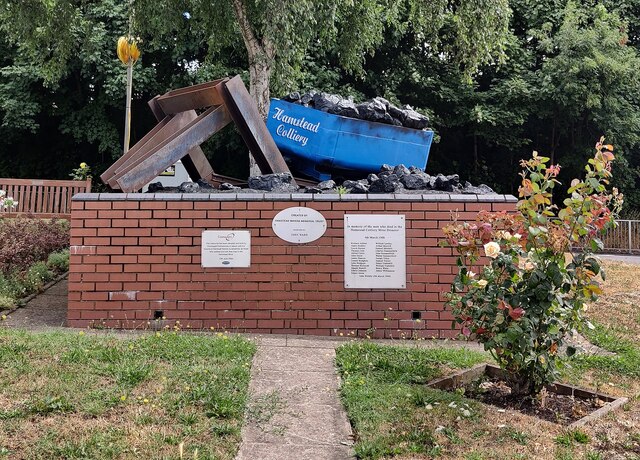
Hamstead Colliery roof fall, 1933
Fifty tons of roof came down on a new haulage crossing at Hamstead Colliery on 15 May 1933, killing four men, two of them brothers in their fifties and sixties.
| Date | 15 May 1933 |
|---|---|
| Mine | Hamstead Colliery |
| Region | West Midlands |
| Type | Collapse / Roof Fall |
| Fatalities | 4 (John Collins, 66, and Samuel Collins, 56, brothers, pipemen; Frank Morris, 47, pit carpenter; Alfred Turley, 19, haulage man.) |
| Context | During active mining |
Location
Plotted at Hamstead Colliery. Recorded location. The large pin is the mine; the small round markers are the nearest mines on record. Click one for its page. View on full map
Cause
A very heavy fall of roof, 50 tons or more, at a newly made and timbered crossing on the haulage road.
What happened
On Monday 15 May 1933 four men were killed together by a fall of roof at Hamstead Colliery, near Birmingham: John Collins, 66, and his brother Samuel, 56, both pipemen; Frank Morris, 47, the pit carpenter; and Alfred Turley, 19, a haulage man. The fall was a very heavy one, of 50 tons if not more, at a new crossing on the haulage. The manager, W. D. Rose, told the Inspector of Mines, E. Rowley, that the crossing had been properly timbered and that a double haulage wheel had been put into its floor two days before. Other witnesses said all the timbering there was satisfactory and that there had been no bump in the pit that morning.
The doctor called to the colliery found that the men had died of asphyxia, and told the inquest that the fall had been so sudden and so heavy that they would have been knocked unconscious at once. The Secretary for Mines spoke of the four in the Commons two days after the fall.
Investigation & inquiry
The Inspector of Mines, E. Rowley, attended the inquest, held before the coroner Frank Cooper. No one suggested negligence and the timbering was the method that had always been used at the pit.
Legal & regulatory aftermath
Verdicts of accidental death. The coroner thought a rider unnecessary, since no foresight could have prevented the fall, and noted that a conference had agreed further precautions to make such crossings safer.
Recorded claims
Individual factual claims, each attached to the source(s) that support it below. Where sources disagree, both are kept.
- On Monday 15 May 1933 a fall of roof at Hamstead Colliery killed four men together: the brothers John and Samuel Collins, pipemen, Frank Morris, pit carpenter, and Alfred Turley, haulage man. 1,2,3
- The fall, of 50 tons or more, came at a new crossing that had been properly timbered; a double haulage wheel had been set in its floor two days earlier. 3
- The inquest returned verdicts of accidental death; nobody, the Inspector of Mines included, suggested negligence, and the coroner saw no need for a rider. 3
Related terminology
Mining terms this disaster is structurally linked to, with the nature of the relationship.
- Colliery (contextual relationship)
Named 3 times in this record, first in the summary: “Fifty tons of roof came down on a new haulage crossing at Hamstead Colliery on 15 May 1933, killing four men, two of them brothers in their…” - HM Chief Inspector of Mines (contextual relationship)
Named twice in this record, first in the narrative: “…at a new crossing on the haulage. The manager, W. D. Rose, told the Inspector of Mines, E. Rowley, that the crossing had been properly timbered and that a…” - Haulage (contextual relationship)
Named 5 times in this record, first in the summary: “Fifty tons of roof came down on a new haulage crossing at Hamstead Colliery on 15 May 1933, killing four men, two…” - Roof Fall (contextual relationship)
Named twice in this record, first in the cause: “A very heavy fall of roof, 50 tons or more, at a newly made and timbered crossing on the…”
Sources
- (primary) Coal Industry (Accident, Hednesford) — Hansard (House of Commons)
- (primary) Durham Mining Museum: Hamstead, 15 May 1933 — Durham Mining Museum
- (primary) The Hamstead Verdict, The Science and Art of Mining, 10 June 1933 (Durham Mining Museum transcript) — Durham Mining Museum
Record created: 27 November 2026 · Last researched: 27 November 2026