 MineArchive
Benston Colliery inrush, 1860
On the morning of 23 October 1860 water from unmapped old workings broke into the Benston pit on the Johnstone estate in Renfrewshire. About forty men near the breach reached the shaft, the last climbing the cage ropes, but five men and boys were drowned.
| Date | 23 October 1860 |
|---|---|
| Mine | Benston Colliery |
| Region | Renfrewshire |
| Primary type | Flooding / Inundation |
| Associated types | Entrapment |
| Fatalities | 5 (Robert Alexander, John Alison (Allison), John Hendry, John McMillan and Alexander Stewart, colliers. The Durham Mining Museum gives their ages as 20, 20, 20, 40 and 14; the Johnstone History Society as 24, 29, 21, 44 and 12.) |
| Context | During active mining |
Cause
An irruption of water from old works: the water is supposed to have entered through a room that connected with an exploring mine driven west from the old Shaws pit some forty years earlier, whose position was known only by tradition and lay further off than it proved.
Contributing factors
The estate's plans could be traced back only about sixty years. Boreholes were kept ahead of the workings to the south, where flooded waste was known, but no one thought to bore to the north.
What happened
Benston lay to the dip of old workings known to be full of water. It was 54 fathoms deep and worked two seams seldom more than ten feet apart, and the men had long dreaded the waste water. The inspector, William Alexander, examined the pit in July 1860 and pointed out that the only safe way to work was to keep boreholes ahead of the exploring mines. Former workmen's tradition put the old exploring mine from the Shaws pit north of Benston bridge, 46 fathoms from the workings.
At about nine on the morning of Tuesday 23 October the alarm was given that water had broken in, and it rose fast. Nearly fifty men and boys were in the pit. About forty working near the breach made for the shaft and reached it, but a boy was overtaken and drowned; the water rose so quickly that the last of them had to haul themselves up the ropes attached to the cage. Two miners in a separate part were saved after the water had risen to within a foot of the roof at the shaft bottom. Four more, in a farther part of the workings, were lost. In the afternoon the water was still rising about two feet an hour.
Rescue & recovery
With a great body of water in the old workings the pit could not soon be cleared. The NMRS account says the bodies were recovered several months later; the Johnstone History Society says the pit never reopened and that the bodies remain in it.
Investigation & inquiry
William Alexander found no want of care in the southern workings, where a waste was known, and believed the usual precautions would have been taken to the north had anyone expected water there; but he remarked that the Shaws pit workings were more recent than those of No. 8 pit and that some of the later managers must have neglected their predecessors' prudent arrangements. He added that the Mines Inspection Act's requirement for proper plans of all underground works would in future largely prevent such losses, though several collieries stood in the same position and the errors of the past could not be corrected.
Memorials & commemoration
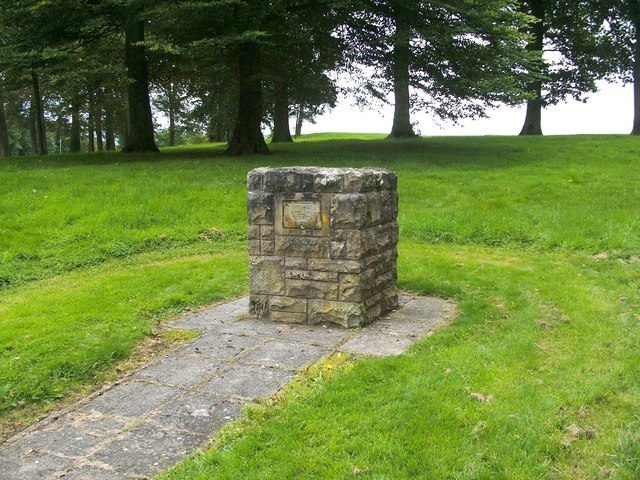
The Johnstone Coal Miners' Cairn, built in 1994 in the Wee Wood at Johnstone, commemorates the dead of the Quarrelton disaster of 1818 and the Benston disaster of 1860.
What's uncertain
Points where sources disagree or the record could not be settled; both accounts are kept. All open questions in the archive.
- The bodies were recovered several months later. (disputed) 2
- The pit never reopened, and the bodies remain in it. (disputed) 1
Recorded claims
Individual factual claims, each attached to the source(s) that support it below. Where sources disagree, both are kept.
- On 23 October 1860 water from old workings broke into Ludovic Houston's Benston pit near Johnstone, and five men and boys were drowned. 1,2,3
- The water is supposed to have entered through a room connecting with an exploring mine driven some forty years before from the old Shaws pit, of which no plan existed; boreholes were kept ahead to the south but no one thought to bore to the north. 2,3
- About forty men working near the breach reached the shaft, the last of them climbing the cage ropes as the water rose; two more were saved with the water a foot from the roof. 1
- The bodies were recovered several months later. (disputed) 2
- The pit never reopened, and the bodies remain in it. (disputed) 1
- The inspector, William Alexander, said that some later managers must have neglected the prudent arrangements of their predecessors, and that the requirement for proper mine plans would in future prevent such losses. 2,3
Related terminology
Mining terms this disaster is structurally linked to, with the nature of the relationship.
- Borehole (contextual relationship)
Named twice in this record, first in the contributing factors: “The estate's plans could be traced back only about sixty years. Boreholes were kept ahead of the workings to the south, where flooded waste…” - Cage (contextual relationship)
Named twice in this record, first in the summary: “…forty men near the breach reached the shaft, the last climbing the cage ropes, but five men and boys were drowned.” - Fathom (contextual relationship)
Named twice in this record, first in the narrative: “…lay to the dip of old workings known to be full of water. It was 54 fathoms deep and worked two seams seldom more than ten feet apart, and the…” - Old Workings (contextual relationship)
Named 6 times in this record, first in the summary: “On the morning of 23 October 1860 water from unmapped old workings broke into the Benston pit on the Johnstone estate in Renfrewshire.…” - Shaft (contextual relationship)
Named 3 times in this record, first in the summary: “…estate in Renfrewshire. About forty men near the breach reached the shaft, the last climbing the cage ropes, but five men and boys were…”
Sources
- (secondary) Johnstone History Society: Johnstone Coal Miners Memorial Cairn — Johnstone History Society
- (secondary) Benstone Colliery Inrush, Johnstone, 1860 (NMRS accidents and disasters) — Northern Mine Research Society
- (primary) Colliery disaster, 23 October 1860: Benstone (Durham Mining Museum) — Durham Mining Museum
Record created: 24 October 2026 · Last researched: 24 October 2026