 MineArchive
Avonbraes mine explosion, 1841
At breakfast time on 16 March 1841 firedamp exploded in the Duke of Hamilton's drift mine in the Avon gorge near Quarter, killing six men and a boy inside, and four of the men who rushed in after them died in the afterdamp.
| Date | 16 March 1841 |
|---|---|
| Mine | Avonbraes Colliery |
| Region | South Lanarkshire |
| Primary type | Explosion |
| Associated types | Rescue |
| Fatalities | 11 (Killed in the explosion: William Brounlie and his son, aged ten; James Duffie; John Duffie; Hugh McLean; John Smith; William Wotherspoon. Died in the rescue: James Fleming, George Pate (or Peat), James Fisher and James Fyfe. A 1951 account gives thirteen.) |
| Context | During active mining |
Cause
Firedamp, said to have been given off suddenly from fissures at a rise in the strata, exploded in a mine that had been examined that morning and reported free of danger.
What happened
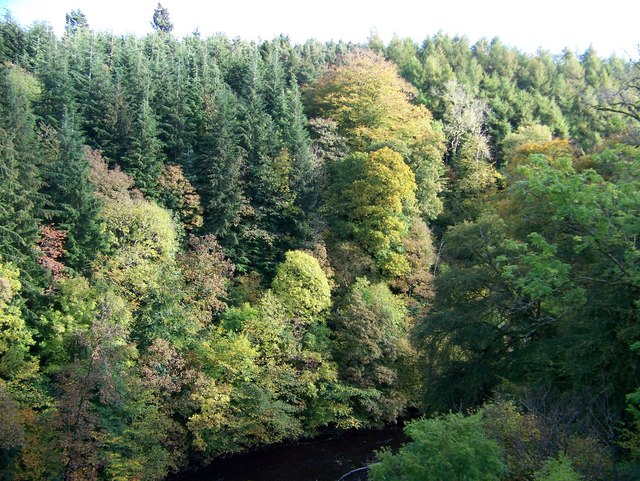
The Duke of Hamilton's coal mine at Avon Braes was a drift driven into the bank of the Avon gorge, not far from Chatelherault, and worked by men from Hamilton and the village of Quarter. It was open to the day at both ends, with a current of air passing through, and on the morning of Tuesday 16 March 1841 two oversmen had examined it and reported it free of danger.
About eight o'clock, the breakfast hour, the firedamp exploded. Six men and a boy were inside, among them William Brounlie and his ten-year-old son, and all were killed at once. The overseer was not at hand, and seven men who were outside the mouth went straight in to help them. A second party, alarmed for them in turn, dragged three out alive and four dead. A Hamilton man who ran the two miles from the town as a youth remembered, forty-five years later, the doctors holding back further volunteers while the gas still came out of the mine, and Ord Adams, who had brought the doctors from the town, going in himself and coming out staggering.
The bodies of the first seven were not recovered until the Wednesday morning. Nine of the eleven dead were married, and about sixty people lost their breadwinners. They were the first recorded deaths in a Hamilton coal mine.
The Duke of Hamilton, at the Palace when the news came, sent money to the families at once and paid for the funerals. Duffie's widow was still drawing a pension from the Duke in 1878.
Rescue & recovery
Seven men went in from the mine mouth at once; a second party brought out three alive and four dead. Doctors from Hamilton held back further attempts while the gas cleared, and the bodies of the seven killed in the explosion were brought out the next morning.
What's uncertain
Points where sources disagree or the record could not be settled; both accounts are kept. All open questions in the archive.
- A 1951 account of the Quarter workings gives thirteen killed in the 1841 explosion. (disputed) 3
Recorded claims
Individual factual claims, each attached to the source(s) that support it below. Where sources disagree, both are kept.
- About eight o'clock on the morning of 16 March 1841, the breakfast hour, firedamp exploded in the Duke of Hamilton's coal mine near Quarter, killing the six men and a boy who were inside. 1,2
- Men at the mouth of the mine went in to help without waiting for the overseer; four of them died in the afterdamp and three were dragged out alive by a second party. 1,2
- Eleven died: William Brounlie and his ten-year-old son, James Duffie, John Duffie, Hugh McLean, John Smith and William Wotherspoon in the explosion, and James Fleming, George Pate, James Fisher and James Fyfe in the rescue. 1,2
- A 1951 account of the Quarter workings gives thirteen killed in the 1841 explosion. (disputed) 3
- The mine was a drift in the Avon gorge, not far from Chatelherault, entered from the river bank rather than by a shaft. 3,1
- The mine was open to the day at both ends and had been examined that morning by two oversmen and reported free of danger; the gas was said to have come suddenly from fissures at a rise in the strata. 2
- The Duke of Hamilton sent money to the families and paid for the funerals, and Duffie's widow was still drawing a pension from the Duke in 1878. 1,2
Related terminology
Mining terms this disaster is structurally linked to, with the nature of the relationship.
- Afterdamp (contextual relationship)
Named in this record’s summary: “…boy inside, and four of the men who rushed in after them died in the afterdamp.” - Colliery (contextual relationship)
Named twice in this record, first in the narrative: “The Duke of Hamilton's coal mine at Avon Braes was a drift driven into the bank of the Avon gorge,…” - Drift (contextual relationship)
Named twice in this record, first in the summary: “…time on 16 March 1841 firedamp exploded in the Duke of Hamilton's drift mine in the Avon gorge near Quarter, killing six men and a boy inside,…” - Firedamp (contextual relationship)
Named 3 times in this record, first in the summary: “At breakfast time on 16 March 1841 firedamp exploded in the Duke of Hamilton's drift mine in the Avon gorge near…”
Photographs & further reading
This page doesn't try to reproduce everything — these are the best original sources found for this disaster.
The Glasgow Herald's report of 19 March 1841, with the list of the eleven dead.
View sourceSources
- (secondary) Lanarkshire coal mines (Wilma S. Bolton's research) — Historic Hamilton
- (primary) Quarter 16th March 1841 (Glasgow Herald, 19 March 1841) — Scottish Mining Website
- (secondary) Misc. Hamilton History — Scottish Mining Website
Record created: 5 October 2026 · Last researched: 6 October 2026