 MineArchive
Tower Colliery workers' buyout
| Category | Labour |
|---|---|
| Dates | October 1992: closure programme announced; Tower reprieved. October 1993: red flag raised on Hirwaun Common. April 1994: British Coal closes Tower. 2 January 1995: the march back. 3 January 1995: reopened under Goitre Tower Anthracite. 25 January 2008: final closure. |
When British Coal closed Tower Colliery at Hirwaun in April 1994, 239 of its miners put £8,000 each of their redundancy money into buying it back. They marched back to work on 2 January 1995 and ran Wales's last deep mine as their own company until the coal ran out in 2008.
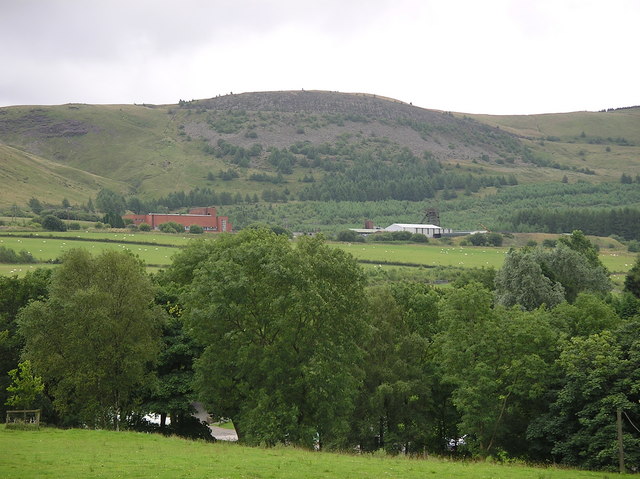
The mining history in this record
Tower was on the list of 31 pits whose closure the government announced in October 1992, and among the twelve given a temporary reprieve. In October 1993 its miners raised the red flag on Hirwaun Common during a march commemorating the Merthyr Rising of 1831, and in 1994 the local MP, Ann Clwyd, staged a sit-in underground. British Coal closed the pit in April 1994.
Meeting in the club at Penywaun, the miners took up their NUM branch secretary Tyrone O'Sullivan's proposal to buy the pit. Under the name Tower Employees Buy-Out, 239 men each pledged £8,000 from their redundancy pay, and against the government's resistance a price of £2 million was agreed. On 2 January 1995 they marched back to the colliery, a balloon for every worker, and on 3 January it reopened under Goitre Tower Anthracite, with the mining engineer Philip Weekes as unpaid chairman. 'We were ordinary men, we wanted jobs, we bought a pit,' O'Sullivan said.
People
Tyrone O'Sullivan, NUM branch secretary and chairman of Goitre Tower Anthracite. Philip Weekes, mining engineer and the buyout's unpaid chairman. Ann Clwyd, MP, who staged the 1994 sit-in.
Legacy today
Tower worked on for thirteen years as the last deep mine in Wales, its anthracite finding markets, until it was last worked on 18 January 2008 and closed a week later. The buyout is remembered as a triumph for the labour movement; O'Sullivan, appointed OBE in 1996, told the story in his book 'Tower of Strength' (2001).
Recorded claims
Individual factual claims, each tagged with how solidly it's grounded and attached to the source(s) that support it. Where sources disagree, both are kept.
- British Coal closed Tower Colliery in April 1994 as uneconomic. (documented fact) 1,2,3
- Led by the NUM branch secretary Tyrone O'Sullivan, 239 miners each pledged £8,000 of their redundancy money to buy the pit back, and a price of £2 million was agreed. (documented fact) 1,2,3
- The miners marched back to the pit on 2 January 1995, with a balloon for each worker, and it reopened the next day under Goitre Tower Anthracite. (documented fact) 1
- Tower was the only deep mine in Wales to survive the closures of privatisation, through a unique workers' buyout in 1994, and is widely considered a triumph for the modern labour movement. (documented fact) 4
- O'Sullivan summed it up: 'We were ordinary men, we wanted jobs, we bought a pit.' (documented fact) 2
- Tower was last worked on 18 January 2008 and formally closed on 25 January 2008. (documented fact) 1
Mines
- Tower Colliery — Rhondda Cynon Taf
In 1994-95 the colliery's own miners bought it from British Coal with their redundancy money and ran it as a workers' co-operative until 2008.
Sources
- (secondary) Tower Colliery — Wikipedia
- (secondary) Tyrone O'Sullivan — Wikipedia
- (observational) Tower Colliery, Hirwaun — Whatever's Left
- (secondary) Tower Colliery, Hirwaun (NPRN 91586) — Coflein (RCAHMW)
- (observational) Tower Colliery, Hirwaun Common (Geograph 1075883) — Geograph
Record created: 4 October 2026 · Last researched: 4 October 2026