 MineArchive

The Cramlington derailment of the Flying Scotsman, 1926
| Category | Labour |
|---|---|
| Dates | General Strike began 4 May 1926; derailment 10 May 1926; arrests 5 June 1926; five released September 1928, three in 1929; centenary 2026. |
On 10 May 1926, during the General Strike, striking miners from West Cramlington lifted a rail on the East Coast Main Line to stop the coal trains and instead derailed the Flying Scotsman; eight were jailed for between four and eight years, and the 'Cramlington Train Wreckers' became one of the strike's best-known stories.
The mining history in this record
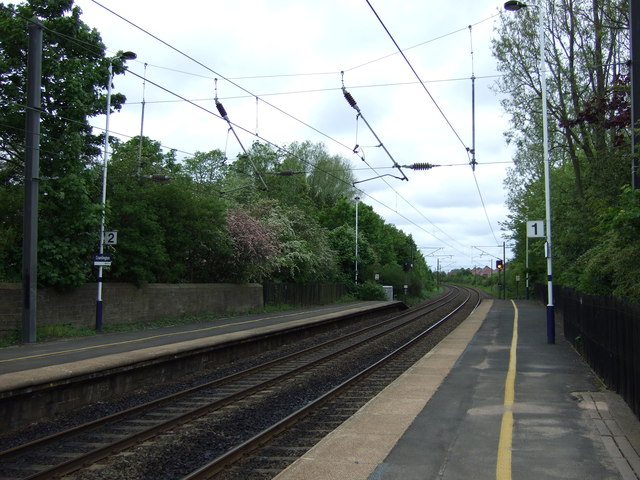
West Cramlington Colliery and its village of four streets stood just east of the East Coast Main Line, nine miles north of Newcastle. On the morning of Monday 10 May 1926, a week into the General Strike, William Golightly of the Northumberland Miners' Association's executive addressed the miners at the West Cramlington Institute and told them to stop the coal trains: 'If you can't stop them at the stations, stop them between stations'; 'let no wheels turn'.
That afternoon a party of miners broke into a platelayers' hut, took its tools and lifted the outside rail of the up line. Hearing a train coming, they ran. It was not a coal train but the Flying Scotsman, twelve carriages behind the A1 locomotive No. 2565 Merry Hampton, crewed by volunteers. It had been flagged down and warned further north, and came on slowly, perhaps at 20 miles an hour; at the gap the engine and leading carriages left the track and the locomotive fell on its side. Of the 281 aboard only a few were hurt, the volunteer fireman scalded and two passengers slightly injured.
For weeks the police met silence, until a striker, Lyle Waugh, turned King's evidence. On 5 June nine men were arrested and eight convicted: Robert Harbottle, Thomas Roberts and Arthur Wilson were sentenced to eight years, James Ellison and William Stephenson to six, and William Baker, Bill Muckle and Oliver Sanderson to four, served at Maidstone. They said they had thought it a coal train and that over thirty had taken part. Five were released in September 1928 'as an act of clemency' and the other three a year later.
People
William Golightly, Northumberland Miners' Association executive, who urged 'let no wheels turn'; Bill Muckle, one of the eight, author of No Regrets (1981); Lyle Waugh, who turned King's evidence; the eight convicted: Robert Harbottle, Thomas Roberts, Arthur Wilson, James Ellison, William Stephenson, William Baker, Bill Muckle and Oliver Sanderson.
Legacy today
The photographs of the overturned engine became among the most reproduced images of the General Strike. Bill Muckle told his side in his 1981 autobiography No Regrets, and Margaret Hutcherson's book Let No Wheels Turn tells the whole story; Ed Waugh's play The Cramlington Train Wreckers, seen through Muckle's eyes, and a centenary blog from the People's History Museum brought it back to attention for the strike's hundredth anniversary in 2026.
Recorded claims
Individual factual claims, each tagged with how solidly it's grounded and attached to the source(s) that support it. Where sources disagree, both are kept.
- On 10 May 1926, during the General Strike, the Flying Scotsman was derailed at Cramlington after miners had lifted a rail. (documented fact) 1,2,3
- That morning William Golightly of the Northumberland Miners' Association urged miners at the West Cramlington Institute to stop the coal trains. (documented fact) 1,3
- The miners intended to stop a coal train and had not meant to derail a passenger express. (contemporary account) 2,3
- Eight miners were convicted and sentenced to between four and eight years' imprisonment. (documented fact) 1,2,3
- Only one person was injured. (contemporary account, disputed) 2,3
- The volunteer fireman was scalded and two passengers were slightly injured. (documented fact, disputed) 1
- Five of the men were released in September 1928 as an act of clemency, and the other three a year later. (documented fact) 1
Mines
- West Cramlington Colliery — Northumberland
The rail was lifted by striking miners from the West Cramlington Colliery village, after a union official addressed them at the West Cramlington Institute that morning.
Real-world mining concepts used here
Sources
- (secondary) Cramlington: a place in labour history (Quentin Outram, 19 December 2025) — Society for the Study of Labour History
- (secondary) 1926 General Strike: the workers who derailed the Flying Scotsman (People's History Museum) — People's History Museum
- (secondary) Strike derailed (The Northumbrian) — The Northumbrian
Record created: 23 October 2026 · Last researched: 25 October 2026