 MineArchive
Little Moscow: Maerdy
| Category | Labour |
|---|---|
| Dates | 1912: The Miners' Next Step. 1919: Horner elected checkweighman. 1926: lodge suspended after the General Strike. 1930: expelled; 'Little Moscow' in the South Wales Daily News. 1931: Horner and 33 others jailed. 1984-85: the strike. December 1990: the colliery closes. 2022: Radio 4's 'Little Moscow' episode. |
Maerdy, at the head of the Rhondda Fach, was called 'Little Moscow' between the wars for the communist politics of the Mardy Colliery miners' lodge. The South Wales Daily News coined the name as an insult; the miners took it with pride, and it still described the pit in the 1984-85 strike.
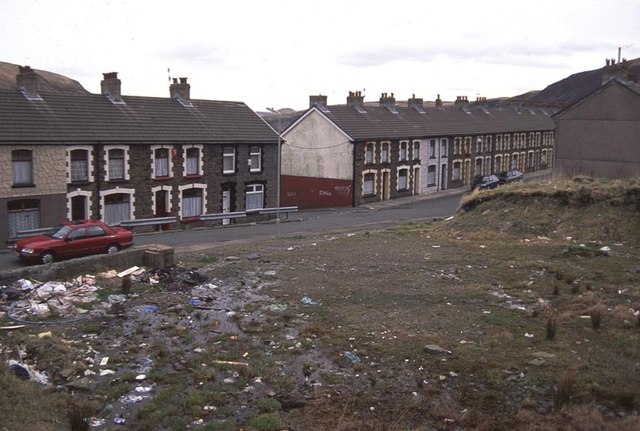
The mining history in this record
Mardy Colliery had a name for militancy almost from its opening. Noah Ablett, a former checkweighman there, published the syndicalist manifesto 'The Miners' Next Step' in 1912, and in 1919 the miners elected Arthur Horner as their checkweighman while he was in prison for refusing to fight in the war. Under Horner, later a founder member of the Communist Party of Great Britain, the lodge grew close to the party. It kept a red banner sent by the working women of Krasnaya Presnya in Moscow to British miners after the 1926 lockout, carried at communist funerals.
After the General Strike the South Wales Miners' Federation suspended the lodge, and in 1930 expelled it. It was in this period that the South Wales Daily News first called Maerdy 'Little Moscow', one of a handful of British places, with Chopwell in Durham and the Vale of Leven, given the name. In 1931 Horner and thirty-three others were sentenced to hard labour for trying to stop an eviction.
The reputation lasted. In the 1984-85 strike Mardy was the last working pit in the Rhondda, its men picketing as far as Cambridge, and in February 1985 The Times wrote that it had not gained the name Little Moscow lightly, nor its reputation for being first out and last back in any dispute. The miners marched back behind their banner and band in March 1985, and the colliery closed in 1990.
People
Arthur Horner, checkweighman at Mardy from 1919, later a founder member of the Communist Party of Great Britain. Noah Ablett, former Mardy checkweighman and author of 'The Miners' Next Step'.
Legacy today
The name remains Maerdy's best-known label, and BBC Radio 4 began its 2022 series 'Britain's Communist Thread' with an episode on the village as Little Moscow.
Recorded claims
Individual factual claims, each tagged with how solidly it's grounded and attached to the source(s) that support it. Where sources disagree, both are kept.
- Maerdy was called 'Little Moscow' for the communist politics of its miners' lodge, a name the miners took pride in. (documented fact) 1,2
- The South Wales Daily News first applied the name 'Little Moscow' to Maerdy, in 1930 by one account. (documented fact) 1,3
- Arthur Horner was elected checkweighman at Mardy Colliery in 1919, while in prison for refusing to fight in the First World War, and under his influence the lodge grew close to the Communist Party. (documented fact) 4,3
- Noah Ablett, author of the syndicalist 'The Miners' Next Step' (1912), had been a checkweighman at Mardy Colliery. (documented fact) 1
- The Mardy lodge was suspended from the South Wales Miners' Federation after the 1926 General Strike and expelled in 1930. (documented fact) 4,3
- A red banner from the working women of Krasnaya Presnya in Moscow, given to British miners after the 1926 lockout, was kept at Maerdy. (documented fact) 4,3
- In February 1985 The Times wrote that Mardy had not gained the name Little Moscow lightly, nor its reputation for being first out and last back in any dispute. (contemporary account) 5
- In 1984 Maerdy miners based themselves in Cambridge from Monday to Friday to picket the Barrington Cement Works. (documented fact) 2
- BBC Radio 4's 'Britain's Communist Thread' opened in November 2022 with an episode on Maerdy as Little Moscow. (documented fact) 6
Mines
- Maerdy Colliery — Rhondda Cynon Taf
The name 'Little Moscow' came from the communist politics of the Mardy Colliery miners' lodge from the 1920s to the 1984-85 strike.
Sources
- (secondary) Little Moscow — Wikipedia
- (secondary) The Miners' Strike and support groups: South Wales — Anglia Ruskin University, Labour History Research Unit
- (secondary) Maerdy — Wikipedia
- (secondary) Mardy Colliery — Wikipedia
- (secondary) Mardy Colliery — Northern Mine Research Society
- (secondary) Britain's Communist Thread, Episode 1: Little Moscow — University of East Anglia
Record created: 4 October 2026 · Last researched: 4 October 2026