 MineArchive
Wroxton and Adderbury Ironstone Workings
| Also known as | Wroxton Ironstone Quarry, North Oxfordshire Ironstone Company, Oxfordshire Ironstone Company, Adderbury Ironstone Workings |
|---|---|
| Location | Wroxton and Adderbury, near Banbury, Oxfordshire — 52.0772, -1.4104 (approximate) |
| Commodity | Iron |
| Type | Ironstone |
| Worked | From 1859–1967 |
| Operators | North Oxfordshire Ironstone Company (1917–1967) |
Overview
An Oxfordshire ironstone field opened up not by ordinary industrial demand but by direct wartime pressure from the Ministry of Munitions, which needed more home-produced iron ore than Britain's existing fields could supply and got a brand-new company built specifically to dig it.
History
Iron mining in the Banbury district began at Adderbury in 1859, with the first workings at Sydenham Farm in East Adderbury extracting thousands of tons of ore a year; more pits opened once the railway reached the area, giving the ore an economic route to market. The much larger development at Wroxton came from a very different motive: in 1917, with the First World War placing acute pressure on Britain's supply of home-produced iron ore, the Ministry of Munitions directly approached promoters to establish the North Oxfordshire Ironstone Company, which opened a quarry north-west of the village that year, with the Oxfordshire Ironstone Company's works starting production in 1919. It grew to become, at one point, the second-largest ironstone producer in the country, connected to the Great Western Railway near Banbury by its own dedicated line, the Oxfordshire Ironstone Railway. Wroxton was worked especially heavily during the Second World War, when the same strategic pressure that had created it in the first place returned in full force. Both the quarry and its railway finally closed in 1967.
Geology
The Oxfordshire ironstone field lies within Jurassic ironstone beds of the same broad Midlands ironstone belt worked at Corby, Rutland and Northamptonshire, occurring here close enough to the surface around Banbury to be worked by opencast quarrying rather than deep mining.
Workings
Worked entirely by opencast quarrying, with the ore hauled by the dedicated Oxfordshire Ironstone Railway to a junction with the Great Western Railway near Banbury for onward shipment to ironworks elsewhere in the Midlands.
Closure
Both the Wroxton quarry and the Oxfordshire Ironstone Railway that served it closed in 1967, ending organised ironstone extraction in the district.
What remains
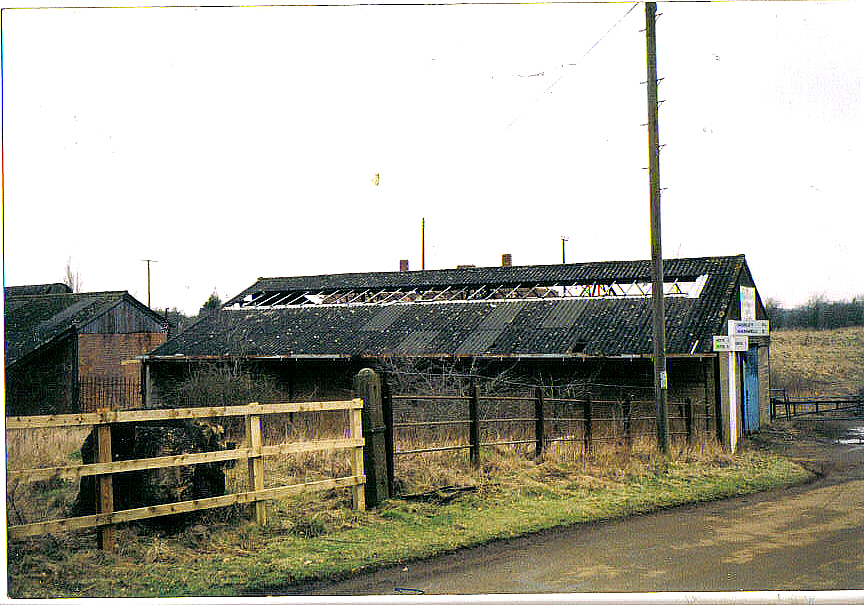
Former quarry ground survives as ruined workings and structures near Wroxton, including quarry ruins and a surviving tool shed associated with the Oxfordshire Ironstone Company, with the route of the old ironstone railway traceable in the landscape as Ironstone Lane.
Quarry ruins and a surviving tool shed near Wroxton, and the trackbed of the Oxfordshire Ironstone Railway, now followed in part by Ironstone Lane.
Redevelopment
None significant — the former quarry ground remains as rough, disused land, with Ironstone Lane preserving the old railway route as a modern road name.
Recorded claims
Individual factual claims, each attached to the source(s) that support it below. Where sources disagree, both are kept.
- Iron mining at Adderbury began in 1859 at Sydenham Farm, extracting thousands of tons of ore a year, with more pits opening once the railway reached the district. 1
- The Ministry of Munitions directly instigated the 1917 formation of the North Oxfordshire Ironstone Company to boost wartime home iron ore production, opening the Wroxton quarry that year with production beginning in 1919. 2,3
- Wroxton grew to become, at one point, the second-largest ironstone producer in the country, worked especially heavily during the Second World War, and was served by its own dedicated Oxfordshire Ironstone Railway to the Great Western Railway near Banbury. 2,3
- Both the Wroxton quarry and the Oxfordshire Ironstone Railway closed in 1967. 2
- Quarry ruins and a surviving tool shed remain near Wroxton, with the old railway route now followed in part by Ironstone Lane. 2
Sources
- (secondary) Adderbury's Industrial Past I: The Oxford Road — Adderbury History Association
- (primary) Wroxton Ironstone Works — Wroxton Parish
- (secondary) Oxfordshire Ironstone Company remembered — Rocks by Rail (Rutland Railway Museum)
Record created: 25 August 2026 · Last researched: 25 August 2026