 MineArchive
Cilgerran Quarries
| Also known as | Cilgerran Slate Quarries, Castle Quarries, Cilgerran, Cefn Slate Quarries, Plain Quarry |
|---|---|
| Location | Teifi gorge, below Cilgerran Castle, Pembrokeshire — 52.0545, -4.6255 (approximate) |
| Commodity | Slate |
| Type | Slate |
| Worked | by the 19th century |
| Maximum depth | Not applicable: open quarries cut into the gorge side. |
Overview
A mile and a half of slate quarries along the south bank of the Teifi below Cilgerran Castle, worked from the river's edge and shipped downstream by boat to Cardigan. The castle itself is built of the stone. By the first edition Ordnance Survey of 1889 some were working and some already abandoned.
History
The quarries run for about a kilometre and a half east of Cilgerran Castle along the south bank of the Teifi, in the wooded gorge below the village. They are shown on the first edition Ordnance Survey of 1889, some of them then at work and others already disused, and they include the Castle Quarries and the Plain and Cefn quarries. Slate went out by boat down the Teifi to Cardigan for transhipment, from a wharf on the south bank of the river.
Cilgerran itself sits above the gorge: a village, parish and community on the south bank, formerly an incorporated market town, with its castle, its annual coracle races and forty-nine listed buildings. Kilgerran Halt on the Whitland and Cardigan Railway served it until the line closed.
Geology
The quarries worked the slate of the Teifi valley, exposed in the cliffs of the gorge the river has cut below Cilgerran. It is a hard, durable stone rather than a fine roofing slate of the north Wales kind: Cilgerran Castle, which stands directly above the quarries, is built of it.
Geological setting: Slate and Regional Metamorphism (well documented example)
Workings
Worked from the river bank upwards into the gorge cliffs, in a string of separate quarries along about a kilometre and a half of the south side. The wharf on the south bank is what made them viable: slate left by water, down the Teifi to Cardigan.
Closure
Some of the quarries were already disused by the 1889 Ordnance Survey. No closure date for the group is recorded.
What remains
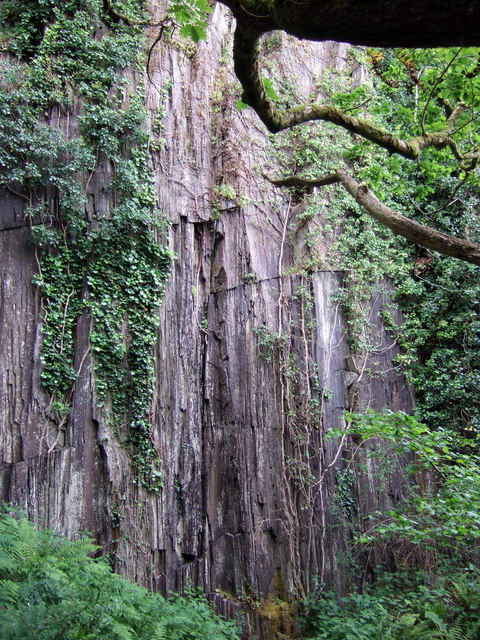
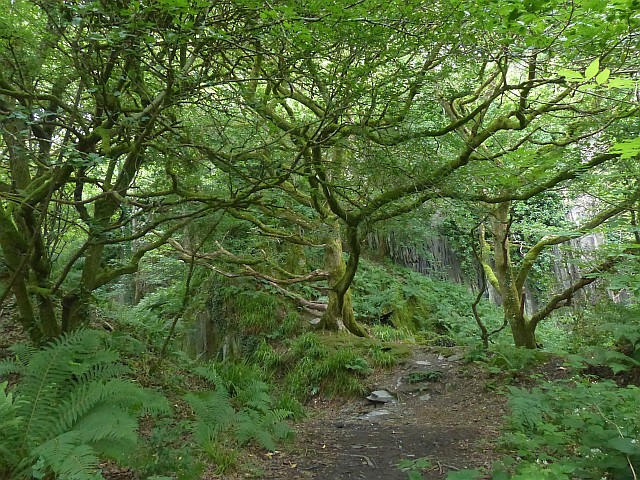
Disused and overshadowed by trees. The old faces stand in the ancient woodland of the gorge, a wooded nature reserve now rather than an industrial landscape, and the quarried cliffs are visible from the riverside path below Cilgerran Castle.
The quarry faces in the gorge and the wharf on the south bank of the Teifi.
Redevelopment
None. The gorge is wooded and managed for nature, with the castle above it in the care of Cadw.
Nearby mines
- Preseli Bluestone Quarries — 7.5 miles (12.0 km) SW
Straight-line distance, within 9 miles (15 km). Show on the map.
Recorded claims
Individual factual claims, each attached to the source(s) that support it below. Where sources disagree, both are kept.
- A series of slate quarries stretches for about 1.5 km east of Cilgerran Castle along the south bank of the Teifi, depicted on the first edition Ordnance Survey of 1889 with some quarries then operational and others disused; they include the Castle Quarries and the Plain and Cefn quarries. 1
- Slate was transported from the quarries by boat along the Teifi to Cardigan for onward transhipment, from a wharf on the south bank of the river. 1
- Cilgerran is a village, parish and community on the south bank of the Teifi in Pembrokeshire, formerly an incorporated market town, known for its castle and its annual coracle races; Kilgerran Halt was a stop on the former Whitland and Cardigan Railway. 2
Photographs & further reading
The Royal Commission's record of the group — its extent along the Teifi, the named quarries within it, their state on the 1889 Ordnance Survey, and the river wharf the slate left from.
View sourceSources
- (primary) Cilgerran Slate Quarries, NPRN 420663 — Coflein, Royal Commission on the Ancient and Historical Monuments of Wales
- (secondary) Cilgerran — Wikipedia
Record created: 9 September 2026 · Last researched: 9 September 2026