 MineArchive
Cawdor Quarry
| Location | Matlock, Derbyshire — 53.1394, -1.5664 (exact) |
|---|---|
| Commodity | Limestone |
| Type | Quarry |
| Worked | from 1857 |
| Maximum depth | An open limestone quarry; no depth applies. |
Overview
Cawdor Quarry is a disused limestone quarry on the edge of Matlock in Derbyshire. Stone from it was used in the construction of Hyde Park Corner and the Thames Embankment in London. The workings date from the late nineteenth century, the first step being a railway siding put in by Thomas Wakely and John Weston in October 1857; W. E. Constable & Company took the quarry over about 1890, working it as the Matlock Limestone Company largely to supply their tar-coating plant at Mitcham in Surrey. Much of the quarry is now a Site of Special Scientific Interest, and its floor has been redeveloped — a Sainsbury's supermarket opened on the site in October 2007, with several hundred houses planned beyond it.
History
The large Cawdor and Station quarries were started in the late nineteenth century, though the first move towards developing Cawdor was the introduction of a railway siding by Thomas Wakely and John Weston in October 1857. About 1890 W. E. Constable & Company Ltd took the quarry over and worked it as the Matlock Limestone Company, principally to secure materials for their tar-coating operation at Mitcham in Surrey — an early instance of a quarry held not to sell stone but to feed its owner's own processing works. The Matlock area's limestone is not of the premium quality of the Hopton Wood stone from Middleton-by-Wirksworth, but it is good, and Cawdor's went into two of the more conspicuous pieces of Victorian London: Hyde Park Corner and the Thames Embankment. Around 2000 the quarry land was bought by Sainsbury's, whose proposal for a supermarket drew opposition from local shopkeepers and grew into a wider scheme for the centre of Matlock, including a new bus station, the diversion of the A6 and a one-way bridge over the Derwent. Work began in January 2007 and the store opened on 4 October that year.
Geology
The quarry worked hard limestone of the Eyam Limestone Formation, laid down about 330 million years ago, in the Derbyshire limestone country of the southern Peak District. The cliff face behind the supermarket is designated a Site of Special Scientific Interest. Limestone of this district also yields decorative stone rich in crinoids and brachiopods, though the premium decorative stone of the area is the Hopton Wood limestone from further south.
Geological setting: Sedimentary Beds and Seams (well documented example)
Workings
An open limestone quarry served from the outset by rail: the 1857 siding was the first development on the site, and the quarry's sidings later gave the Peak Rail heritage railway its connection to the main line at Matlock. Part of the old loading docks is due to be removed to make way for a new alignment restoring that connection. Old derelict machinery and warehouses still stand within the SSSI.
Closure
The closure date is not known. The quarry was disused by the time the land was bought for redevelopment around 2000.
What remains
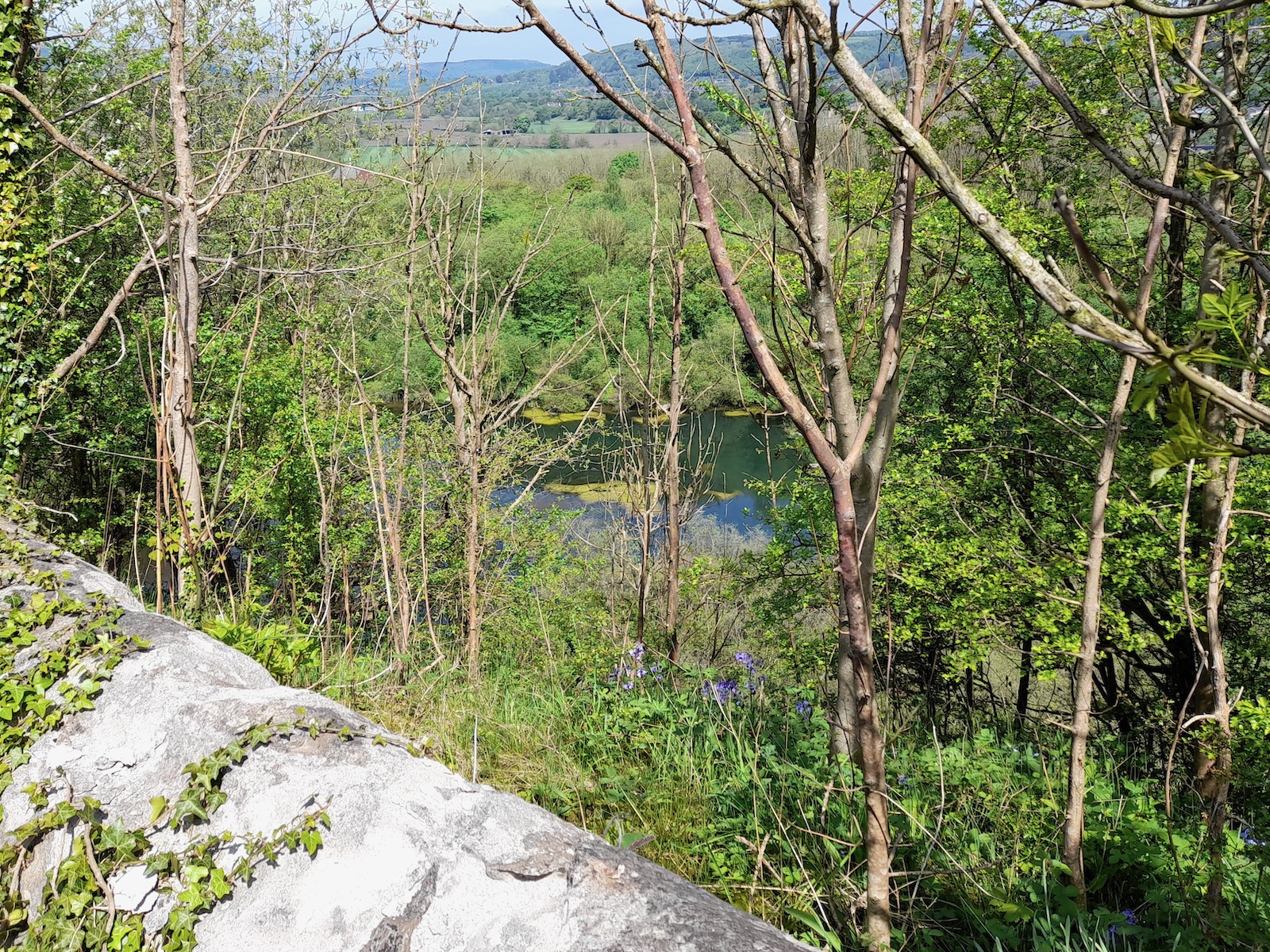
Disused and largely redeveloped. A Sainsbury's supermarket opened on the quarry floor on 4 October 2007, with its petrol station following on 25 October, and a housing development of more than 400 homes called Matlock Spa is planned. Within the SSSI the quarry still contains old derelict machinery and warehouses, and Cawdor Ponds — three lakes left by the quarrying — are owned by Matlock Angling Club.
The quarry face behind the supermarket survives as the designated SSSI, together with derelict machinery and warehouse buildings within it, the three flooded workings known as Cawdor Ponds, and part of the old loading docks in the former quarry sidings.
Redevelopment
The quarry floor now carries a Sainsbury's supermarket, opened October 2007, and the scheme that brought it also delivered a new bus station, a diversion of the A6 and a one-way bridge over the River Derwent. A residential development of over 400 homes, Matlock Spa, is planned to follow.
Nearby mines
- Dimple Mine — 0.3 miles (0.5 km) E
- Gentlewoman's Pipe — 0.6 miles (1.0 km) SE
- Lead Workings in High Tor Recreation Ground — 1.0 miles (1.6 km) SE
- Longtor Mines — 1.1 miles (1.7 km) S
- Masson Hill Mine — 1.0 miles (1.7 km) S
Straight-line distance, within 9 miles (15 km). Show on the map.
Recorded claims
Individual factual claims, each attached to the source(s) that support it below. Where sources disagree, both are kept.
- Stone from Cawdor Quarry was used in the construction of both Hyde Park Corner and the Thames Embankment in London. 1,2
- Much of the quarry is designated a Site of Special Scientific Interest, within which old derelict machinery and warehouses survive; Cawdor Ponds, three lakes left over from the quarrying, are owned by Matlock Angling Club. 1
- The Matlock area's limestone, while not of the premium quality of Hopton Wood stone from Middleton-by-Wirksworth, is good building limestone; the local hard limestone is of the Eyam Limestone Formation, about 330 million years old. 2
- Around 2000 the quarry land was bought by Sainsbury's; the store opened on 4 October 2007 and its petrol station on 25 October, as part of a wider scheme including a new bus station, the diversion of the A6 and a one-way bridge over the Derwent. 1
Photographs & further reading
Sets Cawdor in the context of the district's workings — which quarries took gritstone and which limestone, how the local stone compares with Hopton Wood, and what the Eyam Limestone yields besides building stone.
View sourceSources
- (secondary) Cawdor Quarry — Wikipedia
- (secondary) Mines, Quarries and Mineral Resources of the Matlock Area — Matlock Civic Association
Record created: 4 September 2026 · Last researched: 4 September 2026