 MineArchive
Carmyllie Quarries
| Also known as | Carmyllie Slate Quarry, Arbroath Pavement Quarries, Redford and Greystone Quarries |
|---|---|
| Location | Carmyllie, near Arbroath, Angus — 56.5705, -2.7372 (approximate) |
| Commodity | Freestone |
| Type | Quarry |
| Worked | Late 18th century–20th century (railway closed 1965) |
| Operators | The Panmure and Dalhousie estate (1800–1900) |
Overview
The quarries that paved Scotland. Carmyllie's flaggy sandstone split into sheets so readily that it roofed and floored cities from Dundee to Edinburgh — and to get it down to the sea its owner built the steepest railway in Scotland ever worked by passenger train.
History
From the late 18th century farmers around Redford, Greystone and Carmyllie were taking stone roofing slabs from small pits on their own land and carting them to Arbroath and Dundee. The landowner then opened larger quarries at Carmyllie to supply the tenement builders of the cities, and by 1864 the quarries had around 300 men in constant employment turning out some 150 tons a day. The stone was famous: contemporary accounts called Carmyllie's paving freestone the most esteemed in Scotland, and it went into the paving and steps of Edinburgh's New College and Assembly Hall, the Bank of Scotland on the Mound, and Register House.
Geology
The stone is a flaggy sandstone of the Dundee Formation, part of the Old Red Sandstone of Strathmore. What makes it valuable is not hardness or colour but the way it splits: the beds part readily into flat, even sheets of a thickness useful for paving and for roofing slabs. That is why the product was sold as 'pavement' and why the roofing slabs were called slates locally, though the rock is a sandstone and not a true slate at all — it owes its fissility to bedding rather than to metamorphic cleavage.
Geological setting: Sedimentary Beds and Seams (well documented example)
Workings
Open quarries following the flagstone beds, worked with the grain of the rock so that sheets could be lifted out whole. Getting the product away was the real problem, because the quarries sit 600 feet above the sea five miles inland. The answer was a private mineral railway from Elliot Junction on the coast up to the quarries, which opened at the end of January 1855 — six and a half miles, graded at about 1 in 36, and the steepest line in Scotland ever to carry a passenger service.
Closure
Quarrying declined through the 20th century as concrete and mass-produced materials displaced natural pavement. The railway carried passengers from 1 February 1900 until 2 December 1929 and closed altogether on 19 May 1965, apart from a stub at Elliot serving a factory siding that lasted until 1984.
What remains
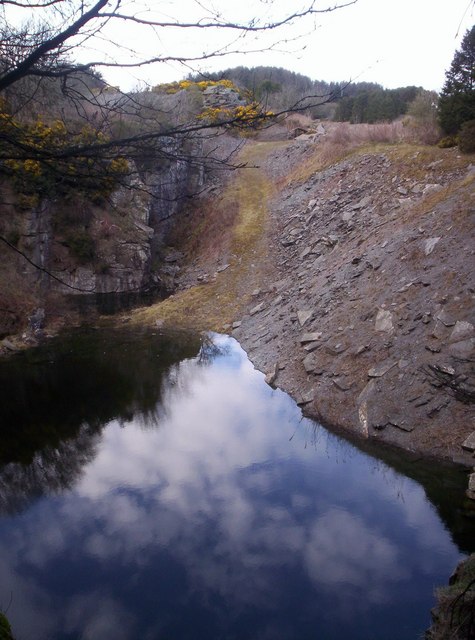
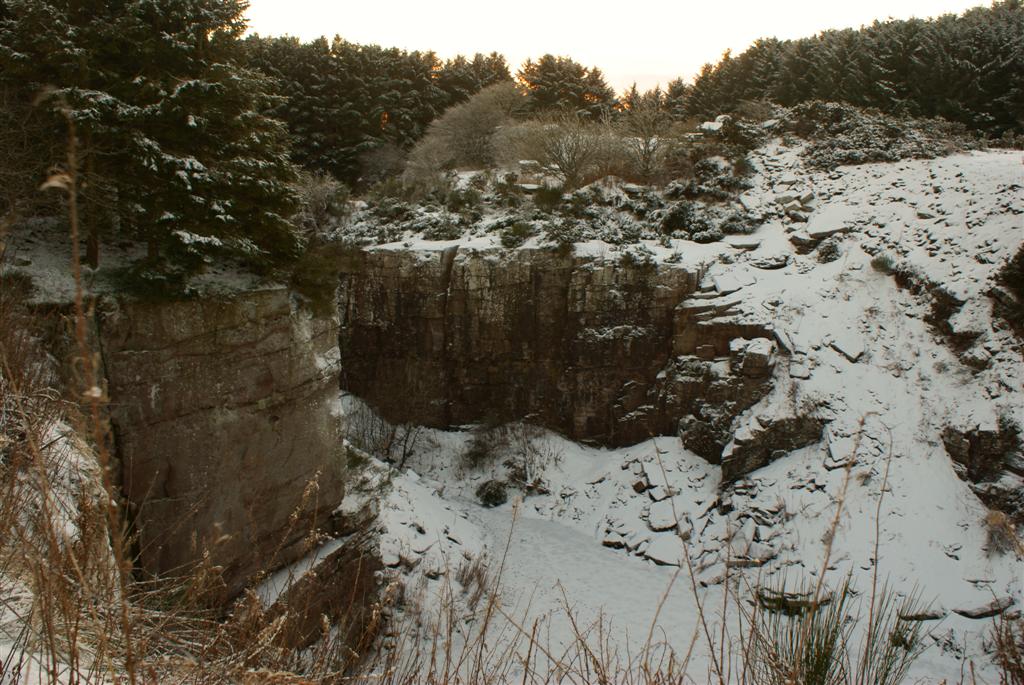
Disused and partly water-filled, in farmland. The quarry faces and spoil remain, and the trackbed of the branch can be walked in places.
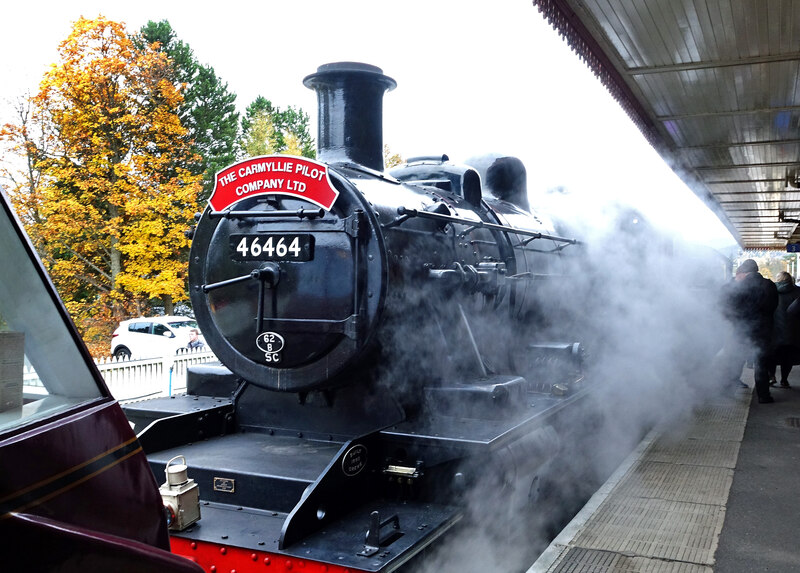
The quarry faces and workings at Carmyllie, and the earthworks of the railway including the sites of the halts at Denhead, Cuthlie and Arbirlot. The branch train was known locally as the Carmyllie Pilot and is still commemorated in the area.
Redevelopment
None — the ground has gone back to agriculture around the abandoned faces.
Recorded claims
Individual factual claims, each attached to the source(s) that support it below. Where sources disagree, both are kept.
- From the late 18th century farmers around Redford, Greystone and Carmyllie worked stone roofing slabs from small pits on their land; the landowner later opened larger quarries at Carmyllie to supply city builders. 1
- By 1864 the quarries employed around 300 men in constant employment and produced some 150 tons of stone a day. 1
- Carmyllie's paving freestone was described as the most esteemed in Scotland, and was used in the paving and steps of Edinburgh's New College and Assembly Hall, the Bank of Scotland on the Mound, and Register House. 1
- The stone is a flaggy sandstone of the Dundee Formation, worked because its beds split readily into flat even sheets — the basis of Arbroath pavement. 2
- A private mineral railway from Elliot Junction to the quarries opened at the end of January 1855, six and a half miles long and graded at about 1 in 36 — the steepest line in Scotland to be worked by a passenger train. 1
- Passenger services ran from 1 February 1900 to 2 December 1929; the line closed on 19 May 1965 apart from a stub at Elliot serving a factory siding until 1984. 1
Sources
- (secondary) Carmyllie Railway — Wikipedia
- (primary) An historical and petrological assessment of Pitairlie Quarry, Angus — British Geological Survey
Record created: 24 August 2026 · Last researched: 24 August 2026