 MineArchive
The Huskar Pit disaster memorials
| Category | Art |
|---|---|
| Dates | 4 July 1838: the Huskar Pit flooding. 1842: the Mines Act. 1988: the Nabs Wood memorial. 2008: the play in Silkstone church. 2010: the memorial window. |
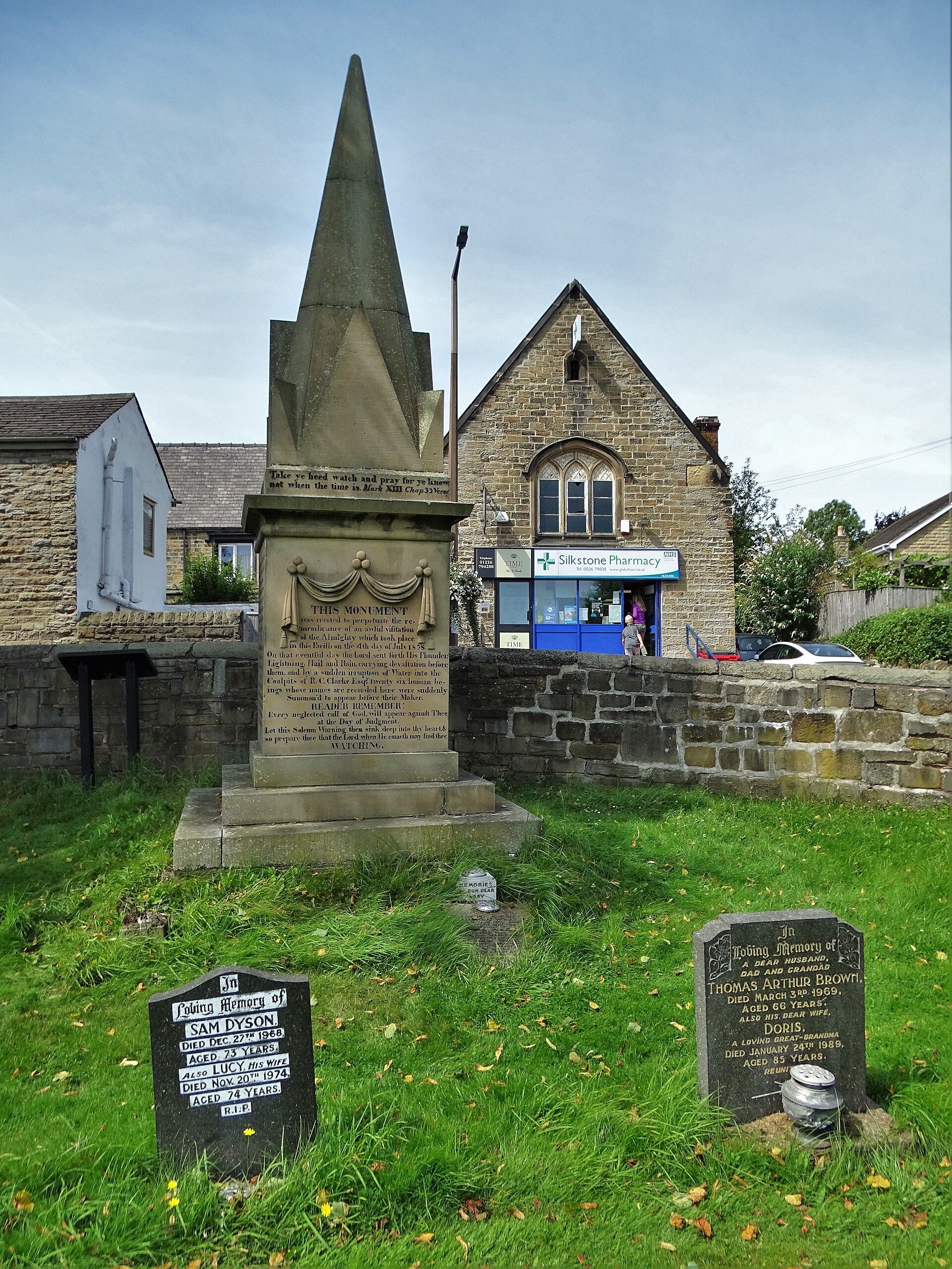
The memorials to the 26 children aged seven to seventeen drowned at Huskar Pit, Silkstone Common, on 4 July 1838: the stone obelisk over their common grave in All Saints' churchyard, Silkstone, which names them all, and the figures of two crawling children set up in Nabs Wood for the 150th anniversary.
The mining history in this record
On 4 July 1838 a thunderstorm sent the stream through Nabs Wood into the dayhole of Huskar Pit, one of R. C. Clarke's pits at Silkstone Common, and 26 children, 11 girls and 15 boys, were drowned as they tried to escape by it. Their bodies were brought up and buried together in the churchyard of All Saints' Church, Silkstone.
A tall stone monument was raised over them, recording on one face 'an awful visitation of the Almighty' in which a sudden eruption of water into Mr Clarke's coalpits had summoned twenty-six souls before their maker, and on the others their names and ages, with a warning to the reader to watch and pray. The disaster shocked the country and helped bring about the Royal Commission on children's employment and the Mines Act of 1842.
People
R. C. Clarke, owner of the pits.
Legacy today
For the 150th anniversary in 1988 the people of Silkstone put up a second memorial in Nabs Wood, close to the entrance of the dayhole: figures of a boy and a girl on their hands and knees in a low tunnel. The parish council found money that year for the upkeep of the old churchyard monument. A play about the disaster and its inquest was performed in Silkstone church in 2008, and in 2010 a stained glass window made by local residents was installed there. The disaster is the subject of Peter Bond's song 'Act of God' and is recalled in Kate Rusby's 'Halt the Wagons'; the churchyard monument is the logo of the village's primary school.
Recorded claims
Individual factual claims, each tagged with how solidly it's grounded and attached to the source(s) that support it. Where sources disagree, both are kept.
- The 26 children drowned at Huskar Pit on 4 July 1838 were buried together in the churchyard of All Saints' Church, Silkstone, where a memorial records their names and ages. (documented fact) 1,2,3
- The churchyard monument records 'an awful visitation of the Almighty' on 4 July 1838, when 'a sudden eruption of water into the coalpits of R. C. Clarke Esq.' drowned the twenty-six, and warns the reader to watch and pray. (documented fact) 2,4
- For the 150th anniversary in 1988 the people of Silkstone put up a memorial in Nabs Wood near the entrance to the dayhole, with figures of a boy and a girl crawling through a low tunnel. (documented fact) 1,2,3
- On the 150th anniversary Silkstone Parish Council made funds available for the upkeep of the old churchyard memorial. (documented fact) 2
- A commemorative stained glass window made by local residents was installed in Silkstone church in 2010, and in 2008 the disaster and inquest were made into a play performed in the church. (documented fact) 1,3
- The disaster is the subject of Peter Bond's song 'Act of God' (1979) and is referred to in Kate Rusby's 'Halt the Wagons' (2019). (documented fact) 1
Mines
- Huskar Pit — South Yorkshire
The memorials commemorate the 26 children drowned in the Huskar Pit dayhole in 1838; the Nabs Wood memorial stands near the dayhole's entrance.
Disasters
- Huskar Pit Flooding, 1838 — 4 July 1838
Sources
- (secondary) Huskar Pit — Wikipedia
- (secondary) Silkstone mining disaster changed history — Barnsley Chronicle
- (secondary) Huskar Pit Memorial — Visit Penistone
- (observational) Memorial to Huskar Pit Disaster (Commons, Neil Theasby, 2021) — Wikimedia Commons

Record created: 5 October 2026 · Last researched: 5 October 2026