 MineArchive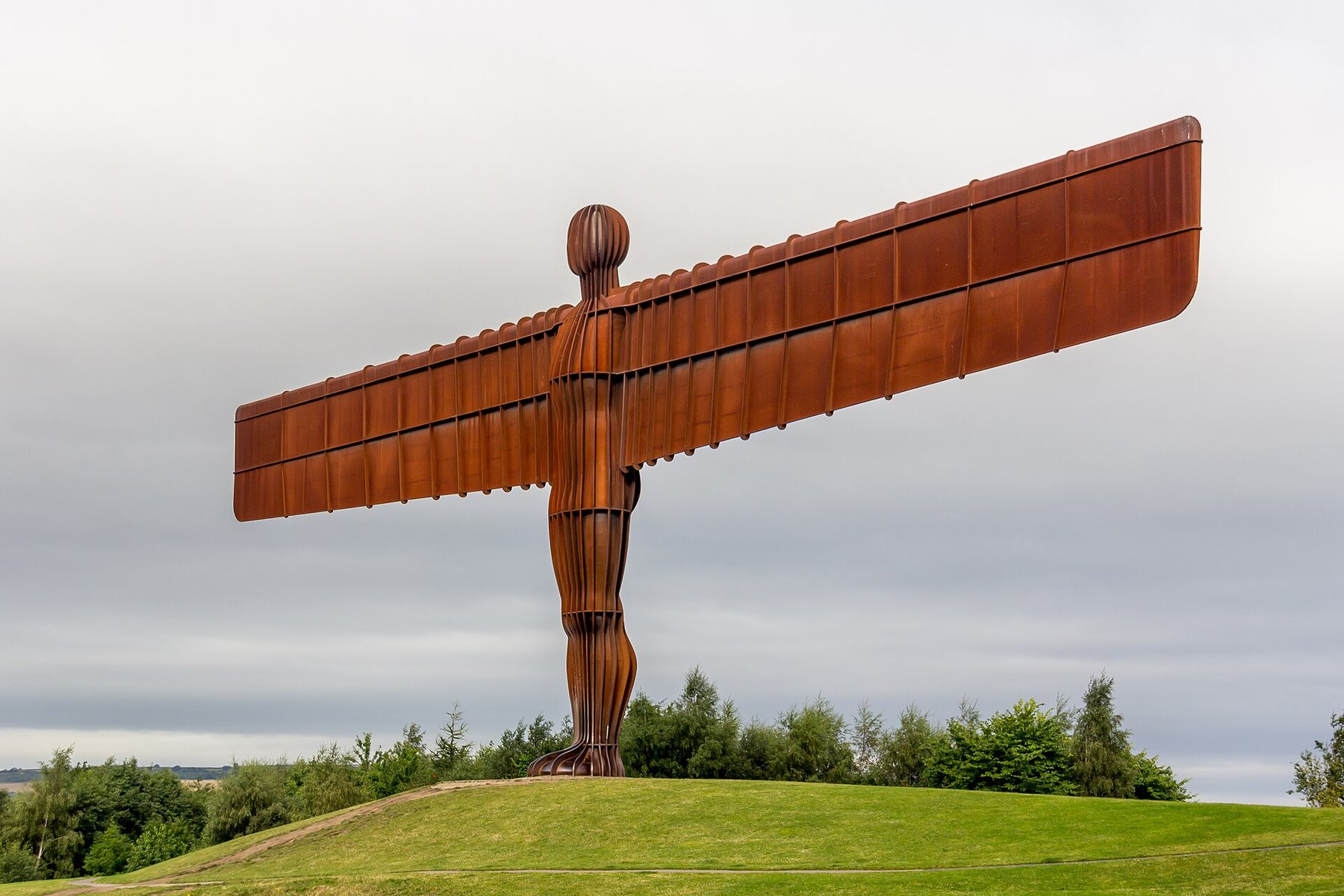
The Angel of the North
| Category | Art |
|---|---|
| Dates | Team Colliery worked from 1726; the Angel installed 14 February 1998. |
Antony Gormley's Angel of the North stands on the reclaimed site of Team Colliery above Gateshead, where coal was worked from the 1720s. Gateshead Council approached Gormley, who was initially reluctant and agreed after visiting the ground; he has said the mining done beneath the site gives it a poetic resonance, men having worked below in the dark where the sculpture now stands in the light. It was raised in February 1998 and is seen by an estimated thirty-three million people a year.
The mining history in this record
The hill at Low Eighton is colliery ground. Team Colliery worked it from 1726 — the Angel's own account of the site gives the 1720s to the 1960s — through dozens of small pits scattered across Eighton Moor, and what stands there now was made by clearing the remains away and piling the earth into a knoll.
Gateshead Council commissioned the work and approached Gormley, who was reluctant at first and agreed after seeing the proposed site. The sculpture is cast from his own body: 208 tonnes of COR-TEN weathering steel, twenty metres tall, with a wingspan of fifty-four metres, the wings angled three and a half degrees forward to give what he called a sense of embrace. The rusted colour of the steel is where its working title, The Iron Angel of the North, came from.
It was installed on 14 February 1998. The components travelled the twenty-eight miles from Hartlepool overnight in convoy, the body on a forty-eight-wheel trailer, and drew crowds on the way; the next morning the figure was lowered into place, the first wing fixed at about eleven and the second at four in the afternoon, watched by thousands and more than twenty television crews.
People
Antony Gormley (born 1950), the sculptor. The plaque beside the work carries his own account of the site: that the hilltop has the feeling of a megalithic mound, that the mining done beneath it gives the place a poetic resonance — “Men worked beneath the surface in the dark” — and that it matters to him that the Angel is rooted in the ground rather than floating in the ether. He has described the choice of an angel as working three ways at once: as a reminder of the industrial history under the site, as a marker of the passage from the industrial to the information age, and as a focus for human hopes and fears.
Legacy today
The North of England Civic Trust has called it possibly the most prominent piece of post-war public art in the United Kingdom, and arguably the best known and most easily recognisable. Standing beside the A1 and the East Coast Main Line, it is estimated to be seen by thirty-three million people a year.
Because it commemorates no particular person, viewers have attached their own meanings to it, and one of the recurring ones is precisely the connection Gormley named: the miners who worked under the ground it stands on. The small housing estate a few hundred metres away is still called Team Colliery and takes its name from the pit.
Recorded claims
Individual factual claims, each tagged with how solidly it's grounded and attached to the source(s) that support it. Where sources disagree, both are kept.
- The Angel was built on land previously part of the former Team Colliery, whose remains were removed and the earth piled into the knoll the sculpture stands on. Sources differ on what specifically stood there: the account of the sculpture says a colliery reservoir, while accounts of Birtley and of the Team Colliery estate say the pithead baths of the Betty Ann pit. (documented fact, disputed)
- The plaque beside the sculpture carries Gormley's statement that the hilltop site has the feeling of a megalithic mound, that there is a poetic resonance in the mining done underneath it, and that men worked beneath the surface in the dark. (documented fact)
- Gateshead Council commissioned the work and approached Gormley, who was initially reluctant and agreed after visiting the proposed site, a former colliery. (documented fact)
- The sculpture is cast from Gormley's own body: 208 tonnes of COR-TEN weathering steel, twenty metres tall, with a wingspan of fifty-four metres, the wings angled three and a half degrees forward. (documented fact)
- The components were taken twenty-eight miles from Hartlepool overnight on 14 February 1998, the body on a forty-eight-wheel trailer, and the figure was lowered into place the next morning before crowds of thousands. (documented fact)
- Standing beside the A1 and the East Coast Main Line, the sculpture is estimated to be seen by thirty-three million people a year. (documented fact)
Mines
- Team Colliery — Tyne and Wear
The sculpture stands on the reclaimed site of Team Colliery at Low Eighton, ground the colliery worked from 1726. Gormley has said explicitly that the mining done beneath the site gives it a poetic resonance, and that connection is recorded on the plaque beside the work.
Sources
- (secondary) Angel of the North — Wikipedia
- (secondary) Birtley, Tyne and Wear — Wikipedia
- (secondary) Team Colliery — Wikipedia
Record created: 4 September 2026 · Last researched: 4 September 2026