 MineArchive
Fishbelly Rail
| Also known as | Fish-bellied Rail (spacing/hyphenation variant used interchangeably in period and modern sources), Fish Belly Rail (spacing/hyphenation variant used interchangeably in period and modern sources) |
|---|---|
| Category | Structures & Machinery |
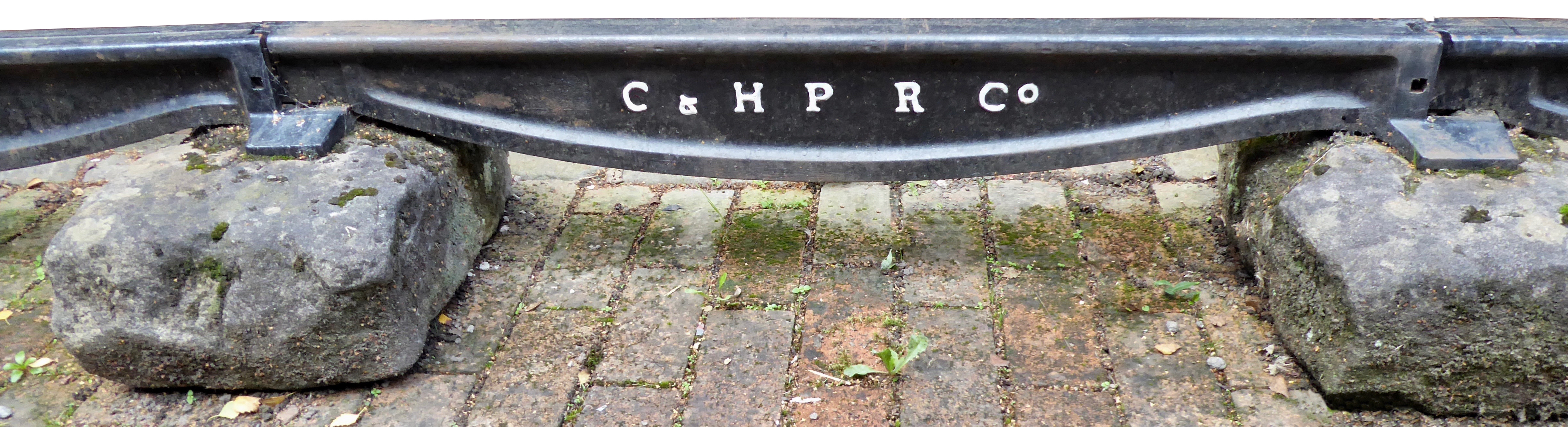
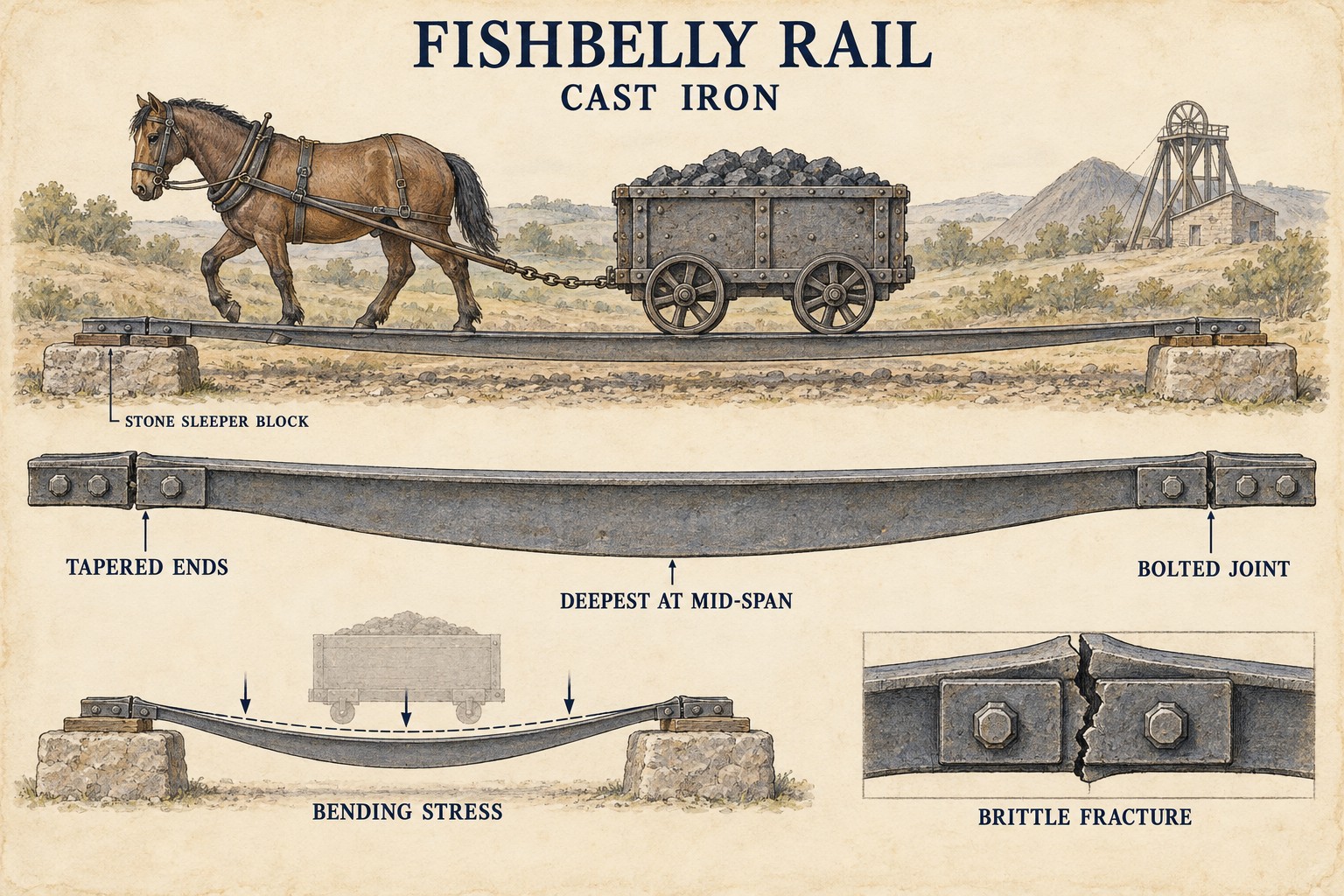
An early cast-iron tramway rail, cast noticeably deeper in the middle of its length than at its ends, giving it a curved profile likened to the belly of a fish.
Historical usage
Devised by the engineer William Jessop and introduced from the 1780s on light horse-drawn wagonways serving collieries and quarries, fishbelly rail became one of the standard rail forms of the earliest British tramways and, later, edge railways. It was cast in short lengths, typically three to six feet, with side plates for bolting to stone sleeper blocks. Though largely superseded on main lines by wrought-iron and double-headed rail from the 1820s-30s, it remained in use on remote, small-scale mineral tramways -- serving horse-drawn or man-pushed wagons at mines and quarries -- into the 20th century, with examples recorded still in use as late as the 1940s.
How it worked
The rail's greater depth at mid-span, tapering toward each end, put more material where the bending stress on a supported beam is greatest and least where it is least needed, giving a cast-iron rail -- a brittle material, prone to snapping under a sudden load -- more strength for its weight than a rail of uniform section.
Why it was used
Cast iron was cheap and easy to produce in the quantities a mine or quarry's own internal tramway needed, and the fishbelly profile let a horse-drawn tramway be built with confidence that its rails would bear the load without the excessive extra bulk (and cost) of a uniformly deep casting.
Risks & limitations
Cast iron remained brittle regardless of the clever profile, and fishbelly rails were prone to cracking or snapping, particularly at the joints between the short lengths; this brittleness, along with the material's inability to be rolled into the much longer continuous lengths wrought iron and later steel allowed, meant fishbelly rail was abandoned wherever traffic or loads grew beyond what a small mine or quarry tramway required.
Related terminology
Mines associated with this term
Included only where MineArchive's own research gives a reasonable evidential basis — not every mine where this might plausibly apply.
- Gaewern Quarry — Gwynedd (surviving physical example)
A rare wrought-iron example of fishbelly-profile T-section rail, more usually found cast in iron, survived on site as of an early-1990s survey.
Sources
- (secondary) Fishbelly rail — Wikipedia
- (secondary) Track used on British railway lines — Invicta Grasshopper Group
Record created: 30 August 2026 · Last researched: 30 August 2026