 MineArchive
Cross Geo Talc Quarry
| Location | Cross Geo, Clibberswick, Unst, Shetland Islands — 60.7377, -0.8262 (approximate) |
|---|---|
| Commodity | Talc |
| Type | Mineral |
| Worked | From the Norse period–Still active |
| Maximum depth | No shaft or underground workings — a small surface quarry cut into the cliff and foreshore at Cross Geo. |
Overview
A talc quarry at Cross Geo on Clibberswick bay, Unst, worked in two very different eras: as a Norse-period steatite (soapstone) source carved into bowls and loom-weights over a thousand years ago, and in modern times as one of the few places in Britain where talc has been quarried commercially, on a small and intermittent scale distinct from the larger, now-abandoned Queyhouse Quarry elsewhere on the island.
History
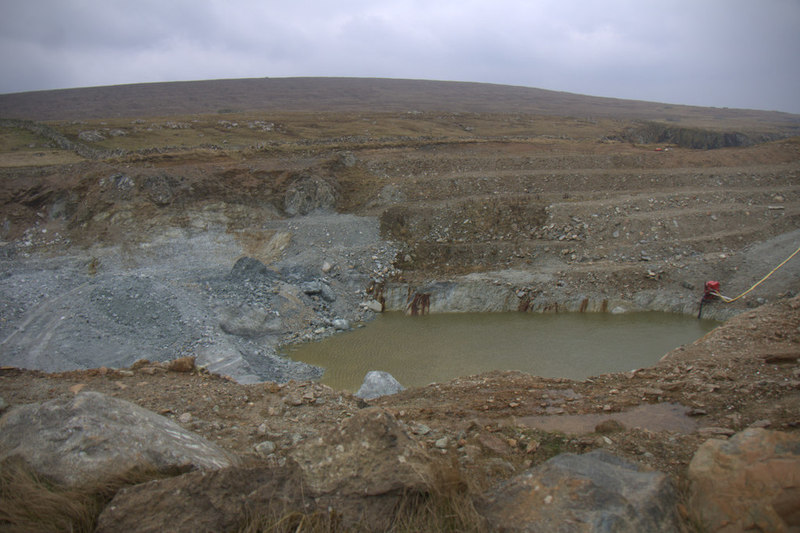
Clibberswick's own place-name preserves its geology: 'Clibber' derives from the Old Norse kleber, meaning soapstone, the same root that gives Shetland the related place-names Clammel Knowes. Norse-period quarrymen cut steatite blocks directly from the cliff faces at Cross Geos, working from precarious positions -- some workings sit high above the beach, and quarrymen are thought to have been lowered on ropes to reach the most workable stone. A rescue excavation in 1983 found waste deposits up to three metres deep together with the remains of a building associated with vessel manufacture, and partly-worked stone was still scattered on the beach below. The soapstone was carved into bowls, baking trays and other vessels: unlike the pottery it displaced, steatite hardened rather than cracked when exposed directly to heat, making it valuable for cooking. Commercial talc quarrying resumed at Cross Geo in modern times on a small, intermittent basis, distinct from the much larger Queyhouse Quarry near Loch of Cliff elsewhere on Unst, which was worked continuously from 1945 producing around 9,000 tons of talc a year for uses including roofing felt before its own eventual abandonment. A 2013 photograph of Cross Geo noted the quarry had become considerably deeper and wetter than it had been in 2007, consistent with continued small-scale extraction through that period.
Geology
The talc at Cross Geo occurs within the Shetland Ophiolite Complex, a slice of ancient oceanic crust and upper mantle rock thrust onto Unst and Fetlar rather than the sedimentary or granite-vein geology typical of mainland Britain. Talc forms here where hydrothermal fluids alter the ophiolite's original serpentine, breaking it down into talc and brucite; commercial-quality talc occurs both at Cross Geo/Clibberswick and at Queyhouse, further along the same talc-bearing belt on the margin of the Main Serpentine Block.
Workings
A shallow surface quarry cut into the cliff and foreshore rather than any underground working -- Norse-period extraction worked exposed rock faces directly, some reached only from above, and the modern operation continues to work the site as an open excavation rather than a shaft or adit mine.
Closure
The Norse-period steatite working and the modern talc quarry are separate eras on the same ground; no closing date for the later working is recorded.
What remains
A working photograph from March 2013 recorded the quarry as considerably deeper and wetter than an earlier 2007 photograph of the same site, consistent with continued small-scale extraction between those dates.
The 1983 excavation identified the remains of a building associated with Norse-era vessel manufacture, buried beneath up to three metres of quarrying waste, alongside partly-worked steatite pieces still scattered on the beach below the quarry faces.
Nearby mines
- Unst Chromite Mines — 2.3 miles (3.6 km) N
Straight-line distance, within 9 miles (15 km). Show on the map.
Recorded claims
Individual factual claims, each attached to the source(s) that support it below. Where sources disagree, both are kept.
- A rescue excavation in 1983 at Cross Geos found waste deposits up to three metres deep and the remains of a building associated with the manufacture of steatite vessels, with worked stone also found on the beach below. 1
- The quarry was recorded in a March 2013 photograph as considerably deeper and wetter than it had been in an earlier 2007 photograph, indicating continued extraction through that period. 2
- Commercial-quality talc occurs at Cross Geo/Clibberswick and at Queyhouse, along the margin of the Main Serpentine Block within the Shetland Ophiolite Complex, formed by hydrothermal alteration of serpentine into talc and brucite. 3
Photographs & further reading
Mindat's mineralogical locality record for the quarry, listing recorded specimens and coordinates.
View sourceSources
- (secondary) Site in Focus — The Steatite Quarry at Cross Geos, Clibberswick, Unst — Archaeology Shetland
- (observational) Clibberswick quarry — Geograph Britain and Ireland (Mike Pennington)
- (primary) Economic geology of Orkney and Shetland — British Geological Survey (BGS Earthwise)
Record created: 29 August 2026 · Last researched: 30 August 2026