 MineArchive
Khazad-dûm
Fictional record. This page describes a mine from a fictional setting, not a real place. Information is based on the cited canon, with adaptations and interpretation distinguished where necessary. It is kept separate from the real MineArchive corpus — see Fictional.
| Also known as | Moria, The Dwarrowdelf, Hadhodrond |
|---|---|
| Setting | Middle-earth (J.R.R. Tolkien) |
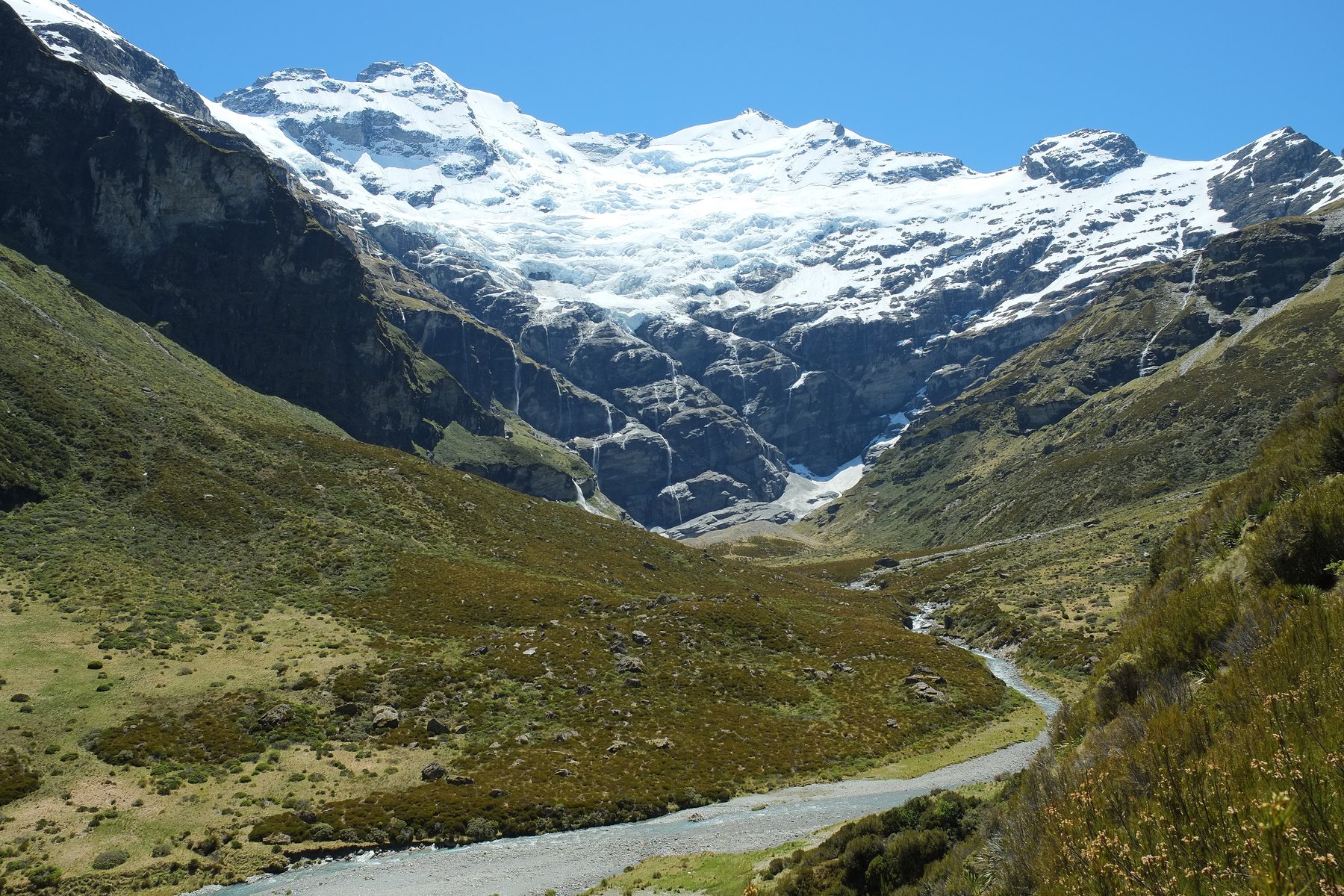
| Location | Beneath the Misty Mountains, under the three peaks the Dwarves called Barazinbar, Zirakzigil and Bundushathûr (Caradhras, Silvertine and Cloudyhead to Men) — entered historically from the west by the Doors of Durin, opening onto Eregion, and from the east by a gate into the Dimrill Dale. |
| Commodity | Mithril |
| Type | Metal |
| Worked | The Elder Days, long before the First Age of the Sun and Moon – Abandoned by Durin's Folk after T.A. 1980-81; reoccupied by Balin's colony, T.A. 2989-94; resettled by Durin VII in the Fourth Age |
| Extent | Worked through all three mountains above it and linked by the Endless Stair, which the text says climbed 'from the lowest dungeon to the highest peak' in an unbroken spiral of many thousand steps to Durin's Tower atop Zirakzigil. No absolute depth, area or step count is given anywhere in the primary texts, and none is estimated here. |
| Controlled by | Durin's Folk (Elder Days – T.A. 1980; T.A. 2989-94 (Balin's colony); Fourth Age onward (Durin VII)) |
Overview
The greatest of the Dwarf-cities of Middle-earth, and the only place its own books ever record mithril being found. Founded in the deeps of legend by Durin the Deathless, it grew into a realm of halls and stairs cut through three mountains — until, in the Third Age, the Dwarves dug deep enough to wake something that had been sleeping since the First Age, and lost the whole kingdom to it in a matter of years.
History
Durin the Deathless, eldest of the Seven Fathers of the Dwarves, founded Khazad-dûm in the Elder Days, long before the count of years reached the First Age. Under his line the realm prospered for thousands of years. In the Second Age the Dwarves of Khazad-dûm kept close and profitable friendship with the Elven-smiths of Eregion just over the mountains; the West-gate, the Doors of Durin, was made in this period by the Elf-smith Celebrimbor and the Dwarf Narvi and inscribed with ithildin, a substance visible only by starlight or moonlight. King Durin III is recorded as having received one of the Seven Rings made for the Dwarf-lords in this same period. Following the War of the Elves and Sauron and the ruin of Eregion, Khazad-dûm's strength held against Sauron's forces at the end of the Second Age, and the realm survived where its Elven neighbour did not. Its ruin came from within: in T.A. 1980 the Dwarves, delving deeper as the more easily reached ore was exhausted, broke into a place where a Balrog of Morgoth had lain hidden since the First Age. It killed King Durin VI; his son Náin I was slain by it in turn soon after, and Durin's Folk abandoned the realm rather than face it, giving it the name it has carried since among Men and Elves — Moria, the Black Pit. Orcs occupied the empty halls for centuries afterward. The Dwarves broke that occupation in the War of the Dwarves and Orcs (T.A. 2793-99) but did not resettle Khazad-dûm itself, still fearing what lay beneath it. In T.A. 2989 Balin son of Fundin led an expedition from Erebor to reclaim it; the colony held the upper halls for five years, recorded in the Book of Mazarbul, before being overrun by Orcs in T.A. 2994. The Fellowship of the Ring passed through the abandoned, Orc-held mines in T.A. 3019, found Balin's tomb, and lost Gandalf to the same Balrog on the bridge below Durin's Tower. By the Fourth Age, Appendix A records, Durin VII returned and refounded the kingdom, which lasted 'until the world grew old and the Dwarves failed'.
Workings
The primary texts describe a city of halls rather than a mine in the modern sense: named chambers include the First Hall and the Twenty-First Hall of the North-end, where Balin's colony first settled, and the Chamber of Mazarbul, which became Balin's seat and, later, his tomb. The Endless Stair connected the depths of the mines to Durin's Tower on the mountain peak above — a single continuous stair rather than a network of separate shafts, so far as the text describes it. Durin's Bridge, 'a slender bridge of stone, without kerb or rail', crossed a chasm before the Second Hall. No description survives in the primary texts of how the Dwarves actually mined mithril underground — only that they delved for it, and delved deeper once the easier ore was gone.
Real-world mining concepts used here: Adit, Level
Closure
Gandalf's own words in the Fellowship of the Ring put it plainly: the Dwarves 'delved too greedily and too deep' in pursuit of mithril and 'disturbed' what was sleeping in the depths beneath the mountains. The Balrog killed King Durin VI in T.A. 1980 and his son Náin I soon after, and the realm was abandoned within the year.
What became of it
Held by Orcs from shortly after T.A. 1981 until the War of the Dwarves and Orcs ended in 2799, though the Dwarves did not resettle it then; briefly retaken by Balin's colony (2989-94); passed to the Fellowship as an empty, Orc-infested ruin in 3019; and, per Appendix A, refounded by Durin VII in the Fourth Age.
Canon & adaptations
Where mithril actually came from is never explained in Tolkien's own texts — Gandalf says only that it was 'found' in Khazad-dûm. Amazon's television adaptation The Rings of Power gives it an origin story involving a Silmaril and a Balrog; see the Mithril commodity record for the detail, since that is where the claim properly belongs.
Disasters & major incidents
-
Durin's Bane
T.A. 1980 · Other · 2 fatalities
Dwarves delving for mithril in the deeps of Khazad-dum broke into a place where a Balrog of Morgoth had lain hidden since the First Age. It killed King Durin VI, and his son Nain I in turn soon after, ending nearly the whole of Durin's Folk's presence in the realm within a matter of years. -
The Bridge of Khazad-dûm
15 January T.A. 3019 · Fire · 1 fatality
Fleeing Orcs and a cave-troll through the long-abandoned halls of Khazad-dum, the Fellowship of the Ring was run down at the mine's eastern bridge by the same Balrog responsible for Durin's Bane some eleven hundred years before. Gandalf the Grey held the bridge alone to let the others cross, broke it under the creature with his staff, and was dragged into the abyss with it as it fell.
Related fictional records
Recorded claims
Each claim is marked with its basis — explicit canon, MineArchive inference, adaptation only, or fandom interpretation — and attached to the source(s) below. Where tellings disagree, both are kept.
- Khazad-dûm was founded by Durin the Deathless in the Elder Days, long before the First Age of the Sun and Moon. (explicit canon) 1
- The Endless Stair ran, in the text's own words, 'from the lowest dungeon to the highest peak' of Khazad-dûm, an unbroken spiral of many thousand steps to Durin's Tower; no absolute depth or step count is ever given. (explicit canon) 2
- Mithril was found in Khazad-dûm and, so far as the books record, nowhere else in Middle-earth by the end of the Third Age. (explicit canon) 2
- In T.A. 1980 the Dwarves, delving too greedily and too deep in search of mithril, disturbed a Balrog that had lain hidden since the First Age; it killed King Durin VI, and his son Náin I soon after, and Durin's Folk abandoned the realm. (explicit canon) 1,3
- Balin led an expedition from Erebor to recolonise Khazad-dûm in T.A. 2989; the colony held for five years before being destroyed by Orcs in T.A. 2994. (explicit canon) 2,3
- By the Fourth Age, Durin VII returned and refounded the kingdom, which endured 'until the world grew old and the Dwarves failed'. (explicit canon) 1
Images
Sources
- (primary canon) The Lord of the Rings, Appendix A — 'Durin's Folk' — J.R.R. Tolkien, 1955
- (primary canon) The Fellowship of the Ring — Book II, 'The Ring Goes South' and 'A Journey in the Dark' — J.R.R. Tolkien, 1954
- (primary canon) The Lord of the Rings, Appendix B — 'The Tale of Years' — J.R.R. Tolkien, 1955
- (adaptation) The Rings of Power, Season 1, Episode 5 ('Partings') — Amazon Studios, 2022
- (primary canon) The Hobbit — Chapter 13, 'Not at Home' — J.R.R. Tolkien, 1937 (mithril text from the 1966 revision)
Record created: 25 August 2026 · Last researched: 25 August 2026