 MineArchive
Featherstone Massacre
During the national coal lockout of 1893, a crowd of over 2,000 gathered at Ackton Hall Colliery amid rumours that coal was being moved out to break the strike. After the Riot Act was read and the crowd failed to disperse, soldiers of the King's Own Yorkshire Light Infantry opened fire; two bystanders, James Gibbs and James Arthur Duggan, were fatally wounded and died the next day. The event became known as the Featherstone Massacre, a landmark moment in British labour history.
| Date | 7 September 1893 |
|---|---|
| Mine | Ackton Hall Colliery |
| Region | West Yorkshire |
| Type | Other |
| Fatalities | 2 (James Gibbs and James Arthur Duggan were killed. Neither was a striking miner shot in the act of rioting: the inquest on Gibbs found specifically that he was a peaceable man who took no part in the riotous proceedings. Nine other men were injured badly enough to receive a share of the compensation later paid.) |
| Context | During active mining (Occurred during the 1893 national coal lockout, not routine mine operation -- soldiers were deployed to protect colliery property, not to manage a mining hazard.) |
Cause
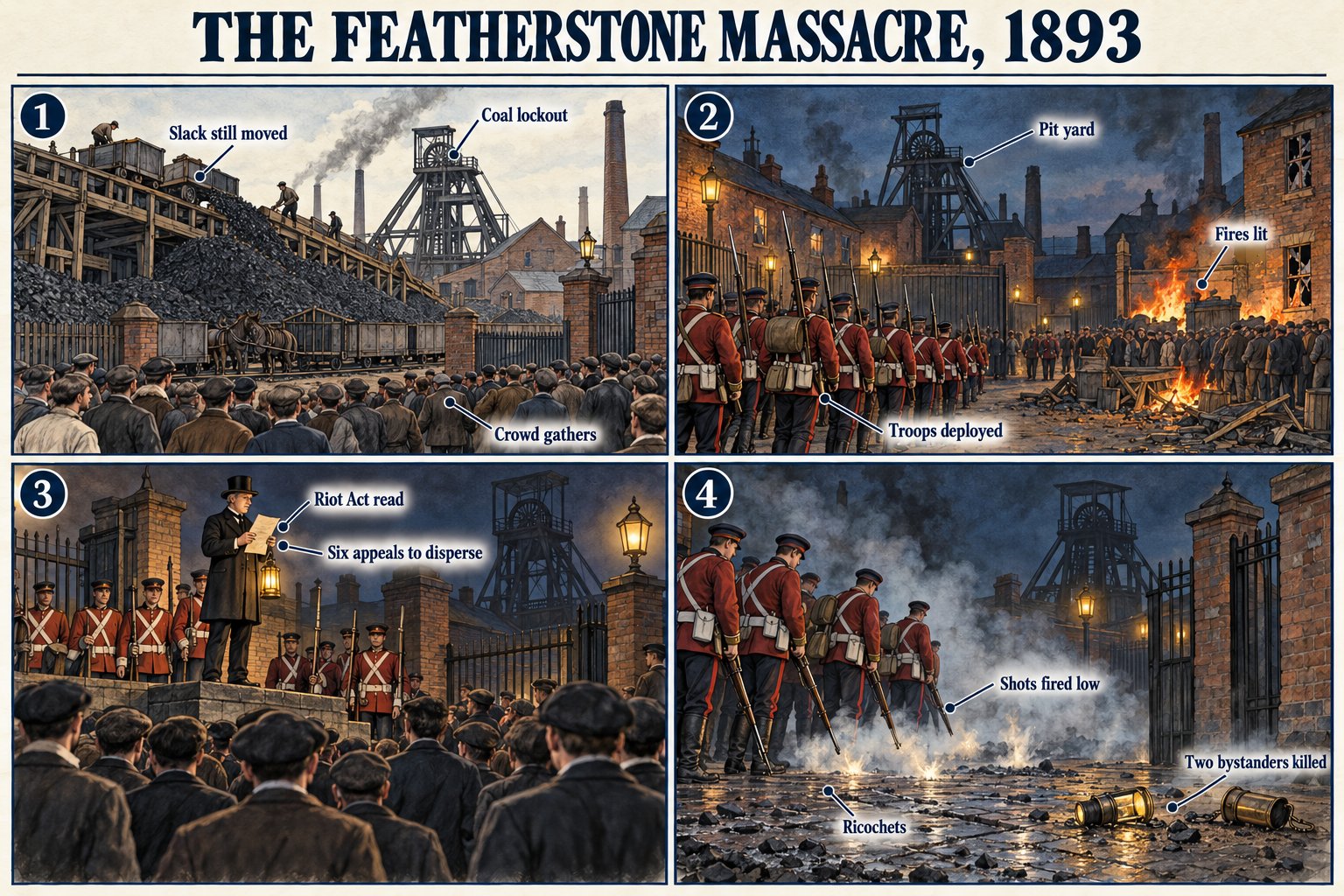
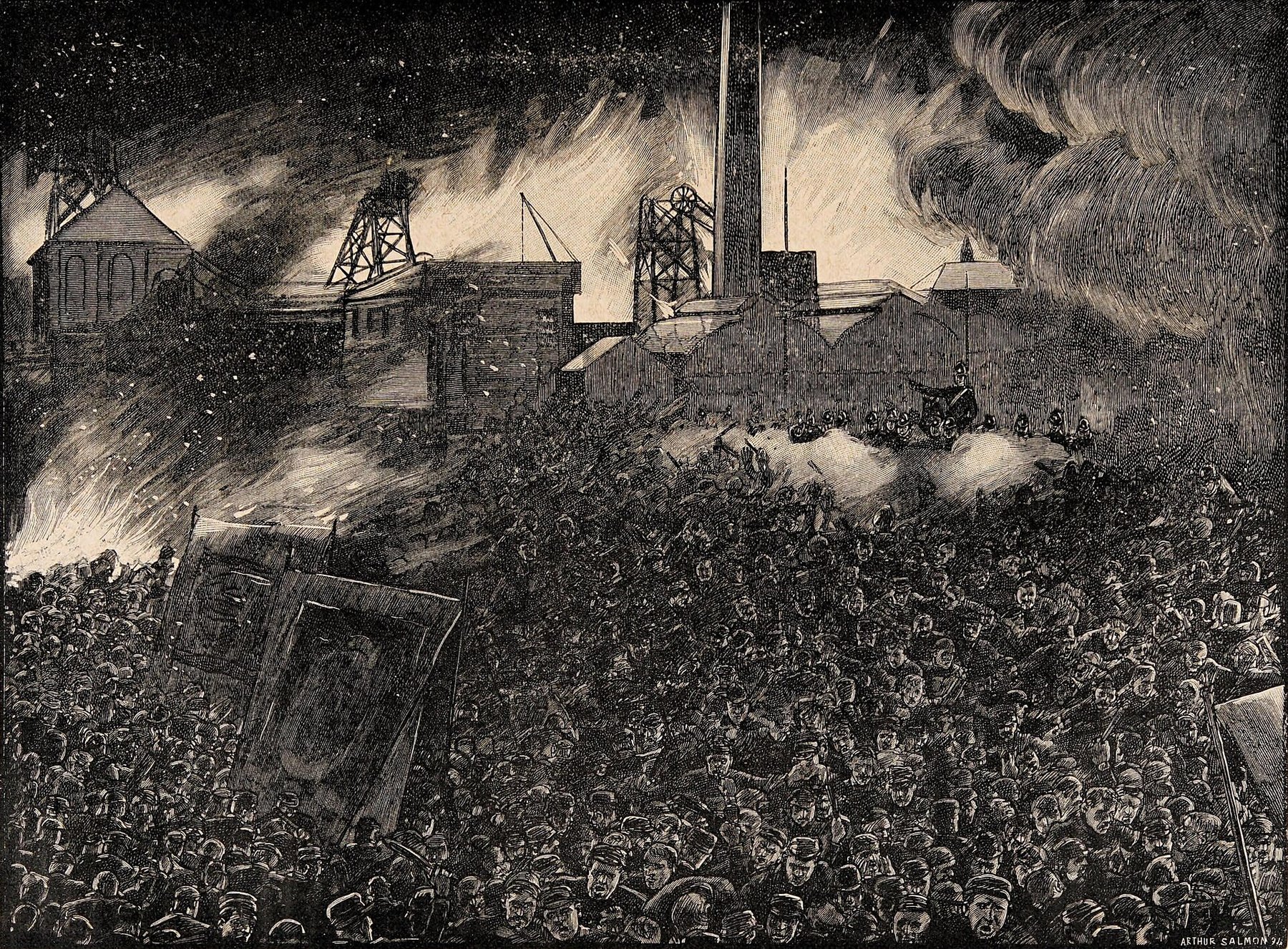
A crowd, swollen by miners from other pits and reported by the official inquiry to have been 'preconcerted' and organised from outside the immediate area, gathered at Ackton Hall Colliery amid rumours that coal stocks were being moved to break the national lockout. After the crowd set fires in the pit yard and ignored repeated calls to disperse following a formal reading of the Riot Act, the magistrate authorised soldiers to open fire; ricocheting shots struck bystanders rather than the intended targets.
Contributing factors
The colliery's owner, Samuel Cunliffe Lister, had continued loading and selling small coal (slack) from surface stockpiles throughout the lockout, which local people believed broke the spirit of the dispute; combined with the late arrival of a magistrate and a divided, undermanned military presence, this created the conditions the official inquiry later held responsible for the shooting.
What happened
On the evening of 7 September 1893, a crowd that grew to over 2,000 people gathered at Ackton Hall Colliery, Featherstone, during the national coal lockout, amid anger that coal was continuing to be moved from the site. Troops -- initially 28 men of the Bradford-based Infantry under Captain Digby Barker, later reinforced by the King's Own Yorkshire Light Infantry under Captain Ottley -- had been deployed to protect colliery property earlier that day after windows were smashed and fires lit in the pit yard. Magistrate Bernard Hartley did not arrive until around 8pm; at 8.40pm he read the Riot Act aloud by lantern light. After six further appeals to disperse were ignored, soldiers fired an initial round into the ground without apparent injury, followed by a second volley from eight soldiers that produced multiple casualties as bullets ricocheted into the crowd. Ten shots in total struck between 11 and 14 people. James Gibbs, a 22-year-old miner and Sunday School teacher from Loscoe Grove, had walked to the colliery with his brother George after seeing fires in the sky; both were hit by the second volley, James through the chest. His brother helped him to a doctor's surgery, where he died in the early hours of 8 September. James Arthur Duggan, a 25-year-old Featherstone miner married only months earlier, was shot in the leg while watching from near the pit entrance; despite treatment at Clayton Hospital, he died the same morning from blood loss and shock. Neither man was established to have taken any active part in the disturbance.
Rescue & recovery
James Gibbs was carried by his brother to a local doctor's surgery, where he died of his wound in the early hours of 8 September. James Arthur Duggan was carried home before being taken by horse-drawn ambulance to Clayton Hospital, arriving in the early hours of 8 September; he died there later that morning from blood loss.
Investigation & inquiry
A coroner's inquest into Duggan's death returned a verdict of justifiable homicide. A separate inquest into Gibbs's death found he 'was a peaceable man and took no part in the riotous proceedings'. A public inquiry led by Lord Bowen, reporting in October 1893, concluded the disturbance had been 'preconcerted' and organised by crowds from outside the immediate area rather than by Ackton Hall's own miners, that both victims were innocent bystanders drawn by curiosity, and that the military's action -- while it criticised the absence of local magistrates and the division of the available troops -- had been legally necessary given the position the soldiers found themselves in.
Legal & regulatory aftermath
No criminal charges were brought against the soldiers involved. In March 1894 Home Secretary H. H. Asquith authorised ex-gratia compensation of £300 in total: £100 each to the families of Gibbs and Duggan, and £200 shared among nine other injured men according to the severity of their injuries.
Changes to practice & legislation
The Bowen inquiry's report became the standard reference point for the law on the use of troops in civil disorder in England: the duty of a soldier called to the aid of the civil power, the requirement that force be no more than necessary, and the position of the magistrate who calls for that aid. Featherstone is generally described as the last occasion on which British soldiers killed strikers on the British mainland in an industrial dispute.
Memorials & commemoration
A memorial to the two men killed stands in Featherstone, unveiled for the centenary in 1993 by Arthur Scargill, then president of the National Union of Mineworkers. The anniversary is still marked locally and has been the subject of an early day motion in the House of Commons.
Recorded claims
Individual factual claims, each attached to the source(s) that support it below. Where sources disagree, both are kept.
- A crowd of over 2,000 gathered at Ackton Hall Colliery on the evening of 7 September 1893; after the Riot Act was read at 8.40pm and repeated appeals to disperse were ignored, soldiers fired, with a second volley of eight soldiers producing multiple casualties as shots ricocheted into the crowd. 1,2
- James Gibbs, 22, a miner and Sunday School teacher, was shot through the chest and died in the early hours of 8 September; James Arthur Duggan, 25, a miner recently married, was shot in the leg and died the same morning from blood loss at Clayton Hospital. 3
- A public inquiry led by Lord Bowen found the disturbance had been organised from outside the immediate area, with no charges brought against the soldiers; in March 1894 Home Secretary Asquith authorised £300 in ex-gratia compensation, £100 each to the Gibbs and Duggan families and £200 shared among nine other injured men. 3
Related terminology
Mining terms this disaster is structurally linked to, with the nature of the relationship.
- Coal (contextual relationship)
Named 6 times in this record, first in the summary: “During the national coal lockout of 1893, a crowd of over 2,000 gathered at Ackton Hall…” - Colliery (contextual relationship)
Named 6 times in this record, first in the summary: “…coal lockout of 1893, a crowd of over 2,000 gathered at Ackton Hall Colliery amid rumours that coal was being moved out to break the strike.…”
Sources
- (secondary) The Ackton Hall Colliery Riot of 1893 — Featherstone, England & the Victorians Archive
- (primary) The Yorkshire Miners and the 1893 Lockout: The Featherstone 'Massacre' — Robert G. Neville, International Review of Social History (Cambridge University Press)
- (secondary) Aftermath of the Ackton Hall Colliery Riot of 1893 — Featherstone, Ackworth & Purston Local History Archive
Record created: 29 August 2026 · Last researched: 11 September 2026