 MineArchive
West Auckland's Lipton Trophy wins, 1909 and 1911
| Category | Sports |
|---|---|
| Dates | 1893: West Auckland F.C. founded. 1908: joined the Northern League. 12 April 1909: beat FC Winterthur 2-0 in the final in Turin. 1911: beat Juventus 6-1 in the final and kept the trophy. 1960: trophy redeemed by a village appeal. 1994: trophy stolen. 1982: The World Cup: A Captain's Tale. |
West Auckland, an amateur football club made up mostly of coal miners from a County Durham pit village, won the Sir Thomas Lipton Trophy in Turin in 1909, and won it again in 1911 by beating Juventus 6-1 in the final, keeping the trophy in what is often called the first World Cup.
The mining history in this record
Sir Thomas Lipton, the tea merchant and sporting enthusiast, set up the competition in Turin for leading clubs of Europe. Italy, Germany and Switzerland sent clubs, but the Football Association refused to have anything to do with it, and West Auckland, founded in 1893 and a member of the Northern League only since 1908, went instead. Why is not certain: a story popular in the town has Lipton meaning Woolwich Arsenal and a note to 'contact W.A.' reaching the wrong club, but Italian reports show a Northern League side was expected. The players were mostly coal miners and paid their own way, some selling furniture and belongings to do so.
In April 1909 they beat Stuttgarter Sportfreunde 2-0 and, in the final on 12 April, FC Winterthur 2-0. Invited back in 1911, they beat FC Zurich 2-0 and Juventus 6-1 in the final, and under the competition's rules kept the trophy. Short of money at home, the club pawned it to the landlady of the local hotel, and it stayed with her family until a village appeal bought it back in 1960.
People
Sir Thomas Lipton, who gave the trophy. Jack Greenwell, a player of 1909, later manager of FC Barcelona. The 1911 final side as recorded: J. Robinson; Tom Wilson, Charlie Cassidy; Andy 'Chips' Appleby, Michael Alderson, Bob 'Drol' Moore; Fred Dunn, Joe Rewcastle, Bob Jones, Bob Guthrie, Charlie 'Dirty' Hogg, T. Riley, John Warick.
Legacy today
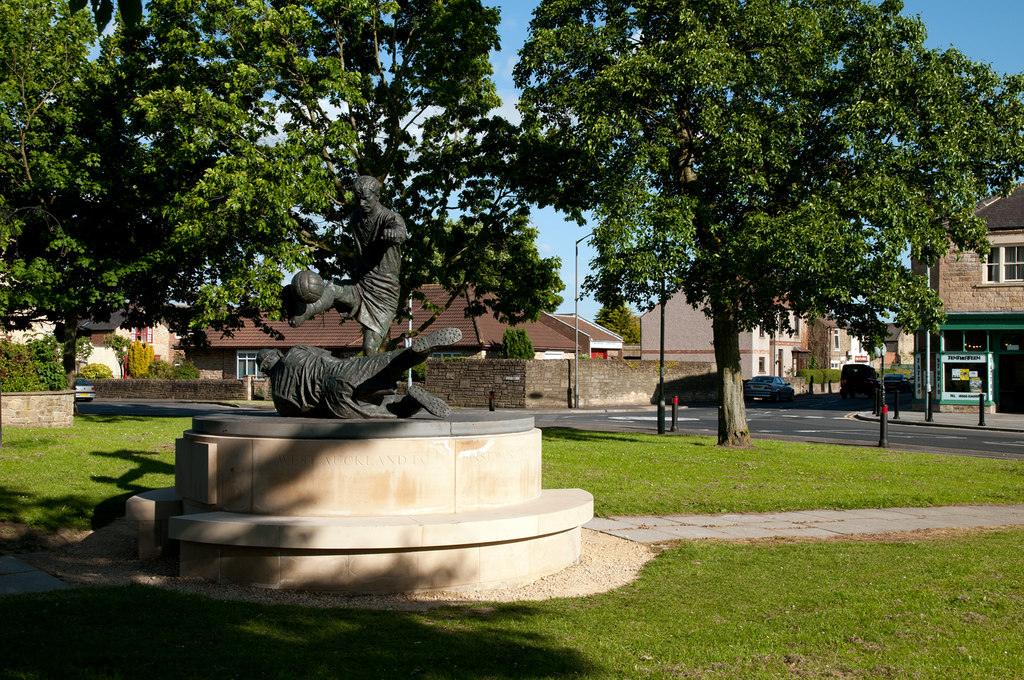
The original trophy was stolen from West Auckland Working Men's Club in 1994 and never found; an exact replica is kept there. Tyne Tees Television dramatised the first win in 1982 as The World Cup: A Captain's Tale, with Dennis Waterman. A statue of a footballer and a miner stands on the village green, and Jack Greenwell, a player of 1909 who later managed FC Barcelona, has been listed in the English Football Hall of Fame. Martin Connolly's history of the wins is called The Miners' Triumph.
Recorded claims
Individual factual claims, each tagged with how solidly it's grounded and attached to the source(s) that support it. Where sources disagree, both are kept.
- West Auckland was an amateur side made up mostly of coal miners. (documented fact) 1,2,3
- West Auckland beat FC Winterthur 2-0 in the final in Turin on 12 April 1909. (documented fact) 1,2,3
- In 1911 they beat Juventus 6-1 in the final and kept the trophy. (documented fact) 1,2,3
- The players paid their own way to Turin, some selling furniture and belongings. (later recollection) 1,3
- The club pawned the trophy to the landlady of the local hotel; a village appeal returned it in 1960. (documented fact) 1
- The trophy was stolen from West Auckland Working Men's Club in 1994 and never recovered. (documented fact) 1,2,3
- The players' pit is not named; West Auckland Colliery was the village's colliery in 1909. (reasonable inference, uncertain) 1,3
Mines
- West Auckland Colliery — County Durham
The team that won in 1909 and 1911 was made up mostly of coal miners from West Auckland; the sources do not name their pit, and West Auckland Colliery, worked by Bolckow, Vaughan, was the village's colliery at the time.
Real-world mining concepts used here
Sources
- (secondary) West Auckland Town F.C. — Wikipedia
- (secondary) Sir Thomas Lipton Trophy — Wikipedia
- (secondary) West Auckland Town AFC: Winners of the first World Cup — SportsByte, University of Sunderland (19 April 2024)
Record created: 6 October 2026 · Last researched: 6 October 2026