 MineArchive

Farewell to Stromness
| Category | Music |
|---|---|
| Dates | Uranium found in the early 1970s; whole-island opposition by 1977; public inquiry in Kirkwall; revue first performed 21 June 1980; Forever Young 1983; Soul Music programme 31 July 2019; Davies died 2016. |
Farewell to Stromness, Peter Maxwell Davies's best-known piece, is a piano interlude from The Yellow Cake Revue, his 1980 protest against plans to mine uranium between Stromness and the Yesnaby cliffs.
The mining history in this record
In the 1970s geologists found uranium ore in the west of Orkney Mainland, in a corridor running from the town of Stromness to the cliffs of Yesnaby, where millstones had once been quarried. The Institute of Geological Sciences forecast commercial mining within a decade, and the South of Scotland Electricity Board, backed by the European Commission, which had paid for a £7 million search for uranium across the member states, applied to sink eleven test boreholes: two at Yesnaby, four near Blackhall and five at the Mill of Cairston.
Orkney turned against it. The islands council objected; the Orkney Heritage Society, led by Ian MacInnes, rector of Stromness Academy, campaigned against the plan, and Marjorie Linklater warned that Stromness would be a ghost town within a decade. By 1977, by one account, the whole of the islands' population was opposed. The application went to a three-day public inquiry in Kirkwall, and the examiner advised the Secretary of State for Scotland to refuse it. Uranium mining in Orkney never went ahead.
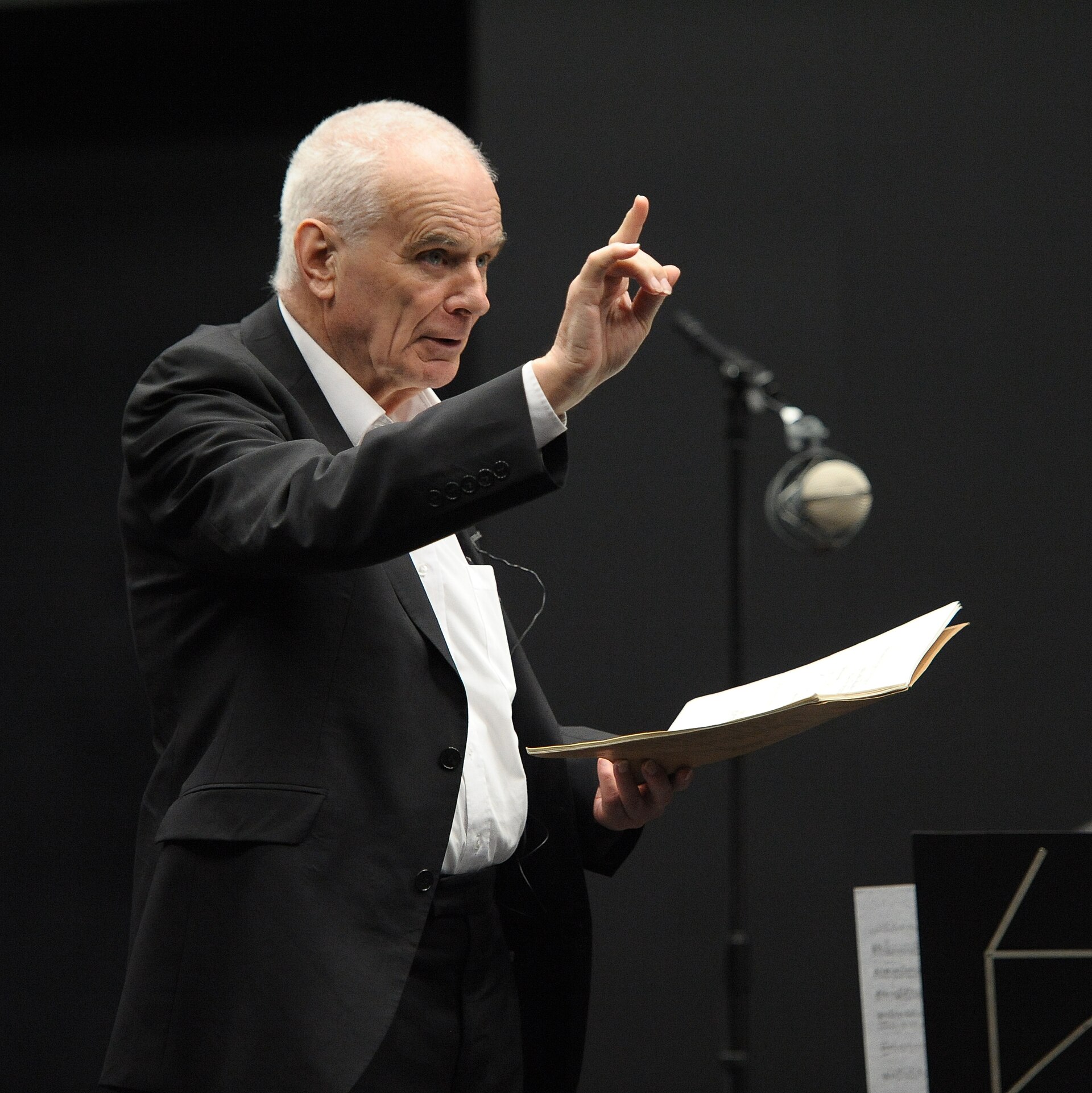
Peter Maxwell Davies, who had lived in Orkney since 1971, wrote The Yellow Cake Revue after the examiner's report, as part of the protest: a sequence of cabaret songs and recitations, named after yellow cake, as uranium ore is known, with two interludes for solo piano. The first is Farewell to Stromness; the second, Yesnaby Ground, takes its name from the cliffs at the far end of the uranium corridor. The revue was first performed at the Stromness Hotel on 21 June 1980, during the St Magnus Festival that Davies had co-founded, with Eleanor Bron speaking and the composer at the piano.
People
Peter Maxwell Davies (1934–2016), composer, resident in Orkney from 1971 and co-founder of the St Magnus Festival; Eleanor Bron, who performed the spoken parts at the premiere; Ian MacInnes, rector of Stromness Academy, who led the Orkney Heritage Society's opposition.
Legacy today
Farewell to Stromness outlived the campaign. It is the most famous music in the revue and Davies's best-known and most often performed work: arranged for guitar and many other instruments, given words by Ray Connolly for the 1983 Channel Four film Forever Young, his only piece in the Classic FM Hall of Fame, and the subject of a BBC Radio 4 Soul Music programme in 2019. Davies said it had almost become a folk tune, liked by people who had no idea who wrote it. Yesnaby Ground is often played on its own too.
Recorded claims
Individual factual claims, each tagged with how solidly it's grounded and attached to the source(s) that support it. Where sources disagree, both are kept.
- Farewell to Stromness is a piano interlude from The Yellow Cake Revue, a sequence of cabaret-style numbers protesting against uranium mining in Orkney. (documented fact) 1,2
- The Yellow Cake Revue was first performed at the Stromness Hotel on 21 June 1980, during the St Magnus Festival, by Eleanor Bron with the composer at the piano. (documented fact) 3,4,5
- The proposed uranium workings lay in a corridor between Stromness and the cliffs of Yesnaby. (documented fact) 3,5
- The South of Scotland Electricity Board applied to sink eleven test boreholes, two of them at Yesnaby. (documented fact) 3
- Davies wrote the revue as part of the protest against uranium mining in Orkney. (documented fact) 3,2
- Uranium mining in Orkney did not go ahead. (documented fact) 3,2
- Farewell to Stromness is Davies's best-known and most often performed work. (documented fact) 3,2
- The revue's second piano interlude, Yesnaby Ground, is named after Yesnaby. (documented fact) 6,5
Mines
- Yesnaby Quarries — Orkney
The uranium corridor the revue protested against ran from Stromness to the cliffs of Yesnaby, where the quarries are, and its second piano interlude, Yesnaby Ground, is named for them.
Real-world mining concepts used here
Sources
- (primary) Peter Maxwell Davies – Farewell to Stromness (work details) — Boosey & Hawkes
- (secondary) The Yellow Cake Revue — Wikipedia
- (secondary) Orkney's Uranium Protests — The Orkney News
- (primary) Peter Maxwell Davies – The Yellow Cake Revue (work details) — Boosey & Hawkes
- (secondary) Orkney's uranium reprieve (Linda Pentz Gunter, 2021) — Beyond Nuclear International
- (secondary) Yesnaby — Wikipedia
Record created: 27 November 2026 · Last researched: 28 November 2026