 MineArchive
Chaloner and the papal curse
| Category | Folklore |
|---|---|
| Dates | Chaloner's travels from 1580; alum-stone found at Belman Bank about 1600; Fuller's Worthies of England 1662; Tristram Shandy published from 1759; the DNB article 1887; Bulmer's directory 1890 |
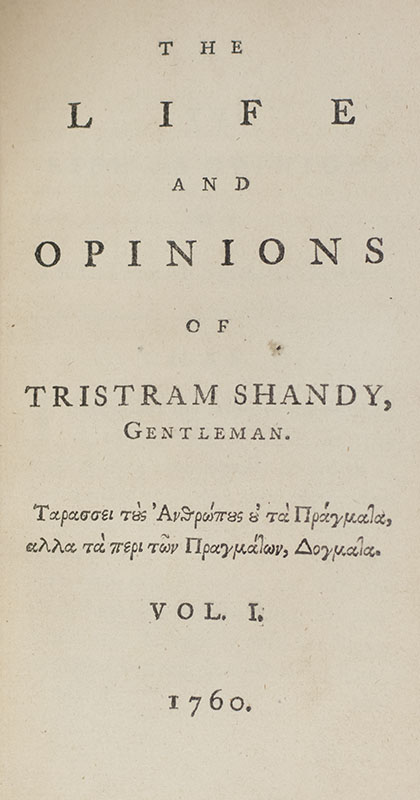
Alum-making in England began at Guisborough about 1600, and a Yorkshire tradition grew up that Sir Thomas Chaloner had stolen it — smuggling the Pope's own alum workers out of Italy in casks, and drawing down a papal anathema on himself and them. The curse was printed as genuine into the nineteenth century. Its text is word for word the curse of Ernulphus in Tristram Shandy.
The mining history in this record
Sir Thomas Chaloner the younger (1561-1615) was a naturalist and courtier who travelled in Italy from 1580 and was fond of natural history and experiment. The Dictionary of National Biography records that while at Puteoli he visited the Pope's alum works and noticed that the vegetation around them resembled that of parts of his own Yorkshire estate at Guisborough. On his return, about 1600, he found alum-stone at Belman Bank and opened there the first alum mines in England. Bulmer's directory of North Yorkshire gives the same reasoning in more detail: he observed the similarity in the delicate green tint of the vegetation near Guisborough to that of the alum district of Puzzeoli, concluded that the same mineral lay beneath, and had the strata examined.
What the tradition adds is the theft. Not knowing the process himself, the story runs, Chaloner bribed some of the Pope's workmen to come away with him privately to England — smuggled, says one account, in casks. This so exasperated the Pope, who until then had enjoyed a lucrative monopoly of the alum trade, that he fulminated an anathema against both the seducer and the seduced. Copies of that anathema were printed in Grose's Antiquities and in Young's history of Whitby.
People
Sir Thomas Chaloner the younger (1561-1615), who opened the first English alum works at Belman Bank. Thomas Fuller, whose Worthies of England named a Rochelle workman, Lambert Russell, a Walloon. Laurence Sterne, whose Tristram Shandy carries the curse of Ernulphus. Francis Grose and George Young, who printed the text as the Pope's. John Westby-Gibson wrote the Dictionary of National Biography article that dismisses it.
Legacy today
Both of the accounts read here reject the curse, and for the same reason. The text printed by Grose does not vary a tittle from the curse of Ernulphus in Laurence Sterne's Tristram Shandy, and Grose had it on no better authority than a paper printed at Whitby. The early writers do not mention the anathema at all. Bulmer's conclusion is that the first part of the story may well be true, since the alum rocks of Italy had themselves been found by reading the vegetation, and that several Popes did try to hold their monopoly by threatening excommunication — but that the anathema itself is probably the invention of a later time.
The Italian workmen fare no better. Thomas Fuller, writing his Worthies of England less than fifty years after the works were established, said the workmen were brought from Rochelle in France, and named one of them: Lambert Russell, a Walloon by birth, not long since deceased. The Dictionary of National Biography says the same — workmen from Rochelle — and gives the casks only as the Yorkshire tradition.
The story has outlived both corrections and is still told along the Yorkshire coast as the origin of its alum industry. What survives of that industry is the industry itself: Chaloner's works ran until the close of the eighteenth century, and the quarries and steeping pits of its successors are strung along the cliffs from Boulby to Ravenscar.
Recorded claims
Individual factual claims, each tagged with how solidly it's grounded and attached to the source(s) that support it. Where sources disagree, both are kept.
- Chaloner visited the Pope's alum works at Puteoli, noticed that the vegetation matched that around Guisborough on his own Yorkshire estate, and about 1600 found alum-stone at Belman Bank and opened there the first alum mines in England. (documented fact)
- Yorkshire tradition holds that, not knowing how alum was made, Chaloner bribed workmen away from the papal works and smuggled them to England hidden in casks, and that the Pope answered with an anathema against him and them. (tradition/folklore, uncertain)
- Thomas Fuller, writing within fifty years of the works being established, said the workmen were brought from Rochelle in France and named one of them as Lambert Russell, a Walloon by birth. The Dictionary of National Biography follows him in saying workmen from Rochelle. (documented fact, disputed)
- The anathema printed as the Pope's by Grose in his Antiquities and by Young in his history of Whitby is word for word the curse of Ernulphus in Laurence Sterne's Tristram Shandy. Bulmer adds that Grose's only authority for it was a paper printed at Whitby, and that the early writers do not mention the anathema at all. (documented fact)
- Bulmer allows that the first part of the story may be true, because the alum rocks of Italy had themselves been discovered in a similar way, and that several Popes did attempt to preserve their monopoly of the alum trade by threats of excommunication. (documented fact)
Mines
- Peak Alum Works — North Yorkshire
Peak is the archive's researched alum record and a later works of the Yorkshire industry Chaloner's Guisborough venture began; the legend is carried in its own text, but the story does not belong to this site.
Sources
- (secondary) Dictionary of National Biography, 1885-1900: Chaloner, Thomas (1561-1615) — Dictionary of National Biography (John Westby-Gibson, 1887), via Wikisource
- (secondary) Guisborough parish, from Bulmer's History, Topography and Directory of North Yorkshire (1890) — T. Bulmer & Co. (1890), via GENUKI
Record created: 23 September 2026 · Last researched: 23 September 2026