 MineArchive
Coprolite
| Also known as | Phosphate Nodule (The accurate description — most 'coprolites' dug commercially were not fossil dung at all) |
|---|---|
| Category | Commodities |
| Commodity page | Coprolite → |
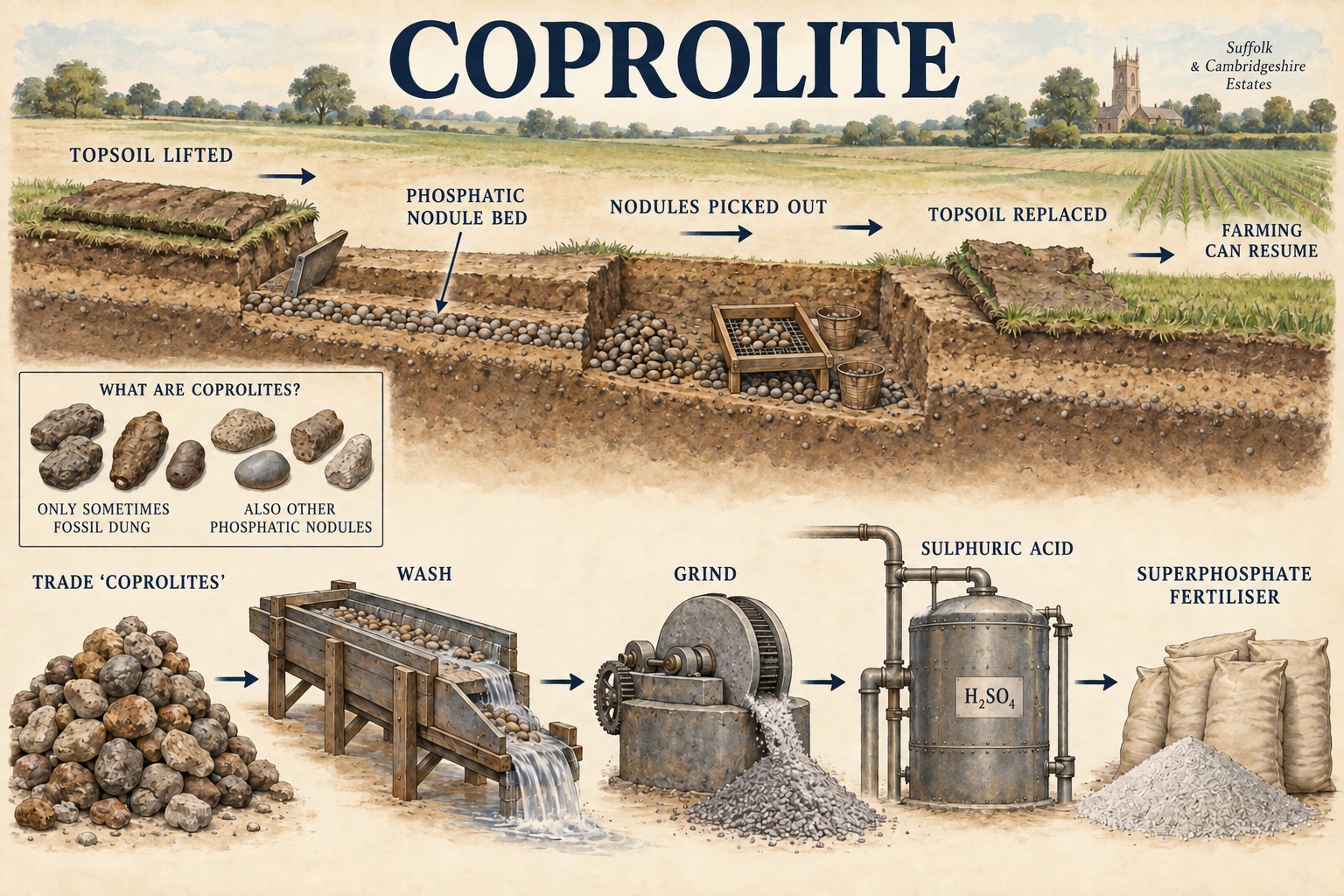
Properly, fossilised animal dung — a trace fossil, largely calcium phosphate, formally identified by William Buckland in 1829 after Mary Anning noticed from 1824 that odd stones inside ichthyosaur skeletons held fish bones and scales. Commercially the word meant something looser and mostly wrong: the phosphatic nodules dug by the ton from the Crag and Greensand of eastern England were only sometimes coprolites, and the name stuck to the industry regardless.
Historical usage
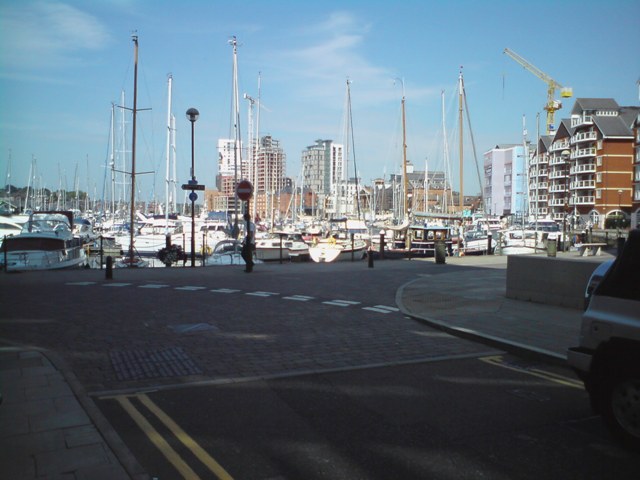
In 1842 John Stevens Henslow — Cambridge professor of botany and Darwin's teacher — noticed dark nodules weathering out of the Red Crag cliffs near Felixstowe, took them for fossil dung, and recognised they were rich in phosphate. Treated with sulphuric acid they yielded superphosphate, the first artificial chemical fertiliser, arriving exactly as British farming went looking for one. Commercial digging began around Felixstowe from about 1845, the Ipswich merchant William Colchester among the first buyers in quantity, and spread across the Suffolk hundreds and then into Cambridgeshire and the Isle of Ely, with Fisons of Ipswich refining. A street by the Ipswich docks is still called Coprolite Street.
How it worked
This was farm labour rather than mining. Trenches were dug across ordinary fields, the nodule-bearing band was picked out, and the topsoil was put back behind the digging as it advanced, so a parish could be turned over completely and returned to agriculture with almost no trace. The nodules were washed, then ground and treated with sulphuric acid at works elsewhere to make superphosphate.
Why it was used
Because British soils were short of phosphate and there was no other source. Superphosphate was the first fertiliser that could be manufactured rather than gathered, and for forty years the raw material lay in fields within carting distance of the works that needed it.
Value over time
The coprolite trade is one of the sharpest booms and busts in British extractive history: nothing before 1842, a national industry by the 1850s, and effectively finished by the 1880s, undercut by imported phosphates from far richer foreign deposits. It came back briefly during the First World War, when phosphate was wanted for munitions rather than fields, and that revival pushed the digging west as far as Woburn Sands in Buckinghamshire before stopping again. What it left behind is almost nothing — the fields were restored as the work advanced — which is why a street name in Ipswich and a nickname for the people of Trimley are among the more durable traces of it.
Hazards & challenges
No occupational-health record for coprolite digging turned up, and none is invented here. What the work plainly involved was hand digging of deep open trenches in soft ground by agricultural labourers with no mining training — unsupported faces, and the collapse risk that goes with them. The chemical hazard sat downstream rather than in the field: superphosphate was made by treating the nodules with sulphuric acid, and the acid works, not the digging, was the dangerous part of the process.
Risks & limitations
A thin bed dug from farmland is exhausted quickly and cannot be deepened, and the industry had no way to compete once phosphate could be shipped in bulk from much richer deposits abroad. It was also entirely dependent on the price of sulphuric acid and on agricultural demand, both outside its control.
Regional variation
Suffolk and the Cambridgeshire fens were the heart of it, working the Red Crag and the Cambridge Greensand respectively. The word 'coprolite' was used across the trade for any phosphatic nodule, whatever its actual origin.
Mines associated with this term
Included only where MineArchive's own research gives a reasonable evidential basis — not every mine where this might plausibly apply.
- Felixstowe and Trimley Coprolite Diggings — Suffolk (well documented example)
The Felixstowe and Trimley diggings are the archive's record of the trade at its Suffolk starting point, where Henslow first noticed the nodules in 1842.
See every mine that worked coprolite →
Sources
- (secondary) Coprolite — Wikipedia
- (secondary) Trimley, Suffolk — the coprolite diggings — Bernard O'Connor
Record created: 25 August 2026 · Last researched: 26 August 2026